Quranic Answer
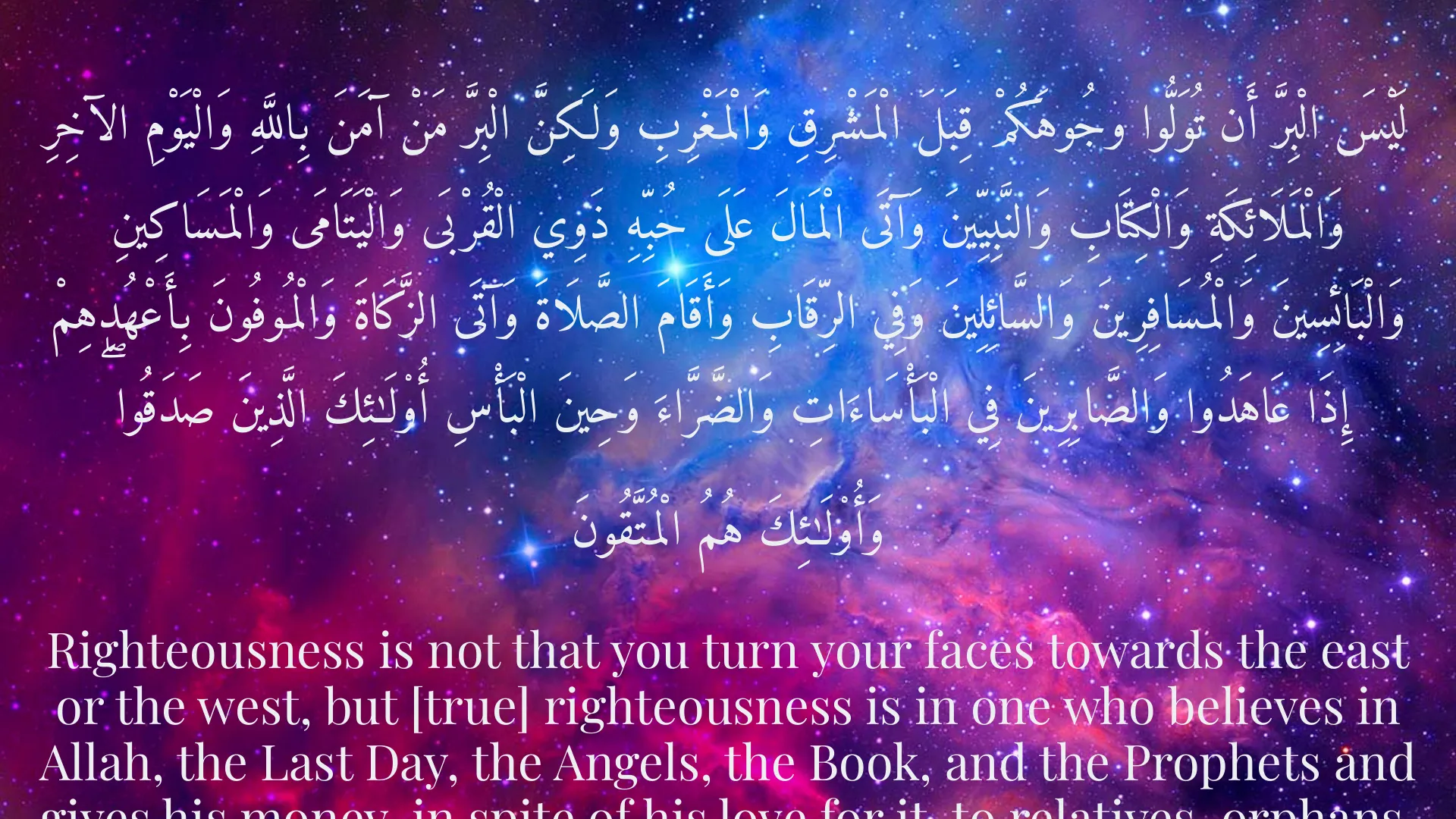
In the Holy Quran, the concept of intention, or 'Niyyah', plays a pivotal role in determining the acceptability of acts of worship. This essential principle is underscored in various verses throughout the Quran, where Allah explicitly links the acceptance of prayers, sacrifices, and other forms of worship to the sincerity and purity of one's intention. As believers, it is crucial to understand that mere rituals or performances of worship without the appropriate intention render these acts insufficient. This teaching invites a deeper reflection on the nature of faith and the genuine desire to seek Allah's pleasure. One of the key references in the Quran regarding this issue can be found in Surah Al-Baqarah, verse 177. In this verse, Allah clarifies that righteousness is not merely about performing rituals, such as the performance of prayers or the giving of charity. Instead, it highlights that true righteousness and faith go hand in hand with the intention behind these acts. It states, 'Righteousness is not that you turn your faces towards the east or the west, but [true] righteousness is in one who believes in Allah, the Last Day, the Angels, the Book, and the Prophets and gives his wealth, in spite of love for it, to relatives, orphans, the needy, the traveler, those who ask [for help], and for freeing slaves; and [who] establishes prayer and gives zakah; [those who] fulfill their promise when they promise; and [those who] are patient in poverty and hardship and during battle. It is those who have been true, and it is those who are the righteous.' Thus, it is clear that the alignment of intent with action is paramount in achieving acceptance from Allah. Another salient point relates to the emphasis placed on sincerity in the performance of worship as highlighted in Surah Al-Mu’minun, verse 60. This verse illustrates Allah's readiness to accept the repentance of His servants. It serves as a powerful reminder that the pathway to forgiveness from Allah is paved through sincere acts of worship. Repentance, or 'Tawbah', requires not only a recognition of wrongdoing but also a heartfelt return to righteousness with the intention of making amends in the sight of Allah. This emphasizes that true repentance must be accompanied by genuine intention and acknowledgment of the sin, ensuring that the individual is earnest in their desire for forgiveness. The narratives within the Quran further exemplify the necessity for pure intentions. A notable example of this is the story of Abel and Cain, recounted in Surah Al-Ma'idah, verse 27, where both brothers presented offerings to Allah. However, only Abel's offering was accepted due to his heartfelt sincerity and the purity of intention behind it. This narrative serves to illustrate that outward appearances and the mere act of giving are insufficient if they are devoid of sincere motives. Abel’s intention was to please Allah and seek His approval, whereas Cain’s intentions were misaligned and potentially motivated by jealousy or insincerity. The tale of Abel and Cain reiterates the fundamental principle that intrinsic motivation toward goodness is what sets apart an accepted act from a rejected one. In a similar vein, another example can be drawn from the life of the Prophet Muhammad (peace be upon him) who emphasized sincerity as a core tenet in many of his teachings. The famous saying of the Prophet, "Actions are judged by intentions, and every person will get that which they intended," is a profound statement that encapsulates this principle. The implications of this principle extend beyond religious worship into daily activities. It invites individuals to introspect and engage in all of their actions—whether acts of charity, support to family, or the daily affairs of life—with a sense of sincerity and purpose. Each mundane task can become a means to earn Allah’s pleasure if undertaken with the right mindset and intention. This perspective encourages Muslims to infuse intention into their routines, fostering a deeper connection with Allah in every act they carry out. Furthermore, the profound impacts of intentions can be seen in the broader community context. When people act with pure intentions, motivated by the hope of pleasing Allah, it can lead to a collective upliftment of morality, compassion, and social positive behavior. An act done with the right intention can inspire others and create a ripple effect that benefits society at large, fostering an environment of mutual respect and understanding. In practical terms, there are numerous ways in which individuals can cultivate sincerity in their worship and daily life. One way to do so is through self-reflection and awareness—taking the time to contemplate the motivations behind one’s actions. Additionally, regular prayer and seeking guidance from Allah can help believers align their intentions with His will. Engaging in sincere acts of charity, volunteering, and support of those in need provide further opportunities to translate intention into action, manifesting a commitment to both personal faith and communal well-being. In conclusion, the significance of intention as emphasized in the Holy Quran cannot be overstated. It is imperative for Muslims to recognize that their acts of worship, if performed without sincere intention, may not achieve acceptance in Allah's eyes. As illustrated through various Quranic verses and narratives, the essence of faith is intertwined with the purity of intentions. Therefore, in striving for acceptance of our actions, we must ensure that they are rooted in sincerity, and performed with the sincere desire to please Allah. Thus, enhancing one’s intentions not only elevates the quality of worship but also transforms every action into an opportunity for spiritual growth and connection with the Divine. This profound understanding of intention can lead to greater mindfulness in both worship and everyday interactions, thereby fulfilling the purpose of creating a life that resonates with authenticity, sincerity, and devotion to Allah.
Related Verses
لَيْسَ الْبِرَّ أَن تُوَلُّوا وجُوهَكُمْ قِبَلَ الْمَشْرِقِ وَالْمَغْرِبِ وَلَكِنَّ الْبِرَّ مَنْ آمَنَ بِاللَّهِ وَالْيَوْمِ الآخِرِ وَالْمَلَائِكَةِ وَالْكِتَابِ وَالنَّبِيِّينَ وَآتَى الْمَالَ عَلَى حُبِّهِ ذَوِي الْقُرْبَى وَالْيَتَامَى وَالْمَسَاكِينِ وَالْبَائِسِينَ وَالْمُسَافِرِينَ وَالسَّائِلِينَ وَفِي الرِّقَابِ وَأَقَامَ الصَّلَاةَ وَآتَى الزَّكَاةَ وَالْمُوفُونَ بِأَعْهُدِهِمْ إِذَا عَاهَدُوا وَالصَّابِرِينَ فِي الْبَأْسَاءَاتِ وَالضَّرَّاءَ وَحِينَ الْبَأْسِ أُو۟لَـٰئِكَ الَّذِينَ صَدَقُوا ۖ وَأُو۟لَـٰئِكَ هُمُ الْمُتَّقُونَ
Righteousness is not that you turn your faces towards the east or the west, but [true] righteousness is in one who believes in Allah, the Last Day, the Angels, the Book, and the Prophets and gives his money, in spite of his love for it, to relatives, orphans, the needy, the traveler, those who ask [for help], and for freeing slaves; and [who] establishes prayer and gives zakah; [those who fulfill their promise when they promise] and [those who are patient in poverty and hardship and during battle]. Those are the ones who have been true, and it is those who are the righteous.
Al-Baqarah : 177
وَالَّذِينَ يَتَوَكَّلونَ عَلَى رَبِّهِمْ
And those who rely upon their Lord.
Al-Mu'minun : 60
وَاتْلُ عَلَيْهِمْ نَبَأَ ابْنَيْ آدَمَ بِالْحَقِّ إِذْ قَرَّبَا قُرْبَانًا فُتُقُبِّلَ مِنْ أَحَدِهِمَا وَلَمْ يُتَقَبَّلْ مِنَ الْآخَرِ إِنَّ اللَّهَ قَتَّا لَيَشَاءَ إِلَى مَنٍ يُقبلُهُ
And relate to them the story of the two sons of Adam, when they both offered a sacrifice, and it was accepted from one of them but was not accepted from the other. Indeed, Allah accepts only from the righteous.
Al-Ma'idah : 27
Short Story
Once upon a time, there was a person named Salim who was always in thoughts about worshipping and obeying God. At the beginning of his path, he faced confusion about whether his acts of worship were accepted or not. One day, he went to the mosque and heard the Imam talking about intention and sincerity in worship. He reflected on whether he had been sincere in his intent all this time. Salim decided to purify his intention and to worship with true faith. After some time, he felt a greater peace in his soul, realizing that his deeds had turned into accepted acts of worship.