Quranic Answer
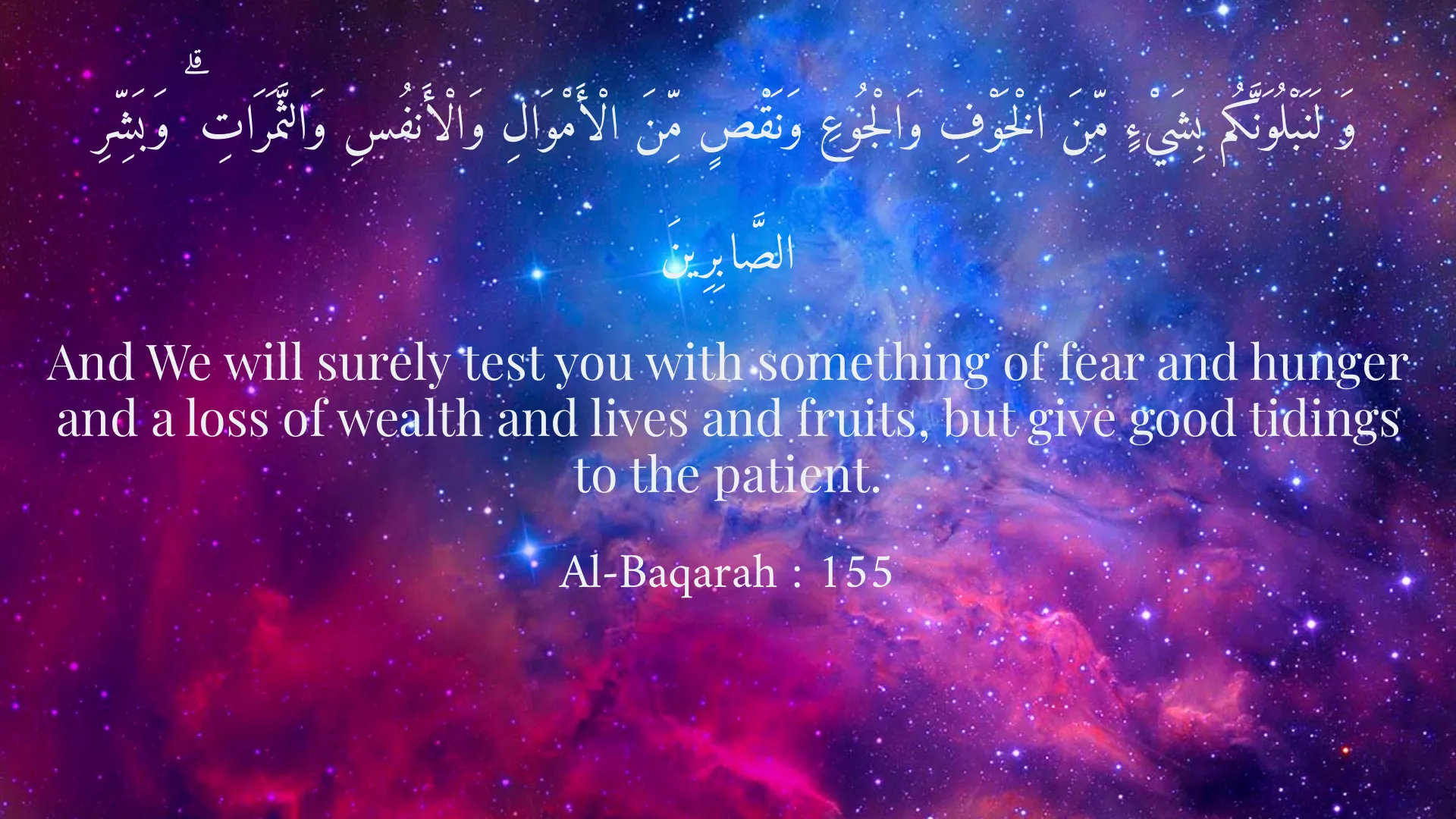
The concept of testing in the Islamic faith is intricately woven into the fabric of human existence, as highlighted in the Holy Quran. One of the most profound references to this idea can be found in Surah Al-Baqarah, verse 155, where Allah explicitly addresses the nature of divine tests, stating: 'And We will surely test you with something of fear and hunger and a loss of wealth and lives and fruits, but give good tidings to the patient.' (Al-Baqarah: 155). This particular verse encapsulates the essence of life's challenges and the necessity for resilience and patience amidst adversity. The Quran emphasizes that divine tests manifest in various forms, and they are often perceived as obstacles or challenges that individuals face throughout their lives. However, it is crucial to understand that these tests are by no means arbitrary. They are divinely ordained and serve a purpose. Allah, in His infinite wisdom, recognizes that each individual possesses unique capabilities, strengths, and weaknesses. Consequently, He customizes the tests according to the specific circumstances and capacities of each individual. This notion of individualized testing is further reinforced in Surah Al-Mu’minun, verse 30, which states: 'Indeed, in the creation of the heavens and the earth and the alternation of night and day are signs for those of understanding.' (Al-Mu'minun: 30). Through this verse, Allah invites believers to reflect on the world around them and recognize that the signs of His wisdom are manifest in the very fabric of creation. Each person’s experience of testing correlates not only with their individual circumstances but also with the unique lessons that they are intended to learn through these experiences. The Quran presents a holistic view of life where individuals can appreciate the meaning behind their hardships and struggles. In Islamic theology, tests are viewed as opportunities for growth and self-improvement. They encourage believers to develop qualities such as patience (sabr), perseverance, faith (iman), and reliance on Allah (tawakkul). The Quran acknowledges that trials may encompass fear, hunger, financial loss, and even the loss of loved ones. These experiences can evoke a wide range of emotions, including despair and frustration. However, the Quran reassures believers that these moments of hardship are temporary and that the true test lies in how one responds to such adversities. For instance, the call to patience embedded in Surah Al-Baqarah’s verse is a powerful reminder that patience is rewarded by Allah. The phrase 'give good tidings to the patient' serves as both encouragement and motivation to endure tough times. From an Islamic perspective, patience is not merely the absence of complaint; it involves a proactive approach to overcoming challenges while maintaining faith in Allah’s plan. This spiritual resilience is paramount in a world filled with uncertainties. While it is human nature to seek comfort and avoid discomfort, the Quran invites believers to embrace their trials, understanding that they are integral to their faith journey. Through testing, individuals can purify their intentions, strengthen their reliance on Allah, and ultimately grow closer to Him. The tests reveal the genuineness of one's faith; they serve as a gauge to assess the depth of one’s relationship with Allah. Moreover, Allah's tests are reflective of His deep understanding of human nature. He is fully aware of our intentions and our hearts. This divine knowledge guides His judgments, ensuring that each person undergoes trials that are suited for them. The diversity of tests becomes a testament to Allah’s justice. For instance, one individual may face financial struggles, while another may experience health issues or social strife. Each trial is tailored to the individual’s unique life experiences, cultural background, and personal challenges. In this way, Allah's justice and mercy intertwine, as He does not burden any soul beyond its capacity. This fundamental principle of Islamic belief corresponds with the notion of divine justice, ensuring that trials are proportional to one's ability to cope and endure. As the Quran aptly states in Surah Al-Baqarah (2:286), 'Allah does not burden a soul beyond that it can bear.' Furthermore, it is essential to recognize the societal implications of these divine tests. Testing is not solely an individual experience; it encompasses communities and societies at large. Natural disasters, epidemics, socio-political unrest, and economic hardship can be seen as collective tests for humanity. In such cases, the Quran provides guidance on how to navigate these broader challenges through principles of compassion, support, and unity. Together, believers are encouraged to lend their support to others facing hardships, promoting a sense of community and solidarity amid trials. In conclusion, the nature of tests as elaborated in the Quran serves as a source of comfort and motivation for believers. Allah's acknowledgment of individual circumstances and the diversity of trials underscores His infinite wisdom and justice. Trials, while daunting, offer profound opportunities for personal growth, spiritual development, and deeper understanding of one's faith. As individuals navigate through different twists and turns in life, they are reminded that these challenges are part of a larger divine plan, meant to strengthen their relationship with Allah. Through patience, perseverance, and trust in divine wisdom, believers can emerge from their trials with enriched spiritual insight and a closer affinity to their Creator. Ultimately, embracing the lessons embedded within these tests can transform hardship into a catalyst for resilience and growth, directing individuals toward a more profound understanding of their purpose in life.
Related Verses
وَ لَنَبْلُوَنَّكُم بِشَيْءٍ مِّنَ الْخَوْفِ وَالْجُوعِ وَنَقْصٍ مِّنَ الْأَمْوَالِ وَالْأَنفُسِ وَالثَّمَرَاتِ ۗ وَبَشِّرِ الصَّابِرِينَ
And We will surely test you with something of fear and hunger and a loss of wealth and lives and fruits, but give good tidings to the patient.
Al-Baqarah : 155
إِنَّ فِي خَلْقِ السَّمَاوَاتِ وَالْأَرْضِ وَاخْتِلَافِ اللَّيْلِ وَالنَّهَارِ لَآيَاتٍ لِّأُولِي الأَلْبَابِ
Indeed, in the creation of the heavens and the earth and the alternation of night and day are signs for those of understanding.
Al-Mu’minun : 30
Short Story
Once upon a time, a man named Hossein pondered over the reflections of his life. He felt that his life was filled with challenges, and he couldn’t understand why God subjected him to these difficulties. He turned to his sacred book, the Quran, and looked through its verses. When he came across the verse where Allah says, 'Everyone is tested according to their capacity,' he felt a sense of peace. Hossein realized that Allah sees him and that his trials were created based on divine wisdom. From that day onwards, Hossein tried to stay patient and remember that every test in his life was like a lamp guiding him toward light.