Quranic Answer
The concept of hardships and trials is a recurring theme in the Holy Quran, and it plays a crucial role in shaping the experiences of believers. The Quran emphasizes that such challenges should not merely be interpreted as manifestations of divine displeasure or wrath. Instead, these experiences serve as vital components of a believer's spiritual journey and are often integral to fostering a deeper connection with God. In Surah Al-Baqarah, verse 155, the Quran states: "And We will surely test you with something of fear and hunger and a loss of wealth and lives and fruits, but give good tidings to the patient." This verse underscores an essential aspect of existence—the inevitability of trials. Life is inherently filled with challenges, and these tests are designed to measure an individual’s faith and resilience. Rather than viewing hardships as punishments, believers are encouraged to perceive them as opportunities for growth and reflection. The promise of ‘good tidings’ for the patient serves as an uplifting reminder that perseverance in the face of adversity can lead to spiritual rewards and deeper insights. Moreover, in Surah Aal-E-Imran, verse 186, Allah articulates: "Indeed, you will be tested and you will hear from those who were given the Scripture before you and from those who associate others with Allah much abuse. But if you are patient and fear Allah, it is a matter of great resolution." This verse further elucidates the role of testing in the character development of believers. By enduring the trials, they become fortified in their faith, learning to rely on God’s wisdom and timing. The juxtaposition of trials with the concept of patience highlights a central tenet in Islam; patience under duress is not only a virtue but also a testament to one's commitment to faith. The reference to ‘great resolution’ indicates that success in these endeavors can lead to deep spiritual maturity and fortitude. In addition, Surah Al-Mu'minun, verse 30 reveals: "And when you are touched by a misfortune, know that it is from Allah so that He can bring you to awareness and repentance." This verse provides an enlightening perspective on the nature of misfortunes that befall believers. Instead of interpreting these challenges as mere inconveniences or punishments, the Quran invites individuals to recognize them as divine opportunities for self-awareness and remedial action. The experiences of misfortune can shake individuals from complacency and compel them to reassess their faith, actions, and relationship with God. In essence, such occurrences may serve as divine prompts to seek forgiveness, refocus intentions, and cultivate a more profound connection with the Creator. Critical examination of these verses offers valuable insights into the Islamic worldview regarding trials and tribulations. The belief that hardships aid in the development of resilience and patience resonates throughout the Quran. These experiences can cultivate empathy, compassion, and humility within individuals, fostering a desire to support others who may endure similar challenges. The trials serve not only as personal growth experiences but also enhance communal strength and unity among believers. When believers face their trials collectively, they cultivate bonds of empathy and support, further strengthening the community as a whole. Furthermore, it is essential to appreciate that trials can illuminate the importance of humility before God. In times of hardship, individuals often realize their dependence on the divine, prompting them to turn to prayer, supplication, and introspection. This connection reinforces the believer's understanding of their relationship with God, and it becomes evident that these trials, rather than being punitive, may be manifestations of divine grace. In many cases, the struggles faced can lead to beneficial outcomes, including spiritual awakenings, new opportunities, and personal transformations. For believers, it is thus important to reframe their understanding of hardship. Instead of seeing tests as mere burdens, they should embrace them as integral aspects of their spiritual journey. The Quran invites believers to maintain a sense of hope even amidst challenges, reminding them of the potential for growth and transformation. By cultivating patience and nurturing a sound fear of Allah, believers can navigate life's adversities with grace and resilience. In conclusion, the presence of trials and tribulations in the life of believers is neither arbitrary nor a sign of divine wrath. On the contrary, they are essential components of the human experience, designed to nurture spiritual growth, increase resilience, and foster a closer relationship with God. The lessons drawn from these verses in the Holy Quran encourage individuals to embrace hardships as pathways toward healing and forgiveness, emphasizing the importance of patience, faith, and repentance. Ultimately, recognizing the opportunity for personal and spiritual development inherent in trials can lead to a more profound sense of peace and understanding within the divine plan. In the grand tapestry of life woven by divine wisdom, trials are but threads that enhance its beauty by enriching the believer’s journey towards eternal fulfillment.
Related Verses
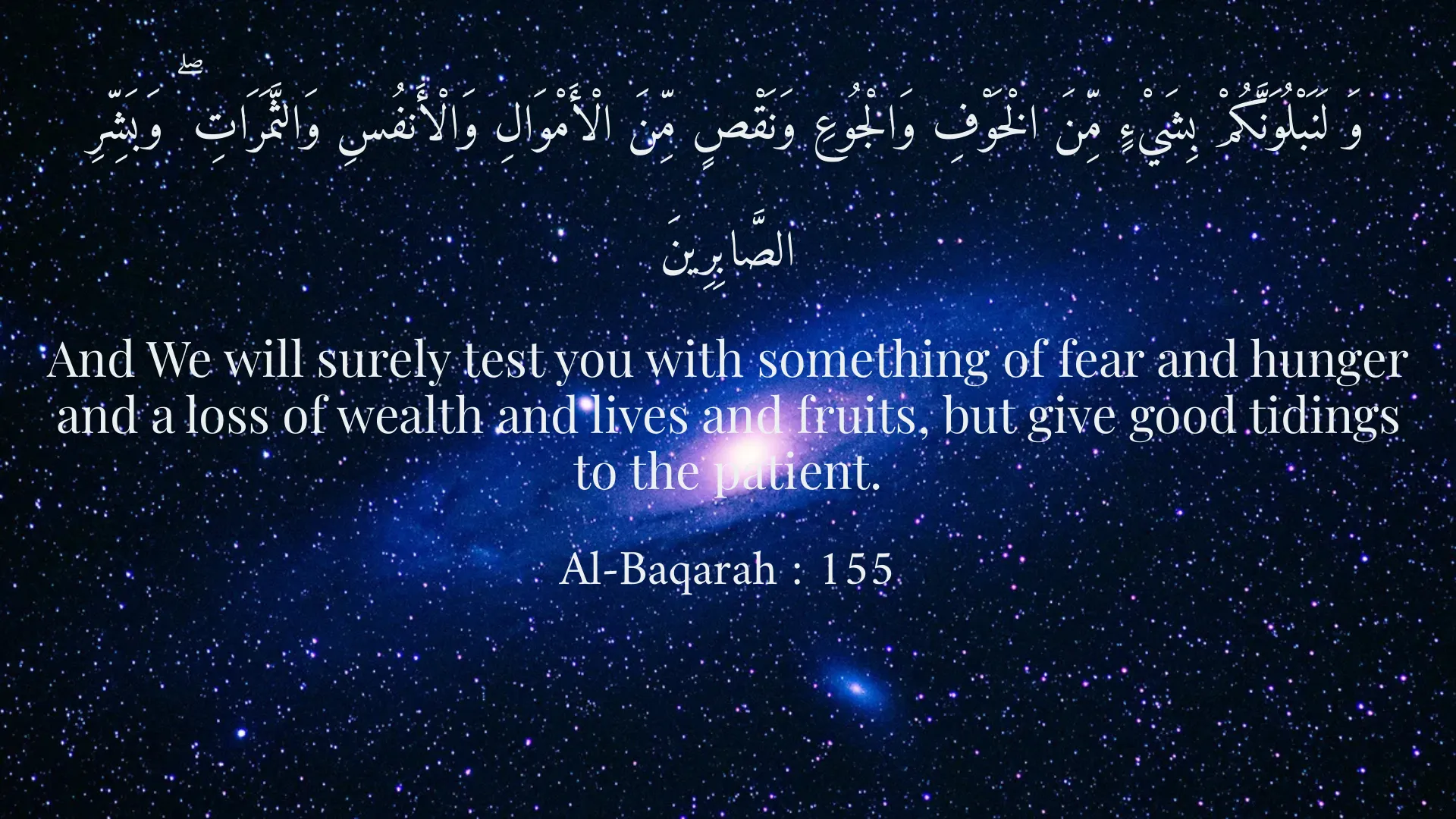
وَ لَنَبْلُوَنَّكُمْ بِشَيْءٍ مِّنَ الْخَوْفِ وَالْجُوعِ وَنَقْصٍ مِّنَ الْأَمْوَالِ وَالْأَنفُسِ وَالثَّمَرَاتِ ۖ وَبَشِّرِ الصَّابِرِينَ
And We will surely test you with something of fear and hunger and a loss of wealth and lives and fruits, but give good tidings to the patient.
Al-Baqarah : 155
إِنَّكُمْ سَتُبْتَلَوْنَ فِي أَمْوَالِكُمْ وَأَنفُسِكُمْ وَسَتَسْمَعُونَ مِنَ الَّذِينَ أُوتُوا الْكِتَابَ مِن قَبْلِكُمْ وَمِنَ الَّذِينَ أَشْرَكُوا أَذًى كَثِيرًا ۖ وَإِن تَصْبِرُوا وَتَتَّقُوا فَإِنَّ ذَٰلِكَ مِنْ عَزْمِ الْأُمُورِ
Indeed, you will be tested and you will hear from those who were given the Scripture before you and from those who associate others with Allah much abuse. But if you are patient and fear Allah, it is a matter of great resolution.
Aal-E-Imran : 186
وَ الَّذِينَ إِذَا أَصَابَتْهُم مُّصِيبَةٌ قَالُوا إِنَّا لِلَّهِ وَ إِنَّا إِلَيْهِ رَاجِعُونَ
And when you are touched by a misfortune, know that it is from Allah so that He can bring you to awareness and repentance.
Al-Mu'minun : 30
Short Story
Once upon a time, there was a man named Hassan who faced many hardships in his life. He often wondered, "Are these signs of God's anger?" One day, he went to the mosque where the preacher spoke about patience and endurance. He recalled the Quranic verses stating that hardships lead to personal growth. From that day on, Hassan decided to view these challenges as opportunities for growth rather than sources of sorrow. Over time, he found that his life improved, and he moved forward with a stronger faith in Allah.