Quranic Answer
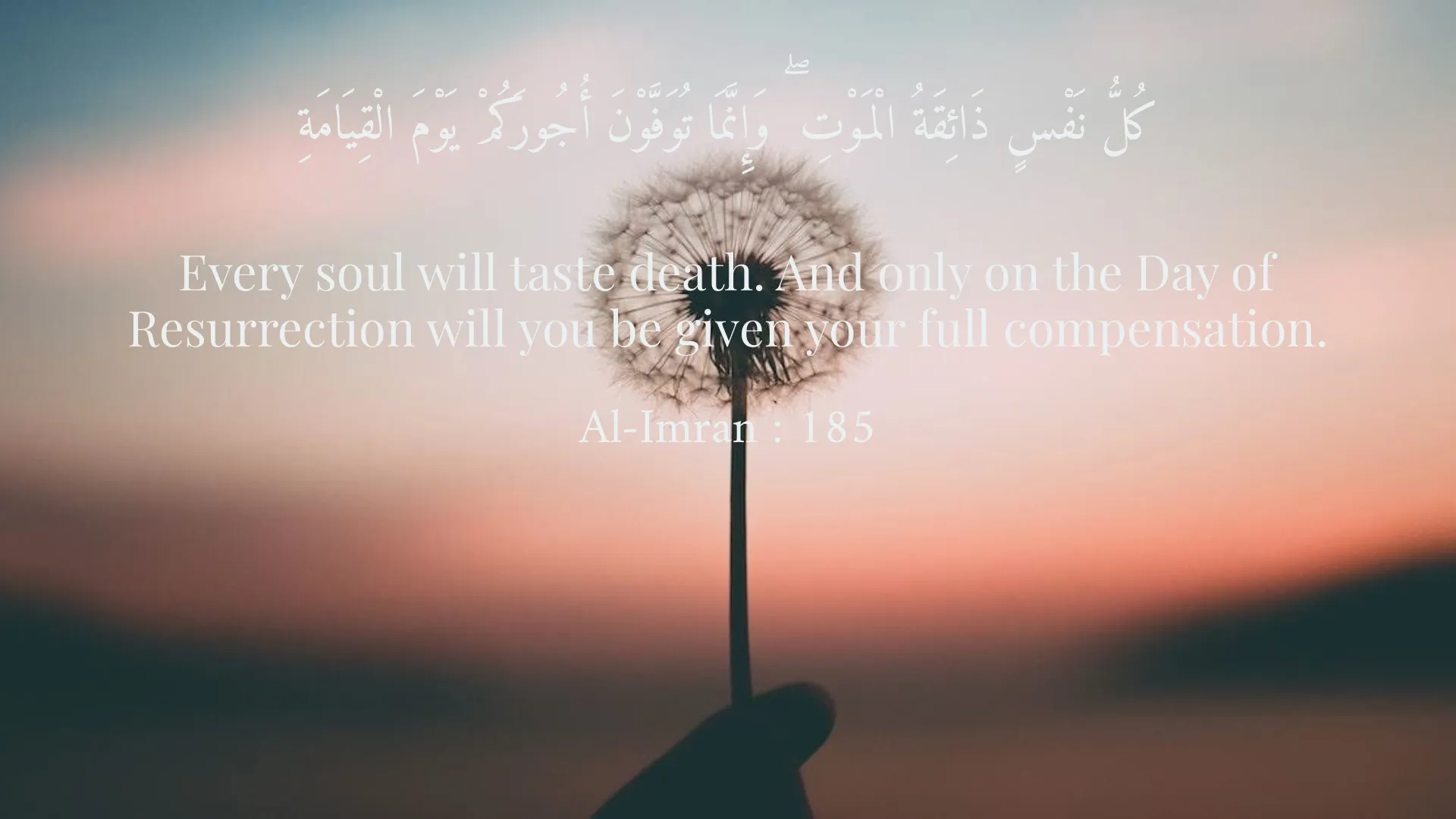
The concept of rewards and punishments in the Hereafter is a fundamental tenet of Islamic belief, intricately woven into the fabric of the Holy Quran. The verses within this sacred text remind believers that the transient nature of worldly life is merely a prelude to a more profound existence beyond death. In particular, Surah Al-Imran (3:185) encapsulates this belief by stating, 'Every soul will taste death. And only on the Day of Resurrection will you be given your full compensation.' This verse serves as a poignant reminder of the inevitability of death and the ultimate judgment that awaits every individual, emphasizing that the deeds performed in this life will determine one's fate in the Hereafter. Islam teaches that human life is ephemeral, a fleeting moment in the context of eternity. Consequently, believers are encouraged to make the most of their time on Earth through righteous actions. The Quran repeatedly underscores the significance of good deeds, which are not only valued for their immediate impacts on society but also for the bountiful rewards they promise in the afterlife. Charity, faith, and virtuous behavior are emphasized as pathways to securing a favorable standing before Allah on the Day of Judgment. Another relevant verse is found in Surah Al-An'am (6:160), which states, 'Whoever brings a good deed will have ten times the like thereof.' This verse illustrates the concept of multiplied rewards, thereby motivating believers to engage in acts of kindness and generosity. The idea that each good deed can yield tenfold rewards not only serves as an encouragement to do good but also reflects the boundless mercy and generosity of Allah. Muslims are reminded that no act of goodness, however small, goes unnoticed and unrecognized by their Creator. Therefore, both the quality and quantity of one’s deeds hold significant weight in the evaluation of a person’s life. In Islamic teaching, the interactions between this world and the Hereafter are essential. The belief in life after death instills in believers a sense of responsibility and accountability for their actions. Muslims are taught that their time on Earth is a test from Allah, and how they navigate this test will directly impact their eternal destinies. For instance, the act of giving charity (sadaqah) is not merely about financial support but is viewed as an investment in one’s afterlife. Each coin spent in the name of helping others is part of a grander scheme where the intention behind the action is scrutinized by Allah. Faith plays a core role in this narrative as well. Believing in Allah, His Messengers, and the revelations, including the Quran, are foundational to a Muslim's practice. It is belief that compels Muslims to act righteously, often motivated by the anticipation of divine rewards. This intrinsic connection between faith and action underlies the Islamic way of life, where the idea of earning rewards in the Hereafter serves as a guiding principle. In discussing the consequences of deeds in the Hereafter, one must also consider the warnings present in the Quran regarding sinful actions. The repercussions of wrongdoing, such as greed, dishonesty, and neglect of religious duties, are a critical aspect of the overall discussion. The contrast between the rewards for good deeds and the penalties for misconduct creates a profound understanding among believers about the importance of leading an ethical life. Furthermore, the promise of rewards in the Hereafter serves another purpose: it cultivates hope within the hearts of the faithful. Life can often seem overwhelming, filled with trials and tribulations. The reminders of an eternal abode filled with peace, joy, and unending blessings provide solace to those enduring hardship. The Quran assures believers that patience during trials will be rewarded and that their sacrifices will bear fruit—both in society and in the Hereafter. An essential aspect of this belief system is sincerity in intention. Good deeds must be carried out with pure motives; they should not be performed merely for recognition or worldly gain. In many instances, the Quran emphasizes the internal state of individuals over their external actions. Surah Al-Baqarah (2:264) warns against meaningless gestures of charity intended for public approval: 'O you who have believed, do not nullify your charities with reminders or harm as does one who spends his wealth only for show.' This highlights the essence of sincere intention behind charitable acts and good deeds, reiterating that the value lies in their purity and authenticity. In conclusion, the principles of reward and punishment in the Hereafter serve as guiding lights for Muslims as they navigate their lives. The Quran’s messages motivate individuals to pursue acts of kindness and righteousness while fostering a deep sense of responsibility. The multifaceted rewards associated with good deeds, as articulated in various verses, underscore the significance of living a life ordained by moral characteristics and faith in Allah. By understanding that this worldly existence is transient and that eternal life awaits, believers are encouraged to engage wholeheartedly in actions that cultivate their souls and earn blessings from their Creator. In the grand scheme of faith, life on Earth is recognized as an opportunity—a divine test worth every effort expended for the promise of an everlasting, blissful Hereafter.
Related Verses
كُلُّ نَفْسٍ ذَائِقَةُ الْمَوْتِ ۖ وَإِنَّمَا تُوَفَّوْنَ أُجُورَكُمْ يَوْمَ الْقِيَامَةِ
Every soul will taste death. And only on the Day of Resurrection will you be given your full compensation.
Al-Imran : 185
مَن جَاءَ بِالْحَسَنَةِ فَلَهُ عَشْرُ أَمْثَالِهَا
Whoever brings a good deed will have ten times the like thereof.
Al-An'am : 160
Short Story
One day, a man named Ahmad was sitting by the sea, pondering about his life. He realized that he had been doing many of his actions to gain others’ attention rather than for God. So, he began performing good deeds like giving charity and helping those in need, all while reflecting on the rewards of the Hereafter. After some time, he noticed an incredible sense of peace in his life and understood that the best rewards await him in the Hereafter.