Quranic Answer
The Significance of Repentance in Islam: A Pathway to Redemption and Spiritual Renewal Repentance, or Tawbah in Arabic, holds paramount importance within the framework of Islam. The Holy Quran, which is considered the ultimate guide for Muslims around the globe, richly elaborates on the concept of repentance, its implications, and its profound effects on an individual's life. It is through the lens of Quranic teachings that we can delve deeper into understanding how repentance can transform lives, clear the path for divine mercy, and guide believers towards a state of inner peace and harmony. At the heart of this discourse lies a striking verse from Surah Al-Furqan (25:70) that emphasizes the hope and redemption available to those who seek forgiveness. The verse states, "Except for those who repent, believe and do righteous work. For them are the Garden of Paradise as a lodging." This profound statement serves as a reminder that irrespective of the gravity of one’s sins, there lies an open door for repentance and reformation. The three pillars outlined in this verse – repentance, belief, and righteous deeds – represent a holistic framework through which individuals can elevate their spiritual status and earn Allah's grace. The Quran further elaborates on the theme of mercy in Surah Az-Zumar (39:53), where Allah reassures His servants, "O My servants who have believed, do not despair of the mercy of Allah. Indeed, Allah forgives all sins. Indeed, it is He who is the Forgiving, the Merciful." This declaration injects hope into the hearts of believers, encouraging them to abandon despair and seek Allah’s forgiveness with sincerity. It reminds individuals that no matter how far they may have strayed, the path to return to Allah is always accessible through heartfelt repentance. The emphasis here is on the sincerity of the heart; genuine remorse and the intention not to repeat past mistakes are essential elements in the journey of repentance. Moreover, repentance is not merely about seeking forgiveness; it also serves as a catalyst for transformation and self-improvement. When a person decides to repent, they are actively acknowledging their shortcomings and taking constructive steps toward rectifying them. This aspect of Tawbah is beautifully captured in various Hadiths where the Prophet Muhammad (pbuh) illustrates that true repentance leads to a change in behavior, thoughts, and actions, fostering moral and ethical enhancement in one's personal life. Thus, the act of seeking forgiveness aligns one’s heart with the principles of righteousness and cultivates a spirit of accountability and self-awareness. From a psychological perspective, repentance can have immense effects on an individual’s mental and emotional well-being. The weight of guilt and regret can often lead to despair and anxiety, affecting one’s overall quality of life. The Quran provides a solution to this turmoil through the promise of forgiveness. When individuals engage in sincere repentance, they unburden themselves of their past mistakes and sins, leading to a newfound sense of freedom and relief. The acknowledgment that Allah is the Most Merciful alleviates the psychological strain and fosters positive mental health. As they embark on the path of righteousness, believers may find an increase in their overall happiness and contentment. Additionally, the concept of communal responsibility comes into play within the discussion of repentance. Islam emphasizes not just individual transformation but also the importance of society at large. When individuals repent and amend their ways, they contribute positively to their communities, fostering an environment of support, understanding, and collective growth. The ripple effect of a single individual’s repentance can empower families, friends, and communities, reinforcing the idea that change is not only personal but can also lead to societal reform. Moreover, the Quran accentuates the fact that sincerity in repentance does not merely involve the verbal acknowledgement of one’s failings; it demands active participation in righteous deeds going forward. This principle resonates with the understanding that repentance opens the door to new beginnings. When individuals perform good deeds after repentance, they symbolize their commitment to honoring their newfound path with deeds that reflect their intention. This cyclical relationship between repentance and action creates a dynamic where one is continuously striving for self-betterment, thus leading to a fulfilling life characterized by purpose and integrity. The Quranic vision of repentance culminates in the assurance that God's mercy is ever-present and boundless. For someone grappling with the weight of their transgressions, the promise of divine forgiveness holds transformative power and serves as an invitation for renewal through faith and good actions. Our ability to repent and seek forgiveness not only beautifies our inner world but also establishes a strong, compassionate connection with the Creator. In conclusion, the Holy Quran speaks deeply about the significance of repentance, underscoring its role as a spirit-lifting act that leads to divine mercy, personal transformation, and societal harmony. It is a sacred opportunity for every believer to start anew, guided by sincerity, faith, and a commitment to righteousness. Repentance does not just release the burden of past sins but also illuminates the path toward a beautiful, purposeful life. As individuals sincerely embrace this virtue, they not only secure their relationship with Allah but also foster peace, compassion, and integrity in their interactions with those around them. Thus, anyone who genuinely wishes to repent from their major sins, with a pure heart and sincere intention, can attain God's mercy and embark on a meaningful, renewed life.
Related Verses
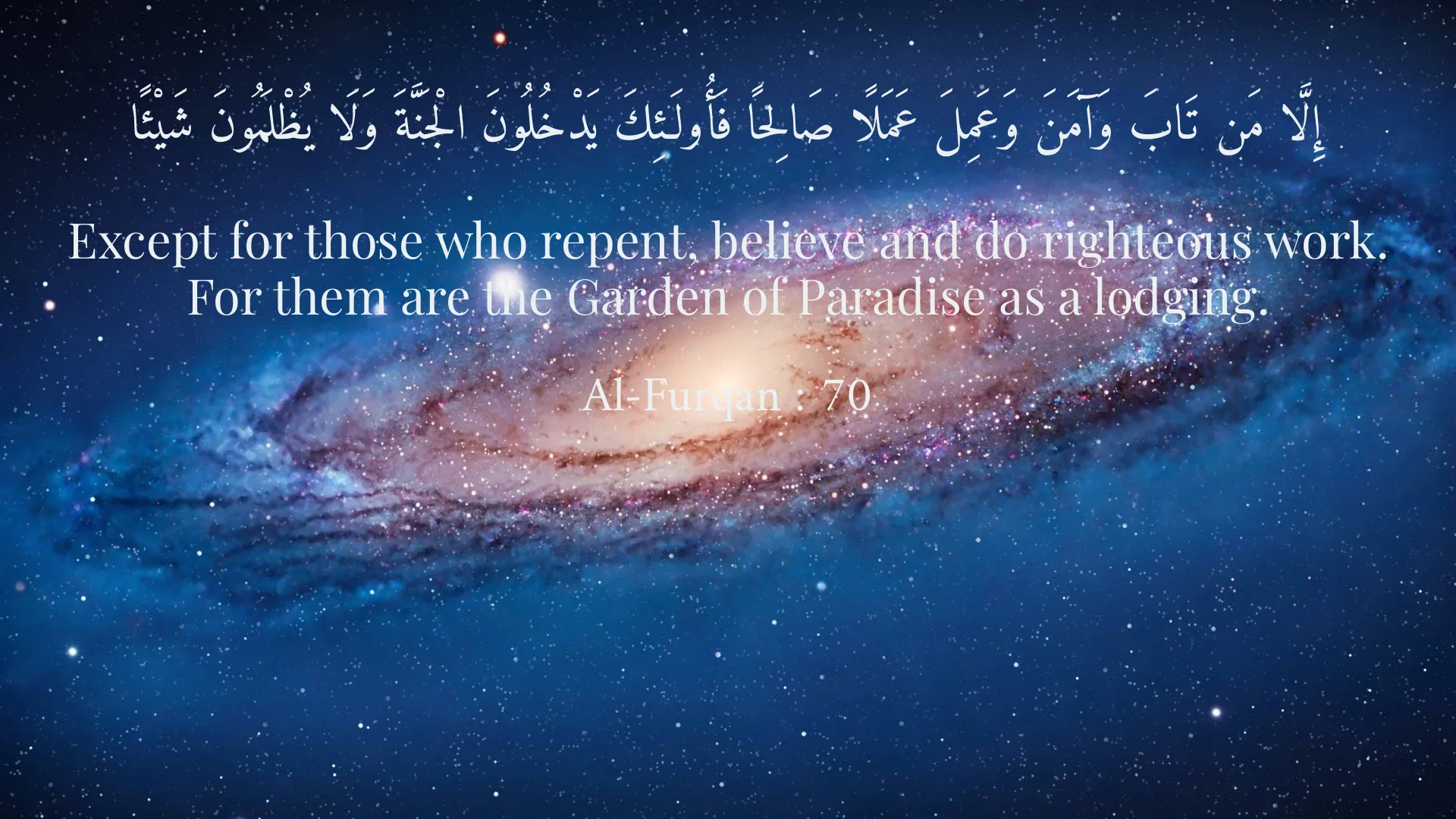
إِلَّا مَن تَابَ وَآمَنَ وَعَمِلَ عَمَلًا صَالِحًا فَأُولَـئِكَ يَدْخُلُونَ الْجَنَّةَ وَلَا يُظْلَمُونَ شَيْئًا
Except for those who repent, believe and do righteous work. For them are the Garden of Paradise as a lodging.
Al-Furqan : 70
يَا عِبَادِي الَّذِينَ آمَنُوا لَا تَقْنَطُوا مِن رَّحْمَةِ اللَّهِ ۚ إِنَّ اللَّهَ يَغْفِرُ الذُّنُوبَ جَمِيعًا ۚ إِنَّهُ هُوَ الْغَفُورُ الرَّحِيمُ
O My servants who have believed, do not despair of the mercy of Allah. Indeed, Allah forgives all sins. Indeed, it is He who is the Forgiving, the Merciful.
Az-Zumar : 53
Short Story
One day, a man named Ali was facing big problems and had committed major sins. He felt hopeless about his life due to his actions. But one day, he decided to repent to Allah and seek forgiveness. Ali cleansed his heart and went through a tough period. He prayed during his last moments, shed tears, and asked Allah for forgiveness. By the virtue of his repentance, he achieved a deep sense of peace and decided to rebuild his life. Now, Ali not only confessed his sins, but he also built a new life for himself and focused all his efforts on good deeds.