Quranic Answer
Earthly love, an emotion that connects us to other human beings and to the material world around us, plays an essential role in shaping our understanding of divine love. This intricate relationship between earthly and divine love presents itself as a recurrent theme in religious texts, particularly in the Quran. Within its verses, we find clear indications that our affections for the tangible aspects of life can illuminate our comprehension of the transcendent love that comes from God. By exploring this theme, we can uncover the layers of meaning woven throughout the Quran that guide us on our spiritual journey towards divine love. In Surah Al-Imran, verse 31, Allah makes a compelling statement: 'Say, 'If you love Allah, then follow me so that Allah will love you.'' This verse emphasizes that true love manifests not merely in verbal declarations or fleeting feelings but requires an active commitment to follow God's commands. The notion here is striking: our earthly loves and our adherence to divine principles are interconnected. When we find authentic love and divinity in our relationships with fellow human beings, we are, in effect, drawing nearer to the divine. Earthly love occupies a unique space in our lives. It nurtures our emotional well-being, fosters connection with others, and can teach us about compassion, sacrifice, and selflessness. In many ways, it serves as a mirror reflecting the qualities that God exemplifies and desires from His servants. The kindness we display towards one another, the loyalty we nurture in our relationships, and the empathy we practice in our daily interactions can all guide us towards a deeper appreciation of Allah's divine traits. This connection between the earthly and the divine reinforces the importance of love in our spiritual practice. Moreover, the Quran provides further insights into the relationship between love for God and love for humanity. In Surah Al-Baqarah, verse 165, Allah articulates a cautionary message: 'And among the people are those who take other than Allah as equals [to Him] and love them as they should love Allah.' This verse starkly illustrates that while earthly relationships and affections are significant, they should never overshadow our love for God. The implication is clear: our love for God should take precedence and be the center of our hearts. Consequently, the earthly loves we experience—whether for family, friends, or community—should serve as avenues that draw us closer to Allah. To better grasp this connection between earthly love and divine affection, one may consider the varying forms of love that exist in our lives. There is the love of a parent for a child, which is filled with instinctual care and protection; the affection shared between friends, marked by trust and shared experiences; and the romantic love that can ignite passion and companionship. Each of these forms of love offers us insight into the attributes of divine love. For instance, a parent's unconditional love for their child may mirror Allah's endless compassion and mercy toward humanity. Similarly, genuine friendship reflects the bond of loyalty and steadfastness that believers are called to cultivate among one another. Yet, as the Quran warns, earthly loves should not become objects of idolatry. The tendency to elevate human affection above the love for God can lead one astray. When individuals devote themselves solely to earthly pursuits or relationships, they risk neglecting their spiritual obligations and missing the profound lessons that earthly love is meant to impart. By learning to prioritize our relationship with Allah while also cherishing our earthly connections, we can create a balanced life that honors both dimensions of love. Furthermore, recognizing that earthly love can serve as a bridge to divine love encourages a more intentional approach to our relationships. It invites us to reflect on the nature of our affections and to ensure they align with divine principles. For instance, in nurturing love for our families and communities, we can embody patience, forgiveness, and understanding—qualities lauded in the Quran. These acts of love not only strengthen our earthly bonds but can also fortify our divine relationship with God. Let us not forget the significance of intention in both earthly and divine love. The purity of our intentions in relationships can elevate ordinary interactions into acts of devotion. Caring for a neighbor, offering help to a friend in need, or simply sharing kindness with a stranger can be viewed as opportunities to practice our love for God. The connection between these actions and divine love becomes especially evident when we recognize that our earthly love can be an expression of our devotion and service to Allah. In summary, the interplay between earthly love and divine love is a central theme in the Quran that showcases how our human experiences can lead us to a more profound understanding of the divine. Through loving one another and following God's commands, we can cultivate a deeper relationship with Allah. The Quran reminds us that while our earthly loves are valuable, they should always guide us towards a greater affection for God. Thus, by nurturing our earthly relationships with the intention of embodying divine attributes, we can walk the path of servitude to Allah and ultimately achieve a heightened sense of love that transcends the confines of this world. In conclusion, earthly love should not be viewed as separate from divine love; rather, it is an integral part of our spiritual journey. Through our connections with others and our hearts' inclinations, we can discover avenues to strengthen our bond with Allah, resonating with the essence of love that binds humanity and divinity together.
Related Verses
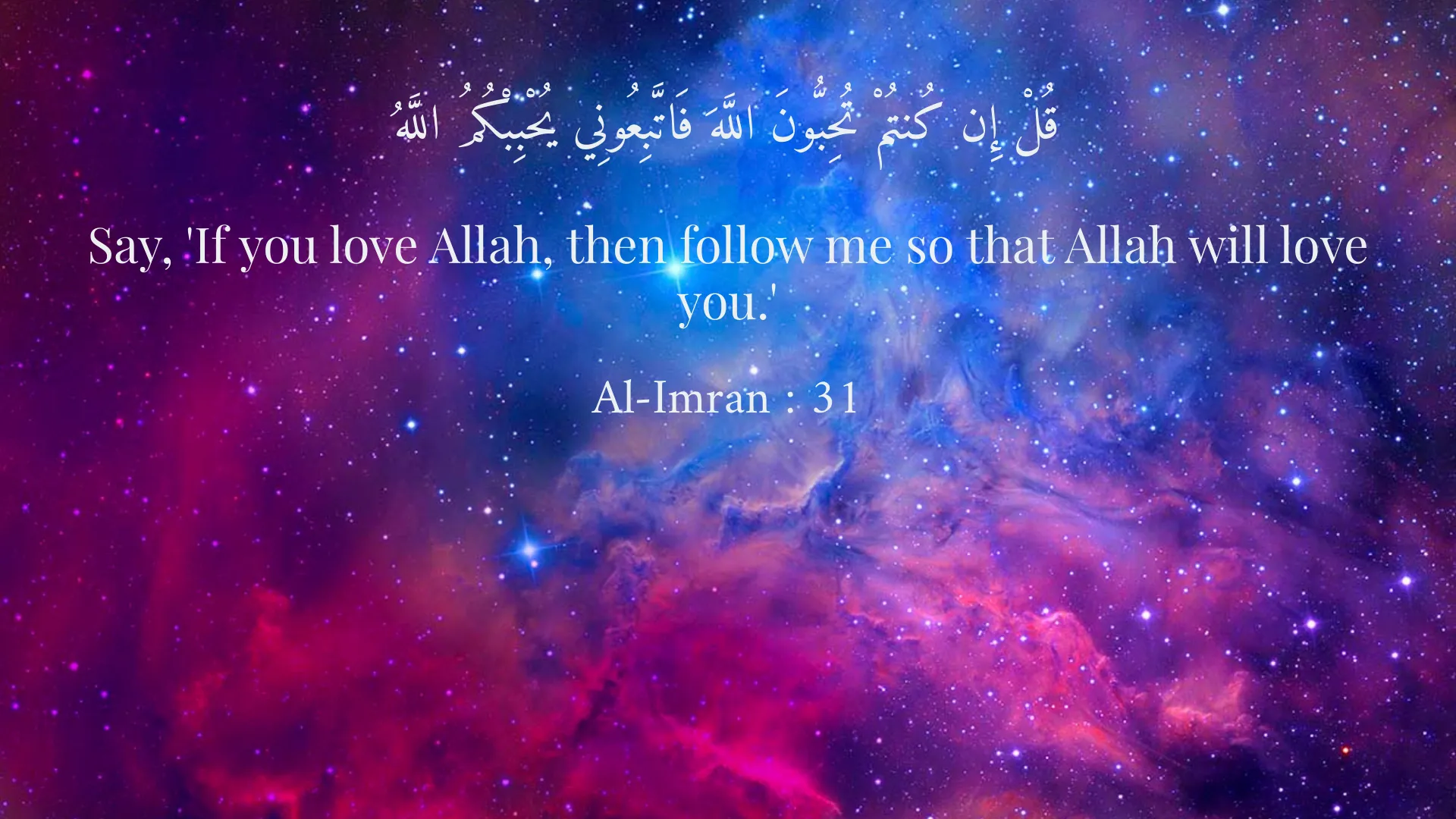
قُلْ إِن كُنتُمْ تُحِبُّونَ اللَّهَ فَاتَّبِعُونِي يُحْبِبْكُمُ اللَّهُ
Say, 'If you love Allah, then follow me so that Allah will love you.'
Al-Imran : 31
وَمِنَ النَّاسِ مَن يُتَّخِذُ مِنْ دُونِ اللَّهِ أَندَادًا يُحِبُّونَهُمْ كَحُبِّ اللَّهِ
And among the people are those who take other than Allah as equals [to Him] and love them as they should love Allah.
Al-Baqarah : 165
Short Story
Once upon a time, a young man named Amir fell in love with a girl living in his neighborhood. His love for her was so deep that he thought about her all day. Alongside his earthly love, he tried to get closer to God. Through prayer, supplication, and helping others, he felt his heart filling with divine love. Ultimately, he realized that true love finds its meaning only in the affection for God and His servants, and that his earthly love helped him to draw closer to divine love.