Quranic Answer
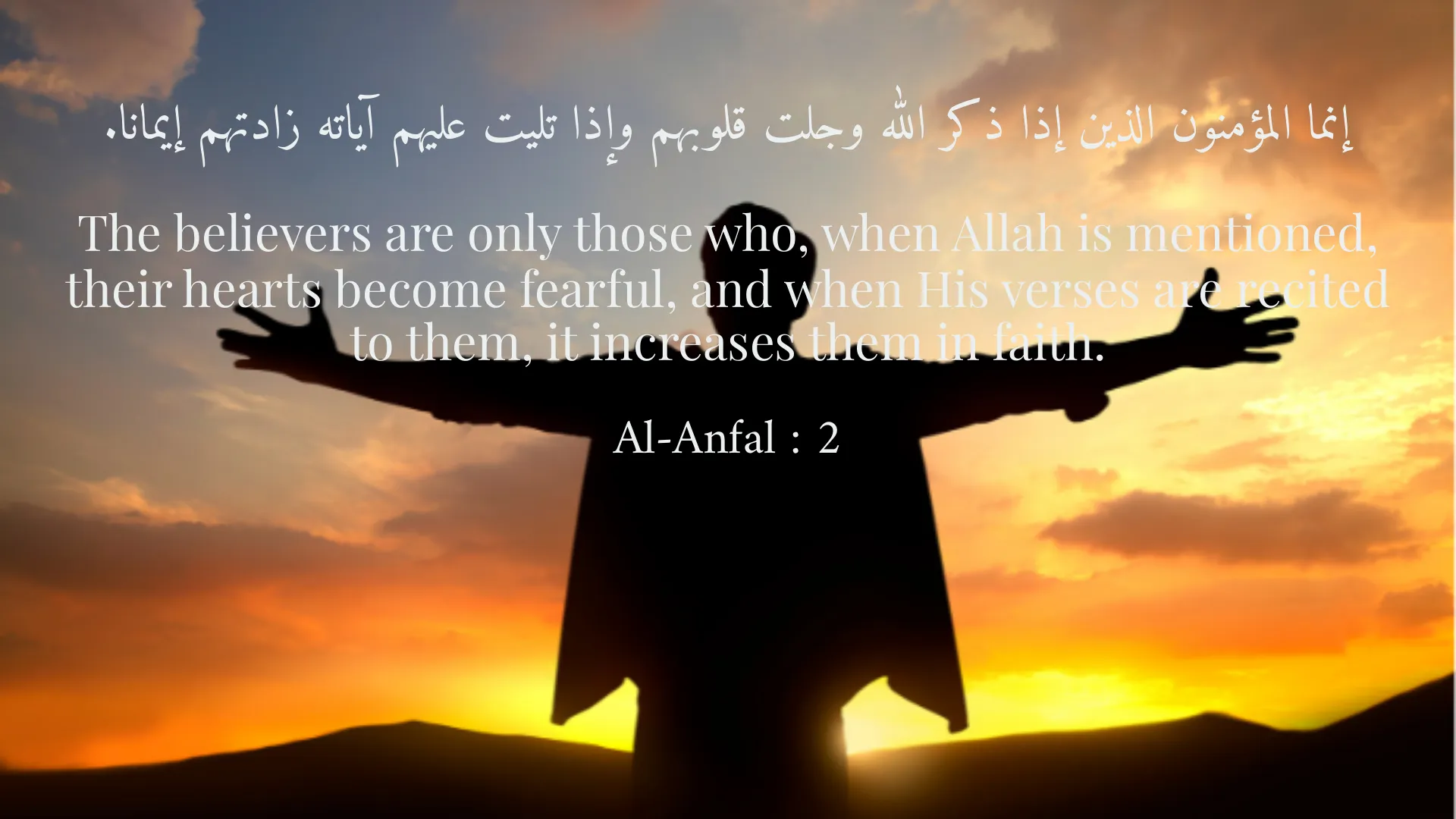
Faith is a fundamental aspect of human existence, often intertwining with individual beliefs, values, and perceptions of reality. Within the religious context, particularly in Islam, faith holds enormous significance as it shapes the beliefs and practices of believers. According to Islamic teachings, faith is not a static entity; rather, it is susceptible to increases and decreases as life unfolds. The Holy Quran speaks to the dynamic nature of faith, emphasizing the importance of nurturing it through various means. In the Quran, a critical verse that elucidates the fluctuation of faith is found in Surah Al-Anfal, verse 2, which declares, 'The believers are only those who, when Allah is mentioned, their hearts become fearful, and when His verses are recited to them, it increases them in faith.' This verse encapsulates the essence of true believers—they respond emotionally and spiritually when they are reminded of Allah. The imagery of hearts trembling upon the remembrance of Allah signifies a profound connection, a resonance with the divine presence that fortifies their faith. The mention of faith's increase through the recitation of Allah's verses offers believers a directive—they must engage actively with the Quran. It serves as a continuous source of inspiration and enlightenment. Regular recitation of the Quran not only reinforces one's faith but also introduces a sense of tranquility and purpose in the believer's life. Thus, this forms the basis of how faith evolves over time and how believers can consciously work towards nurturing their spiritual state. However, life is replete with challenges and trials that can affect one's faith. These trials, while difficult, are also opportunities for growth. As indicated in Surah Al-Baqarah, verse 286, 'Allah does not burden a soul beyond that it can bear.' This verse is pivotal; it recognizes the individuality of believers, affirming that faith operates on different levels and that everyone possesses unique strengths and weaknesses. Individuals are encouraged to develop resilience in the face of adversity, recognizing their limitations while striving to enhance their faith. This notion prompts believers to engage in self-assessment, introspection, and a genuine push to build their spiritual fortitude. Furthermore, in Surah Fatir, verse 32, Allah clarifies the significance of selected individuals and their relationship with the divine, stating, 'Then We made heirs of the Scripture those We had chosen from Our servants.' This verse points to a divine trust placed in certain individuals, suggesting that faith is not merely about personal belief but also about being part of a larger spiritual legacy. Those who inherit the scripture bear a responsibility to uphold and propagate its teachings. The phrase 'those We had chosen' emphasizes that the path to heightened faith is often accompanied by the divine's selection—individuals must endeavor to demonstrate their commitment to this selection by living righteously and striving for the betterment of their faith. One of the most integral ways to strengthen faith is through the practice of prayer. Salah (the five daily prayers) is an obligatory act for Muslims and serves as a direct link between the believer and Allah. Regular prayers instill discipline and mindfulness within believers, acting as reminders of the divine presence throughout the day. This routine fosters a spiritual environment conducive to an evolving faith perspective. Moreover, good deeds serve as a catalyst for faith enhancement. Engaging in acts of kindness, charity, and compassion reinforces the principles outlined in the Quran. By acting on these tenets, believers experience an innate sense of fulfillment which can engender a stronger connection to their faith. The role of community is also crucial in the nurturing of faith. In Islam, believers are encouraged to congregate, share knowledge, and support one another in their spiritual journeys. This brotherhood creates a network of trust and solidarity, which can uplift individuals in their moments of weakness. The collective effort to remind and motivate each other amplifies the overall faith within the community, making it a shared responsibility to care for one another's spiritual well-being. In summary, the journey of faith in Islam is not linear; it ebbs and flows based on one's experiences, actions, and surroundings. The teachings of the Quran provide profound guidance, imparting wisdom on how believers can cultivate their faith. Surah Al-Anfal, Surah Al-Baqarah, and Surah Fatir underscore the necessity of mindful engagement with one's faith through personal efforts, prayer, good deeds, and community support. Believers are encouraged to remain steadfast, seeking increased faith and growing closer to Allah through every challenge encountered. Each believer must remember that faith can waver but is ultimately a dynamic process wherein lies endless opportunities for enhancement and connection with the divine. The call is clear: strive always for greater faith, embrace the challenges, celebrate the growth, and recognize the immense trust placed in believers by Allah.
Related Verses
إنما المؤمنون الذين إذا ذكر الله وجلت قلوبهم وإذا تليت عليهم آياته زادتهم إيمانا.
The believers are only those who, when Allah is mentioned, their hearts become fearful, and when His verses are recited to them, it increases them in faith.
Al-Anfal : 2
لا يكلف الله نفسا إلا وسعها.
Allah does not burden a soul beyond that it can bear.
Al-Baqarah : 286
ثم أورثنا الكتاب الذين اصطفينا من عبادنا.
Then We made heirs of the Scripture those We had chosen from Our servants.
Fatir : 32
Short Story
One day, Musa was engaged in prayer and prostration, asking Allah to increase his faith. Suddenly, he recalled a verse from the Quran that mentioned that faith is shaped by individual effort and closeness to Allah. From that day on, he decided to pay more attention to the Quran alongside his prayers and strengthen his faith through good deeds towards God's servants. After a while, he felt a special peace and radiance in his heart.