Quranic Answer
Faith is a sentiment and spiritual state that can flourish in an individual’s heart and persist over time. It transcends mere belief; it is an intricate tapestry of conviction, trust, and devotion woven into the very fabric of a person’s being. In many religious traditions, faith serves as the bedrock upon which spiritual understanding and ethical behavior are built. Among these traditions, Islam places a profound emphasis on faith, encapsulating its essence and importance within the verses of the Holy Quran. This sacred text contains numerous references to the concept of faith, underscoring its significance in the lives of believers and delineating the characteristics that define a true believer. The Quran serves not only as a guide for spiritual matters but also as a profound reminder of the responsibilities that come with faith. In verse 26 of Surah Al-Baqarah, Allah states: "Indeed, it is only those who believe in Our verses who, when reminded of them, fall down in prostration and exalt Allah with praise of their Lord, and they are not arrogant." This powerful verse vividly illustrates that true believers demonstrate humility before the divine signs and show reverence to God. The act of prostration symbolizes submission and acknowledgment of divine greatness. The mention of humility as a characteristic of believers highlights that faith fosters a sense of respect and dignity in the relationship between the believer and Allah. Moreover, this humility is not simply an outward expression but is rooted in the believer's inner state of heart and mind. It signifies a transformative experience that leads individuals to recognize their limitations and the grandeur of the Creator. When believers are reminded of the divine messages, they respond with devotion and gratitude rather than arrogance. This plea for humility resonates universally, suggesting that the disposition of worship is an essential attribute of faith, irrespective of cultural or personal contexts. Additionally, verse 5 of Surah At-Tahreem emphasizes another critical pillar of faith: justice. It states, "O you who have believed, be persistently standing firm in justice, witnesses in Allah's cause." Here, the Quran intertwines faith with the concept of justice, illustrating that belief is not a passive state but an active commitment to uphold righteousness and truth. For believers, faith manifests in action; it calls them to be advocates for justice, serving not only to uphold their moral integrity but also to contribute positively to society at large. What is remarkable about this verse is how it elevates the notion of justice to a divine imperative. Believers are urged to be vigilant, persistent, and unwavering in their pursuit of justice, reaffirming that faith should inspire actions aimed at fostering social equity and compassion. The Quran’s call to be witnesses for Allah emphasizes the dual responsibility of believers—to witness the truth and to act upon it. Thus, faith becomes a catalyst for social change, urging individuals to step forward in the face of injustice, advocating for the rights of others, and living their beliefs through tangible acts of kindness and fairness. In a broader context, the relationship between faith, justice, and good deeds is intricately linked. By promoting justice, believers inherently express their faith through their actions. They create a ripple effect, inspiring others to engage in similar endeavors, thus amplifying the impact of their faith beyond the individual level. Faith, therefore, not only nurtures personal virtues but also fosters a communal spirit aimed at bettering the society, thus transforming the spiritual journey into a collective movement towards goodness. Furthermore, the mechanisms of faith extend into personal resilience as highlighted in verse 286 of Surah Al-Baqarah: "Allah does not burden a soul beyond that it can bear." This verse encapsulates a fundamental principle of faith; God is aware of an individual's limitations and capacities, and thus, not only does He grant believers strength to face trials, but He also instills hope and reassurance through this knowledge. The assertion that Allah does not burden a soul beyond what it can bear speaks volumes about the relationship between faith and personal growth. Believers are encouraged to see challenges as opportunities for growth rather than insurmountable obstacles. This perspective imbues them with a sense of purpose, prompting them to trust in God’s wisdom and timing, thus revitalizing their faith in difficult times. Consequently, faith emerges as a source of strength, empowerment, and inspiration, guiding individuals through life’s labyrinthine experiences and challenges. Through the verses of the Quran, a profound understanding of faith is cultivated, revealing its intricacies and its essential role in the lives of individuals. Not only can faith persist within individuals, but it must also be a sustained source of inspiration and guidance. It fosters humility, promotes justice, and provides resilience, shaping individuals into conscientious members of society. From the insights gleaned from the Quran, one can conclude that faith is not merely an isolated sentiment but a dynamic and powerful force that can transform lives, inspire communities, and cause ripples of positive change throughout the world. In conclusion, faith, as articulated in the Quranic verses, serves as a multifaceted concept that interlaces personal conviction with collective responsibility. It is a guide that dictates how individuals interact with themselves, their Creator, and society as a whole. Ultimately, nurturing an enduring faith leads to a fulfilling and meaningful life defined by humility, justice, and resilience. As believers immerse themselves in their faith, they foster a community that not only uplifts the spirit but also contributes to the betterment of the world, thereby embodying the true essence of faith in action.
Related Verses
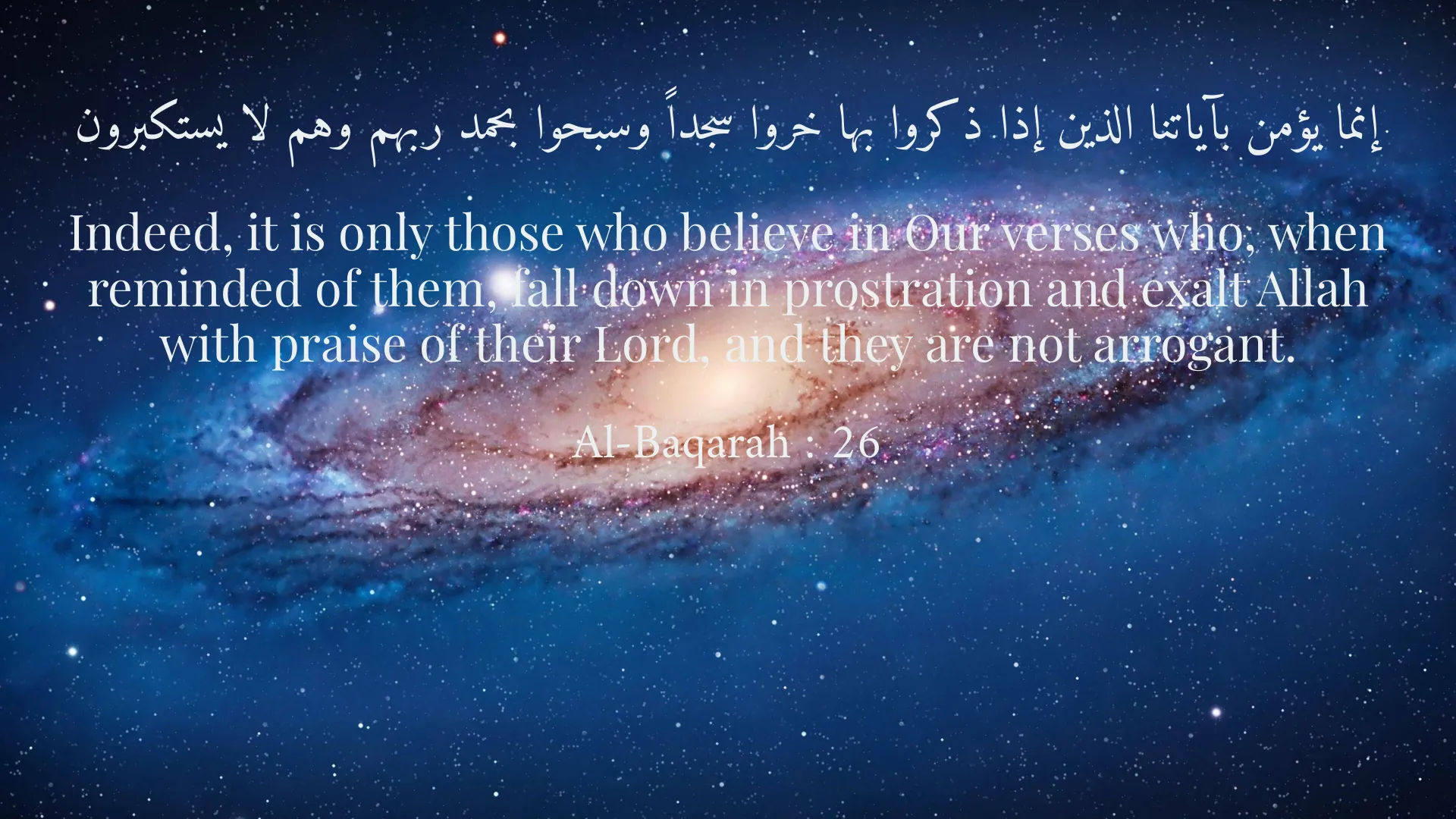
إنما يؤمن بآياتنا الذين إذا ذكروا بها خروا سجداً وسبحوا بحمد ربهم وهم لا يستكبرون
Indeed, it is only those who believe in Our verses who, when reminded of them, fall down in prostration and exalt Allah with praise of their Lord, and they are not arrogant.
Al-Baqarah : 26
يَا أَيُّهَا الَّذِينَ آمَنُوا كُونُوا قَوَّامِينَ لِلَّهِ شُهَدَاءَ بِالْقِسْطِ
O you who have believed, be persistently standing firm in justice, witnesses in Allah's cause.
At-Tahreem : 5
لا يكلف الله نفسًا إلا وسعها
Allah does not burden a soul beyond that it can bear.
Al-Baqarah : 286
Short Story
Once upon a time, a young man named Sajjad felt that his faith was diminishing. He attended prayers daily but sensed a disconnection with God. One night, he decided to go to the seaside and speak to God. As he stood there, looking up at the sky, he fervently asked for his faith to be strengthened. Shortly after, he felt a new and profound feeling within him. From that moment, Sajjad not only continued his prayers but also engaged in good deeds, infusing his life with renewed faith.