Quranic Answer
The Holy Quran, as a sacred text revered by Muslims around the world, serves as a profound source of guidance and wisdom for individuals striving to live a righteous life. Among its many teachings, the concept of repentance (Tawbah) stands out prominently, emphasizing the mercy of Allah and the transformative power of good deeds. The verses in the Quran regarding repentance offer not just a pathway to redemption but also a reflection of the unconditional love and forgiveness that God extends to His creation. This article delves into the nuances of repentance as articulated in the Quran, specifically highlighting Surah Al-Furqan, verse 70, and Surah Az-Zumar, verse 53, and their implications for personal growth and spiritual resilience. Repentance, in the Islamic context, is understood as a return to God after having strayed from the righteous path. It is an acknowledgment of one's past mistakes and a sincere intention to rectify them. In Surah Al-Furqan, verse 70, Allah conveys a powerful message that resonates deeply with believers: "And those who do not testify to falsehood, and when they pass near ill speech, they pass by with dignity. And those who, when they are reminded of the verses of their Lord, do not fall upon them deaf and blind. And those who say, 'Our Lord, grant us from among our wives and offspring comfort to our eyes and make us an example for the righteous.'" The essence of this verse captures the transformative potential of repentance, belief, and the performance of good deeds. The first significant aspect emphasized in this verse is the notion of repentance. Allah assures that those who sincerely turn back to Him, regardless of their sins, have an opportunity to let their past transgressions become a thing of the past. It is crucial to recognize that the desire for repentance must be accompanied by the genuine intention to believe in Allah's oneness and commit to performing righteous deeds. This combination enables a person to transcend their former misdeeds and sets the foundation for a brighter future. The light of faith and good actions serves to illuminate the darkness that often shrouds one's past mistakes. Moreover, the Quran consistently conveys that the mercy of Allah is boundless. In Surah Az-Zumar, verse 53, Allah invites His servants to never lose hope, stating, "O My servants who have believed, fear your Lord. For those who do good in this world is good, and the earth of Allah is spacious. Indeed, the patient will be given their reward without account." This verse encourages believers to embrace the notion of hope, reminding them that no matter how grave their sins may seem, the mercy of God can encompass them. Through genuine repentance and a commitment to good deeds, individuals can indeed elevate themselves and reshape their destinies. In daily life, every person faces the inevitability of mistakes. These missteps often lead to feelings of guilt, remorse, and sometimes despair. However, the Quran highlights that what is truly of importance is the act of returning to God with a pure heart. When individuals strive to improve themselves and seek forgiveness for their shortcomings, they are taking steps that signify spiritual growth. By dedicating oneself to acts of kindness, charity, and moral integrity, one begins to construct a new identity—an identity that is no longer defined by past faults but by the commitment to righteousness. To elaborate further, the potential for transformation through good deeds is a recurring theme in Islamic teachings. Engaging in acts of righteousness serves multiple purposes: it uplifts the community, strengthens the bonds of empathy and compassion, and creates a ripple effect of positivity. Good deeds are not only acts of worship but also social responsibilities towards others. They embody the principles of justice and equity within society. The more actively a person engages in good, the more they reinforce their resolve to distance themselves from sinful acts. In this way, good deeds function as a protective shield—guarding one from temptations and elevating one’s spirit. Additionally, the importance of community support cannot be overstated in the journey of repentance. Surrounding oneself with individuals who encourage positive change can have a profound impact. The collective hope and faith shared amongst a community provide strength to those in need of guidance. In Islam, the concept of Ummah stresses unity and mutual support, reminding believers that they are not alone in their struggles. They share their burdens and experiences, paving the way for transformation on both personal and communal levels. The message of hope embedded in these scriptures illustrates the importance of resilience in the face of adversity. As individuals navigate through life's challenges, the act of seeking forgiveness fosters a spirit of perseverance. It empowers seekers to stand firm against the trials of life with the understanding that their past does not dictate their future. Instead, each new day offers the possibility of renewal—a fresh start characterized by genuine self-improvement and a stronger connection to God. In conclusion, the Holy Quran delivers a resounding message about the power of repentance and the transformative nature of good deeds. Through verses such as Surah Al-Furqan, 70 and Surah Az-Zumar, 53, believers are reminded of the infinite mercy of Allah and the limitless potential for personal redemption. As individuals falter and make mistakes in their lives, what holds the utmost importance is their willingness to return to God with humility and a pure heart. The journey towards righteousness may be fraught with challenges, but it is essential to embrace the hope that lies within—after all, God's mercy is always open to His servants who strive for goodness. Therefore, let us take each step toward righteousness, recognizing it as a beacon of light guiding us away from the darkness of our past.
Related Verses
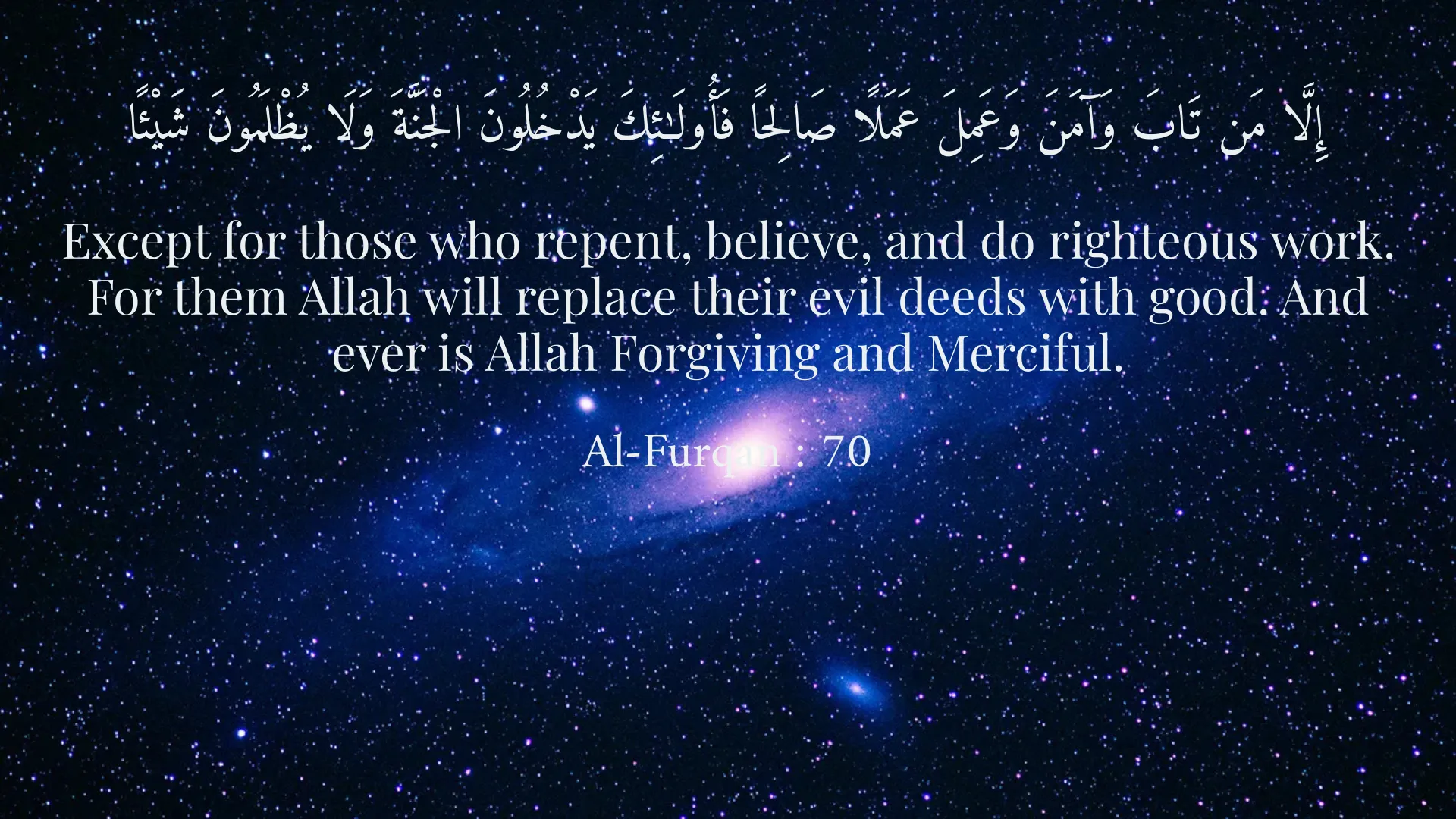
إِلَّا مَن تَابَ وَآمَنَ وَعَمِلَ عَمَلًا صَالِحًا فَأُولَـٰئِكَ يَدْخُلُونَ الْجَنَّةَ وَلَا يُظْلَمُونَ شَيْئًا
Except for those who repent, believe, and do righteous work. For them Allah will replace their evil deeds with good. And ever is Allah Forgiving and Merciful.
Al-Furqan : 70
قُلْ يَـعِبَادِيَ الَّذِينَ آمَنتُمُ اتَّقُوا رَبَّكُمْ لِلَّذِينَ أَحْسَنُوا فِي هَـذِهِ الدُّنْيَا حَسَنَةٌ ۖ وَأَرْضُ اللَّهِ وَاسِعَةٌ ۖ إِنَّمَا يُوَفَّى الصَّابِرُونَ أَجْرَهُمْ بِغَيْرِ حِسَابٍ
Say, 'O My servants who have believed, fear your Lord. For those who do good in this world is good, and the earth of Allah is spacious. Indeed, the patient will be given their reward without account.'
Az-Zumar : 53
Short Story
One day, a man traveled to a city. In his youth, he had made many mistakes and regretted his past. During this journey, he met a religious scholar and sought advice. The scholar told him, 'Every individual has a chance to compensate for their past. If you ask Allah and practice righteousness, you can reach Paradise.' This statement resonated with the man. He decided to repent and sincerely strive to get closer to Allah.