Quranic Answer
In the Holy Quran, the significance of human intention and its importance is emphasized profoundly throughout various verses. The concept of intention is vital in Islam, as it serves as the foundation for all actions. This central theme finds notable reference in Surah Al-Baqarah, particularly in verse 277, which states, "Indeed, those who have believed and done righteous deeds will have the Gardens of Paradise for them, wherein they abide eternally; they will not desire from it any transfer." This powerful verse encapsulates the essence of the relationship between faith, intention, and righteous deeds. The Quran encapsulates the belief that both intention and actions are intertwined; the sincerity of one's heart plays a pivotal role in determining the value of one’s deeds. The highlighted verse underscores that actions must stem from a place of genuine belief and righteous intentions. Merely performing acts of worship or good deeds without the nourishing foundation of intention may not hold the same weight in the eyes of Allah. Therefore, this verse serves as a reminder to believers that to achieve an eternal place in the Gardens of Paradise, one must engage not only in righteous deeds but must do so with the correct intentions at heart. The profound wisdom found within these lines elevates the discourse around how believers ought to approach their actions in life. Furthermore, the Prophet Muhammad (peace be upon him) emphasized the significance of intentions when he stated, "Actions are judged by intentions." This hadith further clarifies that the motivation behind an action is crucial for its acceptance by Allah. In Islam, it is established that if someone has the intention to perform a good deed but is unable to follow through due to unforeseen obstacles or circumstances beyond their control, Allah will reward them for the sincere intention. This demonstrates Allah's mercy and understanding of human limitations, illustrating that He values the intent behind actions as highly as the actions themselves. Hadith literature enriches the Islamic perspective on intention. The concept of niyyah (intention) is critical in various acts of worship, including prayer, fasting, charity, and even mundane daily routines. For instance, acting with a good intention while going about one’s daily tasks, like providing for one’s family or pursuing education, also falls within the realm of righteous deeds that can earn a believer merit. This concept extends into every aspect of life, ensuring that Muslims are conscious of their motivations, thereby nurturing a life replete with purpose and significance. In addition to the emphasis on good intention, Surah Al-Mu’minun illustrates a direct connection between belief and a mindful remembrance of Allah. In verse 63, it states, "Those who believe remember the signs of Allah." This verse highlights the internal state of a believer who not only holds faith but continually reflects upon the divine signs present in the universe. The act of remembering Allah induces a spiritual awareness that inherently guides a believer towards positive intentions and righteous behavior. The interconnectivity between intention and consciousness of Allah suggests that a true believer is consistently striving to live a life aligned with divine pleasure. The astute recognition of Allah's signs reinforces the necessity for good intentions in both public and private domains. The continuous acknowledgment of these signs enables beliefs to manifest in one's actions, ensuring that intentions remain pure. Moreover, the topic of intention within Islamic thought also extends to an understanding of the broader implications of personal ethics and morality. Good intentions not only impact the individual but resonate externally, fostering a community built upon moral values and ethical principles. When individuals act with genuine intent, it shapes their interactions and establishes a culture of trust and mutual respect among the community members. As believers navigate their lives, they are reminded that external barriers may arise, but sincere intentions will still yield merit. Whether faced with societal challenges, personal limitations, or unforeseen circumstances, maintaining a good intention fosters resilience and dedication toward righteousness. Believers understanding this principle find solace in the fact that their intentions are recognized and valued by Allah, allowing them to remain steadfast in their faith despite life's trials. In conclusion, the importance of intention in Islam is a profound offering that aligns both the internal motivations and external actions of individuals. The Quran and Hadith illuminate this relationship, guiding believers to cultivate a deep awareness of their intentions. As outlined in Surah Al-Baqarah and reinforced by the statements of the Prophet Muhammad (PBUH), having a good intention serves as a harbinger for attaining Allah’s pleasure and ultimately everlasting success in the hereafter. Thus, Muslims are encouraged to pursue a path enriched with sincere intentions while engaging in righteous deeds. As the Quran reminds us, both faith and intention are indispensable components of the believer's journey, ensuring that one's heart remains pure and one's actions meaningful.
Related Verses
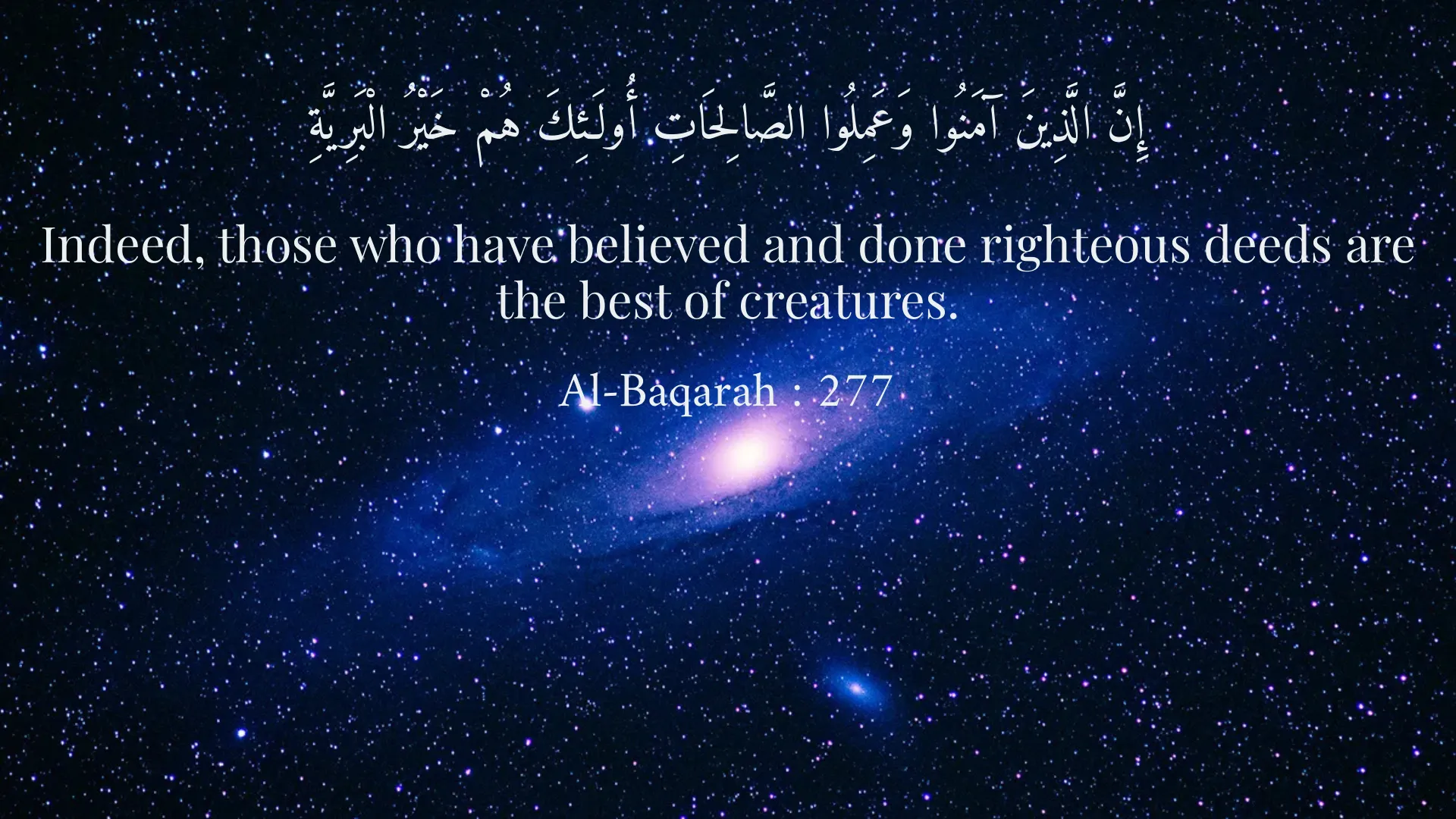
إِنَّ الَّذِينَ آمَنُوا وَعَمِلُوا الصَّالِحَاتِ أُولَـئِكَ هُمْ خَيْرُ الْبَرِيَّةِ
Indeed, those who have believed and done righteous deeds are the best of creatures.
Al-Baqarah : 277
إنما المؤمنون الذين إذا ذكر الله وجلت قلوبهم وإذا تليت عليهم آياته زادتهم إيماناً وعلي ربهم يتوكلون
The believers are only those who, when Allah is mentioned, their hearts become fearful, and when His verses are recited to them, it increases them in faith.
Al-Mu'minun : 63
Short Story
One day, a young man named Sajjad was trying to do a good deed. He decided to help those in need, but due to his financial struggles, he couldn't. However, his good intention remained in his heart. One day a friend immediately encouraged him to pursue his intention and be fruitful for others. Sajjad started with a small deed in his community and soon inspired others by doing good acts. It was then that he realized that intention and efforts towards goodness have a profound impact.