Quranic Answer
Wealth has been a central theme throughout human history, encompassing a broad spectrum of meanings, associations, and implications. In the context of spirituality, particularly within Islamic teachings, the relationship between wealth and servitude to God is critical and complex. The Holy Quran eloquently addresses this connection, allowing believers to navigate their understanding of material possessions while fostering a deeper relationship with their Creator. By exploring relevant verses from the Quran and examining the real-life examples of early Muslims, we can comprehend the significance of wealth in relation to spiritual devotion and servitude to Allah. In Surah Al-Imran, verse 14, Allah states: 'Beautified for people is the love of that which they desire - of women and children, heaped-up sums of gold and silver.' This verse highlights an intrinsic aspect of human nature—the tendency to be captivated by worldly possessions. In this context, wealth is not inherently evil; instead, it symbolizes a trial and temptation ordained by Allah. The Quran recognizes that worldly desires are natural inclinations of human beings, yet it cautions against their potential to detract from one’s relationship with God. The challenge lies in maintaining a balance between enjoying the benefits of wealth and ensuring that it does not become an obstacle in one’s path to spiritual enlightenment. The message that wealth should not supersede the love and worship of Allah is emphasized further in Surah At-Tawbah, verses 34 and 35, where Allah warns the wealthy: 'Indeed, those who hoard gold and silver and spend it not in the way of Allah - give them tidings of a painful punishment.' These verses serve as a stern reminder of the consequences of allowing material wealth to diverge one's focus away from the divine. Wealth, in this context, becomes a source of accountability, calling for responsible management and ethical use. Islam encourages its followers to view wealth as a tool for worship rather than an end goal. When used properly, wealth can serve as a means to further one’s commitment to God and serve the community. Charity, or 'Zakat', is one of the five pillars of Islam, reaffirming the importance of sharing one’s fortune with those in need. Zakat not only purifies one’s wealth but also engenders empathy, generosity, and communal bonds among believers. Instead of hoarding wealth, believers are encouraged to recognize the transient nature of earthly possessions and the eternal value of charitable acts that contribute to the welfare of others and resonate with one’s moral duty. Rather than representing wealth as an obstacle, the Quran encapsulates the notion of trials, with wealth being one of many tests from Allah that can produce good or evil outcomes based on how individuals respond to their fortunes. The true measure of a believer is framed not by the amount of wealth accumulated but rather by their conduct and spirituality in the face of both prosperity and adversity. Therefore, real success in the eyes of Allah is determined by the individual’s will to remain steadfast in servitude to Him, regardless of their material circumstances. The notion that wealth serves as a trial is reinforced by examples from the community of the Prophet Muhammad (PBUH). Many companions of the Prophet were affluent, yet they used their wealth in service of Islam. For instance, Abdur Rahman ibn Awf was a wealthy merchant known for his generosity and support for the Muslim community. Despite his considerable success in business, he actively engaged in various charitable endeavors, ensuring that his wealth contributed to the nurturing of Islam and aiding those in need. His life exemplified the ideal balance—utilizing wealth to serve Allah and uplift others rather than succumbing to greed or selfishness. Similarly, Uthman ibn Affan, who later became the third Caliph of Islam, is known for his considerable wealth and unwavering commitment to the welfare of the Muslim community. He played a crucial role in financing various projects, including the construction of mosques and defense measures for the burgeoning Muslim state. Both Abdur Rahman and Uthman epitomized the Islamic principle that wealth should enhance one's devotion and service to God. The Quran, therefore, not only acknowledges the presence of material desires but provides guidance on how to navigate these temptations effectively. Believers are reminded that it is imperative to approach wealth with humility and mindfulness, recognizing that it is a fleeting aspect of life. Holding onto wealth should not lead to arrogance or self-importance; rather, it should instill a sense of responsibility towards others and a commitment to maintaining one’s spiritual integrity. Moreover, wealth is often linked to power, and with power comes the risk of corruption and entitlement. The Quran warns against the abuse of wealth and influence, highlighting the responsibility that accompanies financial prosperity. This financial accountability serves as a crucial reminder that one’s actions reflect their faith. Using wealth as an instrument of oppression or neglecting social responsibility can lead to dire consequences not only in the hereafter but also in the world today. In conclusion, the relationship between wealth and servitude to Allah according to Islamic teachings is an intricate dance requiring mindfulness, humility, and social responsibility. The Quran serves as a guiding light, pushing believers to understand that wealth is not inherently a sin, but the way it is utilized is deeply reflective of one’s faith. The trials of wealth can elevate or diminish one’s spirituality based on an individual’s choices and actions. By focusing on the ultimate purpose of wealth—to serve God and uplift humanity—believers can navigate the spiritual terrain with grace, honor, and devotion. Thus, wealth becomes not a barrier, but a bridge to a more profound connection with Allah, transforming the notion of materialism into a tool for spiritual ascendance.
Related Verses
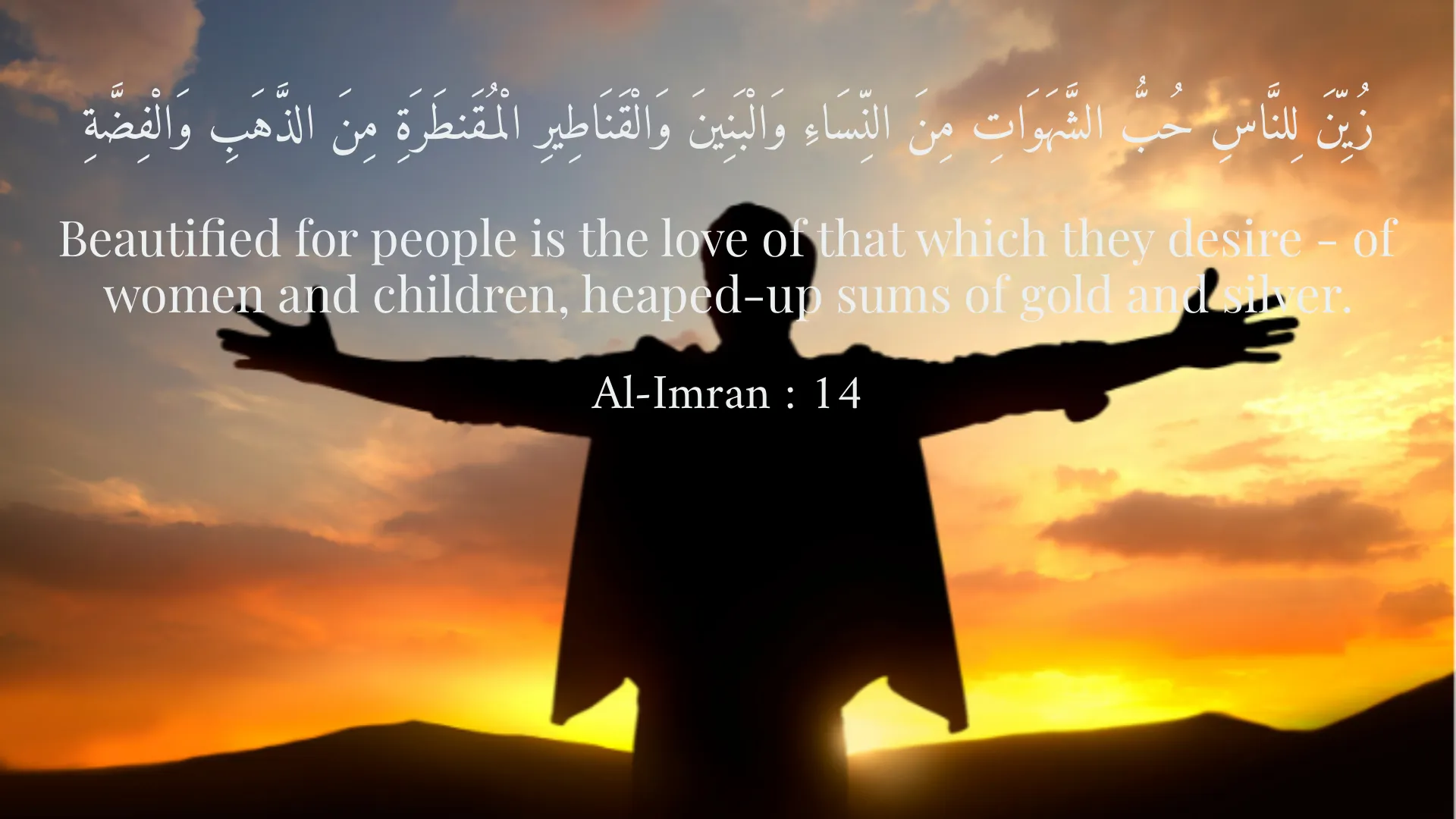
زُيِّنَ لِلنَّاسِ حُبُّ الشَّهَوَاتِ مِنَ النِّسَاءِ وَالْبَنِينَ وَالْقَنَاطِيرِ الْمُقَنطَرَةِ مِنَ الذَّهَبِ وَالْفِضَّةِ
Beautified for people is the love of that which they desire - of women and children, heaped-up sums of gold and silver.
Al-Imran : 14
إِنَّ الَّذِينَ يَكْنِزُونَ الذَّهَبَ وَالْفِضَّةَ وَلَا يُنفِقُونَهَا فِي سَبِيلِ اللَّهِ فَبَشِّرْهُمْ بِعَذَابٍ أَلِيمٍ
Indeed, those who hoard gold and silver and spend it not in the way of Allah - give them tidings of a painful punishment.
At-Tawbah : 34
يَوْمَ يُحْمَى عَلَيْهَا فِي نَارِ جَهَنَّمَ فَتُكْوَىٰ بِهَا جِبَاهُهُمْ وَجُنُوبُهُمْ وَظُهُورُهُمْ
The Day when it will be heated in the Fire of Hell and their foreheads and their sides and their backs will be branded with it.
At-Tawbah : 35
Short Story
One day, a poor boy went to the market to buy some goods. He had two coins in his pocket and asked God to help him buy something good. Suddenly, he came across a wealthy man who owned vast lands but had never helped anyone. The boy thought to himself, 'I have two coins and can help others, but he, despite his great wealth, only thinks of himself.' This realization inspired him to decide that with wealth, he would always serve others.