Quranic Answer
The Concept of Allah's Attention to the Broken-hearted: A Spiritual Exploration Spirituality encompasses various beliefs and practices aimed at connecting individuals with a higher power or consciousness, and in the Islamic tradition, the relationship between believers and Allah is profoundly articulated in the Holy Quran. Among the innumerable teachings within its pages, the verses that speak of Allah's attentiveness to the prayers of the broken-hearted and the needy strongly resonate. These passages are not merely religious text; they present an invitation to the faithful to seek solace in divine mercy during moments of despair. In Surah Al-Baqarah, verse 186, the Quran states, 'And when My servants ask you concerning Me, indeed I am near. I respond to the invocation of the supplicant when he calls upon Me.' This powerful verse encapsulates the essence of Allah's presence and readiness to respond, emphasizing that God is not a distant figure but one who is intimately knowledgeable of the hearts and struggles of His servants. It shows a profound understanding of human nature, particularly the vulnerability and deep emotional pain experienced during times of heartbreak. Heartbreak, whether it arises from personal loss, betrayal, or any other form of emotional trauma, often leads individuals to feel isolated and abandoned. This state of being ignites a stronger yearning for Allah's love and mercy, as people seek refuge in something greater than themselves. The Holy Quran offers numerous verses that bolster the faith of individuals navigating through their heartbreak. They serve to remind believers of the sanctity of supplication and the immense relief that can be found through prayer. The Quran encourages individuals to call out, to implore, and to reflect on their conditions during times of emotional upheaval. For instance, in Surah Ash-Shu'ara, verse 217, Allah commands, 'And proclaim to the people the Hajj. They will come to you on foot and on every lean camel; they will come from every distant path.' While this verse pertains primarily to the pilgrimage, it emphasizes the call to action, urging people to reach out to their Creator. The imagery of the faithful arriving from far and wide symbolizes the universal human experience of suffering and the intrinsic desire to seek sanctuary in the divine amidst trials. Furthermore, in Surah Ghafir, verse 60, Allah reassures His followers with the words, 'And your Lord says, 'Call upon Me; I will respond to you.' Verily, those who scorn My worship will enter Hell in disgrace.' This passage highlights not only Allah's promise of responsiveness but also the critical significance of asking for help through prayer. In these moments of vulnerability, it is essential for the faithful to understand that they must turn to Allah in brokenness, as He desires a relationship built on intimacy and acknowledgment of one’s limitations. The act of crying out and praying has not only psychological implications but also spiritual ones. Engaging with the Quran through reflection and supplication enables individuals to find a channel for their pain. It allows the broken-hearted to vocalize their suffering, transforming their grief into a form of worship. This is significant because it establishes a profound connection between the believer and Allah, where one can trust that their cries will be heard and will yield divine intervention or guidance. The intricate relationship between heartbreak and spirituality can also be mirrored in the works of Muslim scholars and poets, who have often highlighted themes of love and longing for the divine. This includes expressing sorrow and searching for Allah during emotionally tumultuous periods. These reflections illustrate the universal experience of heartbreak as part of the human condition, which is acknowledged within the Quran as a moment for reflection, growth, and turning back to God. It's important to remember that the divine responses to prayers may not always manifest in ways that are immediately recognizable or in the fashion one desires. Sometimes the answer may come as a mere sense of peace, an inner strength, or even through life’s trials that shape character and resilience. It is critical for believers to maintain their faith through the test of time, as the Quran repeatedly emphasizes patience and persistence in prayer. The fundamental belief in Allah’s closeness to humanity is a source of comfort. It offers a sense of belonging for those who find themselves lost in despair. Allah's promise to respond to the broken-hearted invites individuals to partake in the transformative power of prayer, ensuring that their emotional and spiritual needs are met. In conclusion, the power of supplication during times of heartbreak goes beyond mere words; it forms the fabric of the connection between Allah and His servants. The verses from the Quran remind believers that they are never alone in their pain nor are their pleadings unheard. Allah, in His infinite compassion, is ever attentive to the cries of those with broken hearts, ready to infuse their lives with hope, mercy, and guidance. Thus, while the journey through heartbreak can be arduous and laden with trials, seeking Allah through prayer serves as a luminous reminder of His unwavering love and support. In this way, turning towards Allah not only alleviates the burdens of the heart but also rekindles a deeper relationship with the Divine.
Related Verses
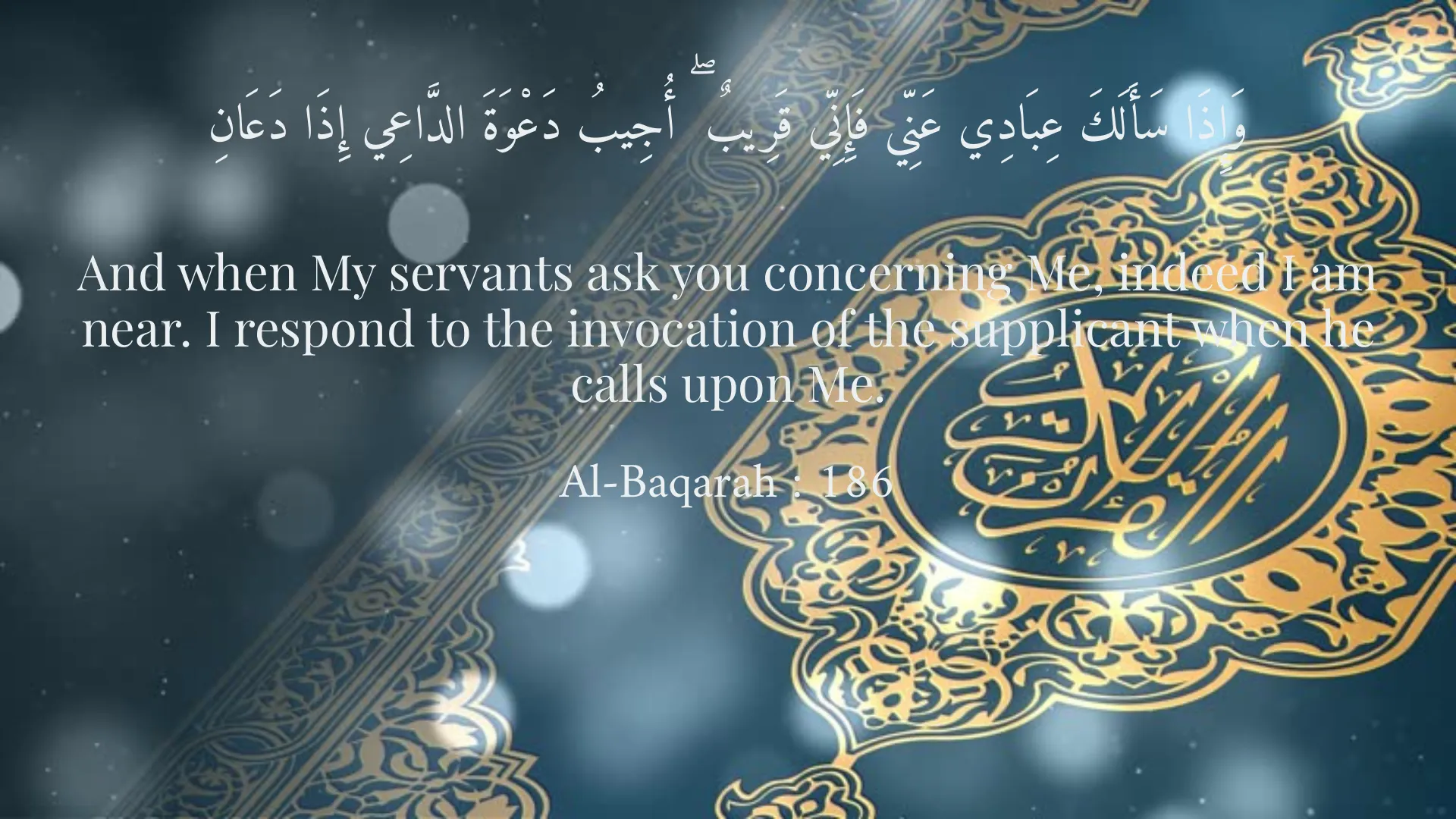
وَإِذَا سَأَلَكَ عِبَادِي عَنِّي فَإِنِّي قَرِيبٌ ۖ أُجِيبُ دَعْوَةَ الدَّاعِي إِذَا دَعَانِ
And when My servants ask you concerning Me, indeed I am near. I respond to the invocation of the supplicant when he calls upon Me.
Al-Baqarah : 186
وَأَذِنْ فِي النَّاسِ بِالْحَجِّ يَأْتُوكَ رِجَالًا وَعَلَى كُلِّ ضَامِرٍ يَأْتِينَ مِنْ كُلِّ فَجٍّ عَمِيقٍ
And proclaim to the people the Hajj. They will come to you on foot and on every lean camel; they will come from every distant path.
Ash-Shu'ara : 217
وَقَالَ رَبُّكُمُ ادْعُونِي أَسْتَجِبْ لَكُمْ ۖ إِنَّ الَّذِينَ يَسْتَكْبِرُونَ عَنْ عِبَادَتِي سَيَدْخُلُونَ جَهَنَّمَ دَاخِلِينَ
And your Lord says, 'Call upon Me; I will respond to you.' Verily, those who scorn My worship will enter Hell in disgrace.
Ghafir : 60
Short Story
One day, Jesus, son of Mary, went by the sea and saw a group of people praying and supplicating. He approached them and listened as they expressed their heartbreak. Jesus joyfully said, 'Those who bear sadness in their hearts are among the closest servants of God. Pray and know for sure that Allah listens to you and will respond to your call.'