Quranic Answer
The Holy Quran, the sacred book of Islam, serves as a guiding beacon for humanity, addressing various aspects of life, including emotions, faith, and the individual's relationship with the Divine. Among the multitude of themes presented within its verses, the significance of human emotions—particularly crying and shedding tears—holds a profound place in Islamic teachings. This article will explore the concept of crying in Islam, the relationship between believers and God, and how such expressions of emotion are perceived within the broader context of faith and spirituality. Crying and shedding tears are not merely human reactions to sorrow or grief; they are recognized as symbols of remorse, repentance, and a deep-seated connection to the Creator in Islam. The Quran articulates that these emotional responses are significant and meaningful, especially when they stem from a place of sincerity and a yearning for forgiveness. In Surah Al-Ma'idah, verse 54, Allah states, "O you who have believed, whoever of you should revert from his religion - Allah will bring forth [for] a people He will love and who will love Him, [who are] humble toward the believers, powerful against the disbelievers. They strive in the cause of Allah and do not fear the blame of a critic." This verse underscores the importance of genuine belief and the disposition of believers who express regret for their past transgressions. It suggests that those who genuinely repent and mourn for their sins are favored and loved by Allah, thus aligning the act of crying with the cultivation of a loving relationship with God. Crying as a Spiritual Connection The act of crying can signify love and attachment to God, characterized by vulnerability and humility. In Islam, a deep emotional state can facilitate a closer connection to the Divine, bringing believers to a state of awareness that their deeds affect their relationship with their Creator. This notion is echoed in different Surahs of the Quran. For instance, Surah Al-An'am, verse 58 declares, "And if I could grasp your purpose, I would have succeeded in finding what pleases me." This verse suggests that Allah brings mercy to those who fear Him and earnestly seek His assistance. Here, the mention of mercy emphasizes that crying and seeking forgiveness are not futile efforts; rather, they are recognized and rewarded by God. Moreover, the Islamic narrations emphasize that when a servant genuinely feels remorse for their sins, God observes them with an eye of mercy. This perspective invites believers to be vulnerable, acknowledging their faults and shortcomings before God, which in turn fosters a deep emotional bond characterized by trust and reliance on Divine grace. The act of crying becomes a pleas for mercy—a profound expression of faith that resonates in the heart of every believer. Crying as a Sign of True Faith In many narrations attributed to Prophet Muhammad (peace be upon him), it is stated that "The eyes of a believer should weep in the face of sin." This profound declaration illustrates how important it is to express one's remorse genuinely. Crying becomes a tool for reflection and self-assessment, prompting believers to examine their actions and their alignment with the teachings of Islam. Such tears, expelled in despair over one's errors or sins, signal an acknowledgment of humanity's fragility and the yearning for Divine forgiveness. Experience and spiritual teachers assert that crying before God signifies a true state of faith—it reveals the heart's sincerity and the earnest desire for spiritual elevation. The emotional act of weeping becomes both an individual and communal experience in worship, allowing believers to unite in their shared humanity and the longing for mercy. This highlights the importance of creating an environment where individuals feel empowered to express their emotions without fear or shame. The Therapeutic Significance of Crying Crying in Islam is not just an emotional reaction, but it can also be viewed through a therapeutic lens. Emotions are intrinsically connected to mental and spiritual health, and crying serves as a powerful outlet for processing feelings of guilt, sorrow, and regret. In a society where emotional expressions are often suppressed, crying can facilitate healing and growth. The Quran encourages believers to embrace their emotions, helping them to navigate their spiritual journeys while affording them the needed avenue to cleanse their souls. In essence, when believers cry before Allah, it is a manifestation of their vast emotional landscape—an interplay between love, fear, hope, and repentance. This multi-faceted relationship becomes enhanced when individuals allow their feelings to surface, thereby fostering a closer stance to God. Tears become a way to navigate the complexities of sinning and the aspiration for grace and mercy. Conclusion In light of this discussion, it can be concluded that crying before God holds a distinguished position in Islam as both a spiritual state and a reflection of true faith. The Holy Quran and the teachings of Prophet Muhammad not only recognize the significance of human emotions, particularly in terms of remorse and repentance but also encourage believers to express their feelings sincerely. The act of shedding tears in prayer or reflection signifies a deep yearning for forgiveness, mercy, and a closer connection to the Divine. In Islam, emotional expressions such as crying are not seen as weaknesses; they are rather viewed as signs of strength and sincerity. The compassionate embrace of one's emotional state reflects an individual's desire to grow spiritually and to cultivate a profound attachment to God. As believers understand and embody this concept, they are encouraged to engage with their emotions, finding solace and grace through authentic repentance and heartfelt connection with their Creator.
Related Verses
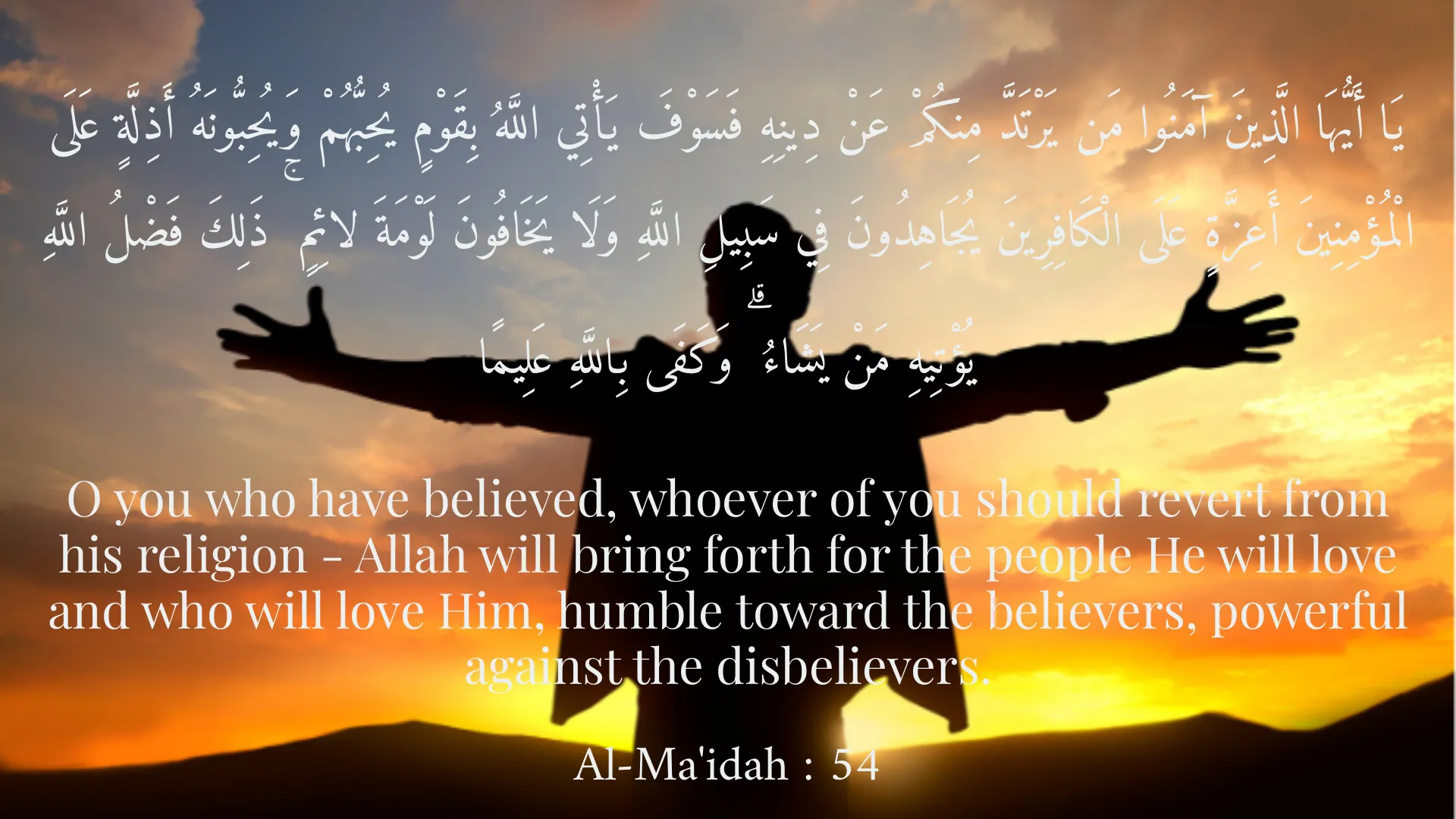
يَا أَيُّهَا الَّذِينَ آمَنُوا مَن يَرْتَدَّ مِنكُمْ عَنْ دِينِهِ فَسَوْفَ يَأْتِي اللَّهُ بِقَوْمٍ يُحِبُّهُمْ وَيُحِبُّونَهُ أَذِلَّةٍ عَلَى الْمُؤْمِنِينَ أَعِزَّةٍ عَلَى الْكَافِرِينَ يُجَاهِدُونَ فِي سَبِيلِ اللَّهِ وَلَا يَخَافُونَ لَوْمَةَ لائِمٍ ۚ ذَلِكَ فَضْلُ اللَّهِ يُؤْتِيهِ مَنْ يَشَاءُ ۗ وَكَفَى بِاللَّهِ عَلِيمًا
O you who have believed, whoever of you should revert from his religion - Allah will bring forth for the people He will love and who will love Him, humble toward the believers, powerful against the disbelievers.
Al-Ma'idah : 54
أُو۟لَـٰئِكَ عَلَىٰ هُدًۭى مِّن رَّبِّهِمْ ۖ وَأُو۟لَـٰئِكَ هُمُ ٱلْمُفْلِحُونَ
It is those who are truly guided by their Lord, and it is those who are the successful.
Al-An'am : 58
Short Story
One day, a man sat in a corner, crying and remembering his Lord. He felt loneliness and distance from God and thought to himself, 'If I come to Him just once with a pure heart, maybe I will win His love.' His tears created a reason for hope and love for God within him, and he realized that God always watches over His servants.