Quranic Answer
The Holy Quran, the sacred text of Islam, serves as a guiding light for millions around the world. It not only provides spiritual guidance but also paints a vivid picture of the hereafter, particularly the concept of paradise. The Quran clearly elucidates that paradise is a reward reserved for God's righteous servants. In this regard, the Quran emphasizes the importance of faith and righteous deeds over mere identification as a Muslim. This article explores the implications of Surah Al-Baqarah, verse 25, and other related verses, shedding light on the prerequisites for entering paradise and the distinction between surface-level faith and profound, actionable belief. Surah Al-Baqarah, verse 25 states, 'And give glad tidings to those who believe and do righteous deeds that they will have gardens in paradise beneath which rivers flow.' This powerful verse serves as a promise to believers who not only profess their faith but also engage in righteous actions. The imagery of gardens and flowing rivers is used to provide a vivid depiction of paradise, evoking a sense of serenity, beauty, and eternal bliss. However, it is essential to understand that this promise is conditional. It is not enough to simply profess being a Muslim; belief must be coupled with deeds that reflect one's faith. The Quran does not restrict the concept of paradise to a particular group; rather, it opens its gates to all those who genuinely believe in God and strive to perform good deeds. This universality of the message highlights the core of Islamic teachings: faith is a living entity, demonstrated through actions and intentions. Surah Al-Imran, verse 185 states, 'Every soul will taste death, and you will only be given your full compensation on the Day of Resurrection. So he who is drawn away from the Fire and admitted to Paradise has certainly attained.' This verse reiterates the importance of striving for righteousness and the implicit rewards that follow. The significance of righteous actions is further emphasized in Surah Al-Anfal, verse 28: 'And know that your properties and your children are but a trial and that Allah has with Him a great reward.' This verse indicates that life’s trials, including wealth and family, are tests designed to gauge an individual’s faith and commitment to righteousness. The emphasis here is clear: it is not merely faith that is valued, but the actions that stem from that faith. Navigating through the various facets of faith and righteous actions reveals an important truth: simply carrying the label of being a Muslim is insufficient for entry into paradise. This assertion does not aim to undermine the identity of Muslims, but rather highlights a deeper understanding of what it truly means to submit to God's will. In Islam, faith and deeds are interlinked; without good actions, faith is rendered incomplete. The Quran encourages believers to reflect on their actions in light of their faith. There are numerous verses that invite individuals to engage in good deeds; such deeds include charity, honesty, kindness, and compassion towards others. By actively participating in these actions, Muslims live out their faith, creating a tangible impact on their communities and the world around them. Doing good is not simply a recommendation, but rather a fundamental aspect of a Muslim’s life that is rewarded by Allah in the hereafter. Moreover, the Quran provides numerous examples of individuals—highlighting that entry to paradise is open to those who exhibit righteousness regardless of their backgrounds or affiliations. Regarded in this light, it becomes evident that the scope of paradise extends beyond the boundaries set by human categorizations. One can be a person of any faith or background, yet if they perform good deeds with sincerity and belief in God, they are on the path to paradise. The distinction between mere identity and authentic faith is central to a Muslim's journey towards righteousness. Relying solely on the label of being a Muslim without active engagement in upholding moral values and performing good deeds is akin to building a house on sand; it lacks the foundation required for spiritual elevation. The Quran repeatedly stresses that believers should not only profess their faith but embody it in their daily lives. In conclusion, the message is clear: the path to paradise is reserved for those who blend their belief with righteous deeds. This notion calls for introspection and a re-evaluation of one's place within the broader framework of faith and action. Thus, it becomes imperative for individuals to recognize that entry into paradise is not a guaranteed outcome of declaring oneself a Muslim, but rather a reward earned through unwavering faith and the pursuit of good deeds. As believers aspire for the gardens of paradise, they must remain diligent, reflecting on their actions daily and striving to improve their connection with God and His creations. Ultimately, this journey is not just about securing a place in paradise but transforming one's life into a testament of faith, leading to divine approval and eternal bliss.
Related Verses
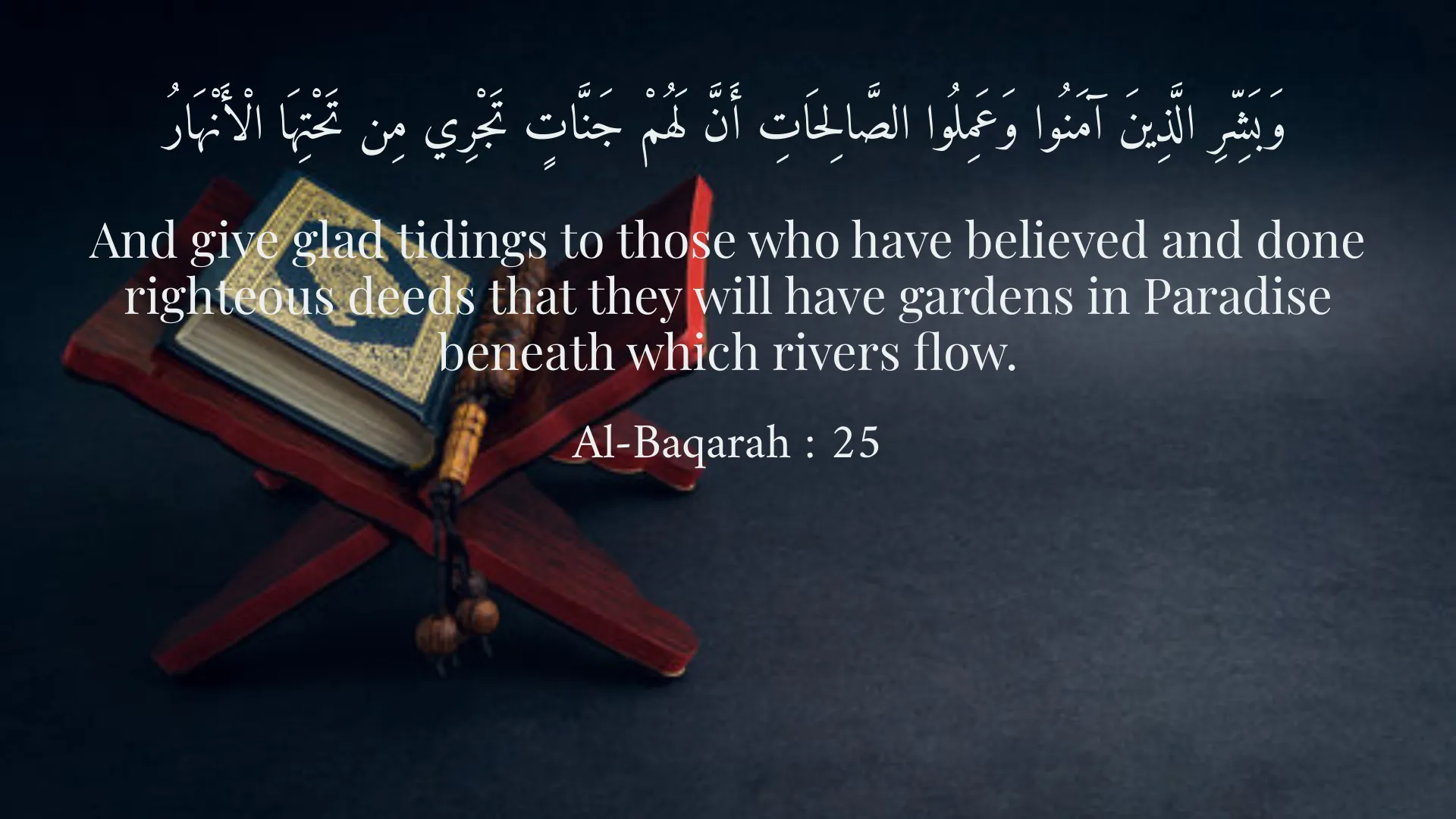
وَبَشِّرِ الَّذِينَ آمَنُوا وَعَمِلُوا الصَّالِحَاتِ أَنَّ لَهُمْ جَنَّاتٍ تَجْرِي مِن تَحْتِهَا الْأَنْهَارُ
And give glad tidings to those who have believed and done righteous deeds that they will have gardens in Paradise beneath which rivers flow.
Al-Baqarah : 25
كُلُّ نَفْسٍ ذَائِقَةُ الْمَوْتِ ۖ وَإِنَّمَا تُوَفَّوْنَ أُجُورَكُمْ يَوْمَ الْقِيَامَةِ ۚ فَمَن زُحْزِحَ عَنِ النَّارِ وَأُدْخِلَ الْجَنَّةَ فَقَدْ فَازَ ۚ وَمَا الْحَيَاةُ الدُّنْيَا إِلَّا مَتَاعُ الْغُرُورِ
Every soul will taste death, and you will be compensated your full payment on the Day of Resurrection. So whoever is drawn away from the Fire and admitted to Paradise has certainly succeeded. And what is the worldly life except the enjoyment of delusion.
Al-Imran : 185
يَا أَيُّهَا الَّذِينَ آمَنُوا لَا تَأْخُذْكُمْ أَمْوَالُكُمْ وَلَا أَوْلَادُكُمْ عَنْ ذِكْرِ اللَّهِ ۖ وَمَن يَفْعَلْ ذَٰلِكَ فَأُولَـٰئِكَ هُمُ الْخَاسِرُونَ
O you who have believed, do not let your wealth and your children distract you from the remembrance of Allah. And whoever does that - then those are the losers.
Al-Anfal : 28
Short Story
In ancient times, there was a man named Ibrahim who would wholeheartedly perform righteous deeds. He always said that he had faith in God and he would advise others to engage in good works. One day, a friend of his asked, "Is merely having the title of a Muslim enough to enter paradise?" Ibrahim, smiling, replied, "No, my brother! Our deeds and intentions are also necessary conditions for entering paradise." He continued that we must strive to perform good deeds in our daily lives and help others to attain higher ranks in paradise. This gave him peace, and as a result, his friends continued in his way.