Quranic Answer
In the Holy Quran, the issues related to wealth and its effects on human life are clearly articulated, providing guidance not just for economic behavior but also for the moral and spiritual dimensions of wealth accumulation and distribution. Wealth, in Islamic teachings, is a double-edged sword—capable of bringing comfort and security but also attracting trials and moral pitfalls, if mismanaged. This article delves into the various aspects of wealth as discussed in the Quran, seeking to explain how the understanding of wealth can impact human lives and the spiritual consequences of wealth-related decisions. ### Understanding Wealth in the Quran Wealth is often seen as a sign of success in the modern world, but in the teachings of Islam, it serves a more divine purpose. In Surah Al-Imran, verse 14, Allah states: "Beautified for people is the love of that which they desire - of women and sons, heaped-up sums of gold and silver, fine branded horses, and cattle and tilled land. That is the enjoyment of worldly life, but Allah has with Him the best return." This verse beautifully illustrates that the material attractions of this world can lead individuals to neglect their spiritual responsibilities. The comprehension of wealth in the Quran is not merely about its accumulation; rather, it demands a holistic approach to utilizing it effectively in fulfilling both worldly and spiritual objectives. #### The Temptation of Wealth The Quran does not shy away from acknowledging the allure of wealth and possessions. It recognizes the innate desires that lead people to pursue riches. However, it concurrently warns us about the risk of such pursuits. The term 'beautified' indicates that the love for worldly possessions is natural but can transform into an obsession that distracts humans from their ultimate purpose in life—serving Allah. This is significant in highlighting that while wealth itself is not inherently evil, it is the attachment one has to it that can create spiritual and ethical dilemmas. #### Hoarding Wealth and Its Consequences The Quran also warns against hoarding wealth. In Surah At-Tawbah, verse 34, it states: "O you who have believed, indeed, many of the scholars and the monks consume the wealth of people unjustly and avert [them] from the way of Allah. And those who hoard gold and silver and spend it not in the way of Allah - give them tidings of a painful punishment." This verse serves as a stark reminder that withholding wealth from those in need not only harms others but also incurs spiritual penalties. The act of hoarding wealth is condemned, as it suggests a lack of trust in Allah's provision and a failure to fulfill one's social responsibilities. The consequences captured in these verses are profound. They indicate that the misuse of wealth can lead to spiritual desolation, making individuals lose sight of their moral and ethical obligations. Thus, it’s not just a financial issue; it is a query of the heart and one’s intention behind acquiring and maintaining wealth. #### Wise Spending and Charity Islam encourages its followers to adopt a balance in their financial affairs. The teachings in the Quran highlight the importance of wise spending. Instead of hoarding wealth, individuals should engage in charitable activities as prescribed by Islamic norms, which entail giving a portion of their wealth to those in need. The practice of Zakat, for instance, is a fundamental pillar of Islam, highlighting the importance of wealth circulation within the community and ensuring that no one suffers from poverty. True blessings lie in the right usage of wealth. The Quran promotes a philosophy of wealth sharing, where each individual has a responsibility not just to themselves but to their community and society at large. The act of donating or spending in ways that benefit the creation of Allah emphasizes spiritual growth and moral integrity. By engaging in charitable deeds, one contributes to the welfare of others while simultaneously cleansing their wealth and souls. #### Spiritual and Moral Dangers of Neglecting Wealth Management The potential for spiritual and moral dangers looms large when individuals neglect the right management of their wealth. When one becomes overly attached to material possessions, they may experience spiritual turbulence. The Quran asserts that negligence of God often comes hand in hand with an overbearing focus on wealth. As such, a sense of responsibility must envelop wealth management; neglecting this responsibility could lead to isolation from Allah’s mercy and guidance. Additionally, pursuing wealth without a framework rooted in ethical conduct can lead to exploitation, inequality, and social discord. Islam advocates for a society where wealth is used as a tool for communal betterment, not a means of oppression. The balance between personal gain and the greater good serves as a cornerstone of Islamic economics as highlighted throughout various teachings in the Quran. ### Conclusion: The Path to Prosperity in Islam In conclusion, the Quran provides profound insights on the role of wealth in human life. Wealth should be approached with a sense of responsibility, within a framework that prioritizes ethical considerations and social welfare. The balance between earning wealth and spending it wisely in the way of Allah signifies spiritual maturity and fulfillment. One must remember that excessive wealth, if not approached correctly, could lead to distancing from God. True prosperity lies not in the amount of wealth possessed, but rather in the right intention and actions taken in its management. The way in which one utilizes their wealth has legitimate spiritual ramifications reflecting their overall relationship with Allah and their commitment to serve humanity. Thus, it is imperative that individuals remain mindful of their financial dealings, cultivate generosity, and allow their wealth to become a means of drawing closer to God rather than a barrier to spiritual enlightenment.
Related Verses
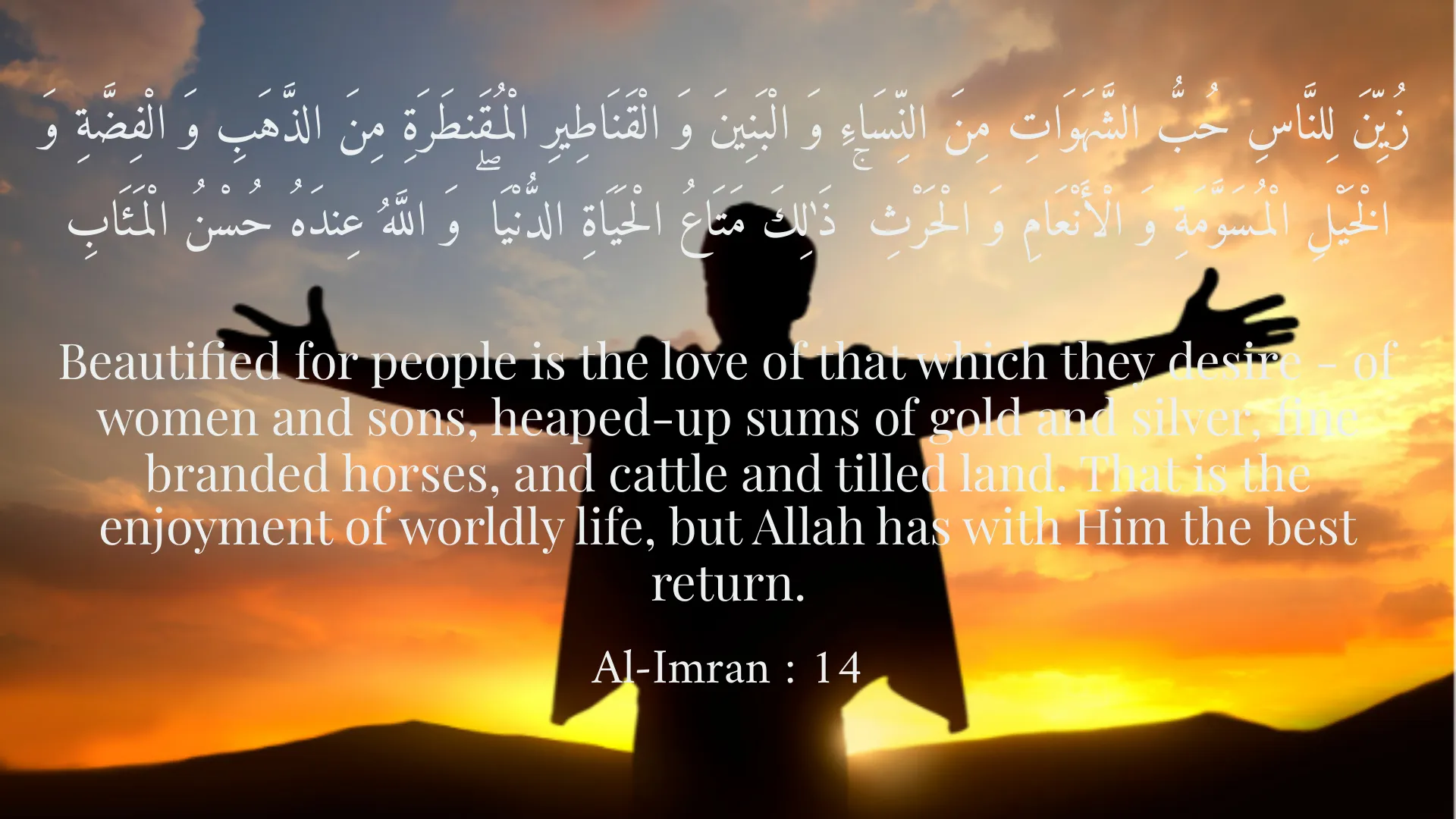
زُيِّنَ لِلنَّاسِ حُبُّ الشَّهَوَاتِ مِنَ النِّسَاءِ وَ الْبَنِينَ وَ الْقَنَاطِیرِ الْمُقَنطَرَةِ مِنَ الذَّهَبِ وَ الْفِضَّةِ وَ الْخَیْلِ الْمُسَوَّمَةِ وَ الْأَنْعَامِ وَ الْحَرْثِ ۚ ذَٰلِكَ مَتَاعُ الْحَيَاةِ الدُّنْیَا ۖ وَ اللَّهُ عِندَهُ حُسْنُ الْمَئَابِ
Beautified for people is the love of that which they desire - of women and sons, heaped-up sums of gold and silver, fine branded horses, and cattle and tilled land. That is the enjoyment of worldly life, but Allah has with Him the best return.
Al-Imran : 14
يَا أَيُّهَا الَّذِينَ آمَنُوا إنَّ كَثِيرًا مِنَ الْأَحْبَارِ وَالرُّهْبَانِ لَيَأْكُلُونَ أَمْوَالَ النَّاسِ بِالْبَاطِلِ وَيَصُدُّونَ عَن سَبِيلِ اللَّهِ، والَّذِينَ يَكنِزُونَ الذَّهَبَ وَالْفِضَّةَ وَلَا يُنفِقُونَهَا فِي سَبِيلِ اللَّهِ فَبَشِّرْهُم بِعَذَابٍ أَلِيمٍ
O you who have believed, indeed, many of the scholars and the monks consume the wealth of people unjustly and avert [them] from the way of Allah. And those who hoard gold and silver and spend it not in the way of Allah - give them tidings of a painful punishment.
At-Tawbah : 34
Short Story
One day, a wealthy man was walking through the market, thinking about how to increase his riches. Suddenly, he saw a child playing in the street and smiling at him. He recalled whether he had grown closer to God with all his wealth or not. He decided to donate some of his money to those in need and, in doing so, found greater inner peace.