Quranic Answer
In the Holy Quran, a profound emphasis is laid on the significance of faith (Iman), the remembrance of God (Dhikr), and the performance of good deeds (A'mal Salih). The Quran serves as a guide for the manifold aspects of human life, urging believers to integrate their faith into their everyday activities. This integration serves as a constant reminder that every action, regardless of how mundane it may seem, can be elevated to an act of worship when performed with the right intention. The Islamic worldview encourages a holistic understanding of work, relating it to spirituality and moral righteousness. ### Faith as the Foundation of Actions In many verses, the Quran articulates the idea that the essence of a believer’s life is to live in accordance with the principles set forth by Allah. In Surah Al-An'am, verse 162, it is stated: 'Say, indeed, my prayer, my rites of sacrifice, my living and my dying are for Allah, Lord of the worlds.' This verse unequivocally illustrates that an individual's entire existence should be directed towards fulfilling the will of God. The concept of work is interwoven into this fabric of faith, where daily tasks transform into a form of devotion when undertaken with sincerity. To contextualize this understanding, the Quran encourages believers not to compartmentalize their lives into sacred and secular. Every chore, every job, and every role played in society can be seen as part of one’s spiritual journey. When one approaches work with an earnest heart and strives to fulfill their responsibilities not only for personal gain but in service of others and for God's pleasure, it enhances their spiritual standing. This notion propels believers toward a life where faith and work harmoniously coexist, thereby uplifting both their physical and spiritual dimensions. ### The Balance Between Work and Worship Islam does not advocate for the abandonment of worldly life in the pursuit of spirituality. Rather, it emphasizes balance. Excessive labor can lead to fatigue and diminishing time for worship, leading one to become distanced from the remembrance of God. However, this does not imply that work is a hindrance to spirituality; instead, it can be a means of drawing closer to God. Each activity performed as a duty can serve as a form of worship if it is done with the right intention. In today's fast-paced world, many individuals may find themselves in a relentless cycle of work, meetings, and deadlines, often overlooking spiritual obligations. This neglect can foster a sense of disconnect from faith and a feeling of emptiness. In this regard, the Quran serves as a reminder that worship should not be confined merely to the hours of prayer or religious rituals but can also be manifest in how one conducts business, interacts with colleagues, and fulfills familial responsibilities. ### Integrating Worship into Daily Life Thus, regarding work, the Quran advocates for a perspective that sees every act as an opportunity for worship. This idea of integrating worship into daily actions can have profound effects on a believer's life. For instance, when a person carries out their job not just as a means to earn a livelihood but as a way to provide for their family, contribute to society, and be of service to others, the act transforms into an act of worship. Such an approach fosters a culture of integrity, honesty, and responsibility, aligning with Islamic principles. In Surah At-Talaq, Allah mentions, 'And whoever fears Allah – He will make for him a way out. And will provide for him from where he does not expect.' (Surah At-Talaq, 2-3). This verse reinforces the idea that being conscious of God and maintaining faith during challenging times can yield divine assistance. It implies that efforts made with sincere intentions do not go unnoticed and are rewarded by God. Such promises act as a source of motivation, encouraging individuals to maintain their faith despite the challenges and fatigue brought on by work. ### The Intent Matters More than Quantity Moreover, one should remember that while work is paramount, the significance lies more in the quality of work and the intent behind it than in the sheer volume of work completed. Engaging in work that lacks good intention, or is performed without ethical considerations, cannot be equated with work performed to seek God’s pleasure. When believers strive for excellence in their efforts while maintaining a consciousness of God, they fulfill the dual mandate of being productive members of society and devout servants of Allah. ### Conclusion: A Spiritual Perspective on Labor In conclusion, the teachings of the Holy Quran advocate a comprehensive understanding of faith that permeates every facet of human existence, including work. It emphasizes that work is not merely a duty for livelihood but can also serve as an expression of devotion and righteousness when performed with pure intentions. By recognizing the spiritual dimension of everyday responsibilities, believers can achieve a deeper connection with God, ultimately guiding them to lead balanced, fulfilling lives. Therefore, the path forward for any believer lies in cultivating this awareness – that every act, no matter how trivial, can be rendered meaningful through the remembrance of God and sincere intention. It is through this lens that work becomes not a distraction from faith, but rather, a significant component of one’s journey toward spiritual fulfillment.
Related Verses
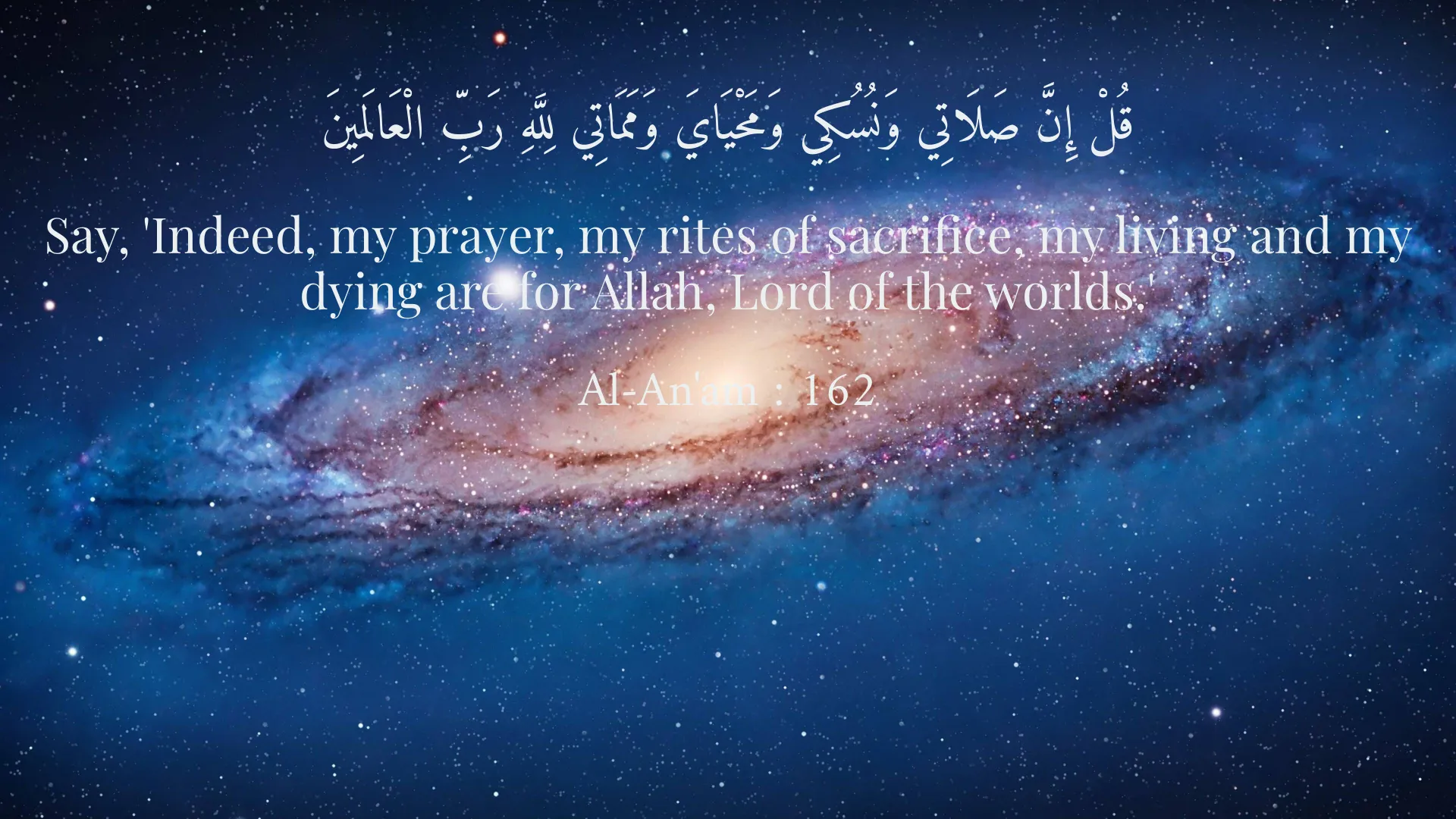
قُلْ إِنَّ صَلَاتِي وَنُسُكِي وَمَحْيَايَ وَمَمَاتِي لِلَّهِ رَبِّ الْعَالَمِينَ
Say, 'Indeed, my prayer, my rites of sacrifice, my living and my dying are for Allah, Lord of the worlds.'
Al-An'am : 162
وَمَن يَتَّقِ اللَّهَ يَجْعَل لَّهُ مَخْرَجًا
And whoever fears Allah - He will make for him a way out.
At-Talaq : 2
وَيَرْزُقْهُ مِنْ حَيْثُ لَا يَحْتَسِبُ
And will provide for him from where he does not expect.
At-Talaq : 3
Short Story
One day, Adel was working a lot and felt distant from God. He decided to take a moment away from work to focus on prayer and worship. Gradually, he realized that remembering God and keeping Him in his heart even while working brought him greater peace and helped strengthen his faith.