Quranic Answer
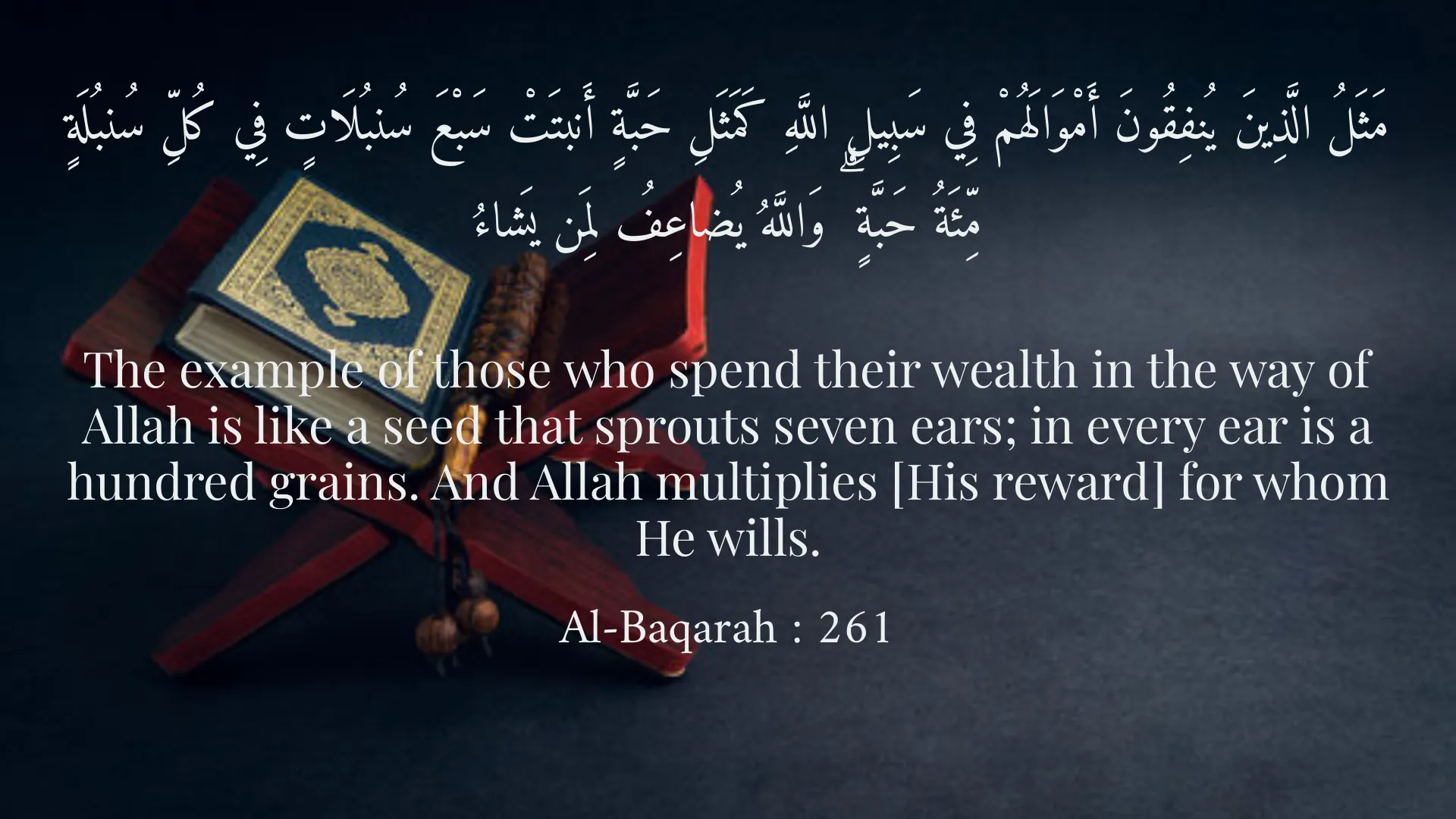
Charity holds a transformative place in the teachings of Islam, as emphasized in the Holy Quran. The significance of charity transcends mere benevolence; it is imbued with divine purpose and warranted by profound wisdom. Charity, or 'Sadaqah' in Arabic, is consistently portrayed not only as a means of assistance to the underprivileged but also as a channel of divine blessings and protection against adversities. In verse 261 of Surah Al-Baqarah, Allah presents a vivid metaphor that underscores the magnitude of rewards associated with charity: 'The example of those who spend their wealth in the way of Allah is like a seed that sprouts seven ears; in every ear is a hundred grains. And Allah multiplies [His reward] for whom He wills.' This verse encapsulates the notion that acts of charity, akin to planting seeds, yield significant benefits and blessings, both in this world and the hereafter. The analogy in this verse is particularly striking—just as a single seed can lead to multiple ears of corn, each containing numerous grains, so too can a single act of charity flourish into manifold blessings. This conveys that the spirit of giving will result not in depletion but rather in augmentation of one’s sustenance and blessings. The implications of this are profound: charity not only serves the immediate needs of the needy but simultaneously enriches the life of the giver. Furthermore, Islamic teachings on charity extend beyond the mere act of giving; they delve into the transformative effects that charity can have on individuals, families, and communities. The act of giving induces a cycle of positivity, which uplifts the spirit and fortifies social bonds. The Quran presents charity as a beacon of compassion and an essential component of a morally oriented life. Charity instills values of empathy, solidarity, and fraternity within communities, serving as a powerful tool for social reform. The teachings of Prophet Muhammad (peace be upon him) further elucidate the spiritual and practical dimensions of charity. One notable tradition states: 'Charity pushes away misfortunes.' This assertion provides a compelling glimpse into the protective function of charitable acts. According to these teachings, engaging in charity is an act of foresight; one is not only addressing the plight of others but also fortifying oneself against potential adversities. This reflects a reciprocal relationship between the giver and the act of giving: by assisting others, one attracts divine mercy and protection. The multifaceted benefits of charity are not limited to divine rewards or worldly benefits; they extend into the realm of personal healing and emotional wellness. Charity serves as a form of spiritual therapy for those grappling with trials and tribulations. In the face of adversity, the act of giving can provide solace and a sense of purpose. It can uplift the spirits of those who experience distressing life circumstances, allowing them to find meaning and fulfillment through the service of others. In essence, charity can act as a catalyst for personal transformation, helping individuals navigate their struggles by fostering a sense of community and interconnectedness. Moreover, the communal aspect of charity in Islam cannot be understated. By promoting acts of giving within families and communities, charity cultivates a culture of support and resilience. When individuals and families practice regular charitable giving, they contribute to a safety net that encompasses their entire community. This collective spirit of giving not only diminishes poverty but also nurtures an environment where individuals feel that they are part of something greater than themselves. This unity brings about a profound change, leading to healthier and more cohesive communities. It is also significant to note that charity in Islam is not solely financial. The concept encompasses any act of kindness or support extended towards others. Whether it be through providing knowledge, assisting someone in need, taking care of the elderly, or simply offering a smile, charity embodies various forms of social responsibility. These acts accumulate in their potential to foster goodwill, ultimately enriching the giver's life while simultaneously uplifting those who are benefit from it. As we examine the broader implications of charity in an Islamic context, it's essential to acknowledge the practical steps that individuals can take to incorporate this principle into their daily lives. Establishing systems for regular charitable giving, whether it be through direct donations to charities or informal acts of kindness, cultivates a lifestyle characterized by empathy and awareness of societal needs. This can also include volunteer work, mentorship programs, and community initiatives that focus on empowering vulnerable populations. In conclusion, the significance of charity in Islam is profoundly multifaceted. It serves not merely as a benevolent act towards the needy but as a divine injunction that, when fulfilled, can lead to immense worldly and spiritual benefits. The Quran and the teachings of Prophet Muhammad (peace be upon him) are clear in communicating that charity is a pathway to prosperity, resilience, and inner peace. Engaging in charitable acts fosters a spirit of interconnectedness among individuals, ultimately leading to healthier societies. Thus, both the giver and the receiver flourish in a cycle of compassion, as charity is not just a good deed but a crucial aspect of maintaining the health of individuals and communities alike. Engaging in charity should, therefore, be viewed not only as an ethical responsibility but as a vital investment in our collective well-being.
Related Verses
مَثَلُ الَّذِينَ يُنفِقُونَ أَمْوَالَهُمْ فِي سَبِيلِ اللَّهِ كَمَثَلِ حَبَّةٍ أَنبتَتْ سَبْعَ سُنبُلَاتٍ فِي كُلِّ سُنبُلَةٍ مِّئَةُ حَبَّةٍ ۗ وَاللَّهُ يُضاعِفُ لِمَن يَشاءُ
The example of those who spend their wealth in the way of Allah is like a seed that sprouts seven ears; in every ear is a hundred grains. And Allah multiplies [His reward] for whom He wills.
Al-Baqarah : 261
Short Story
One day, a man named Hasan decided to donate some of his money to the needy. Every day, he set aside a portion of his earnings to give to the poor. After some time, his life transformed; not only did he face fewer challenges, but he also felt a great sense of happiness and contentment. Hasan would tell his friends, 'Giving charity has filled my life with blessings!'