Quranic Answer
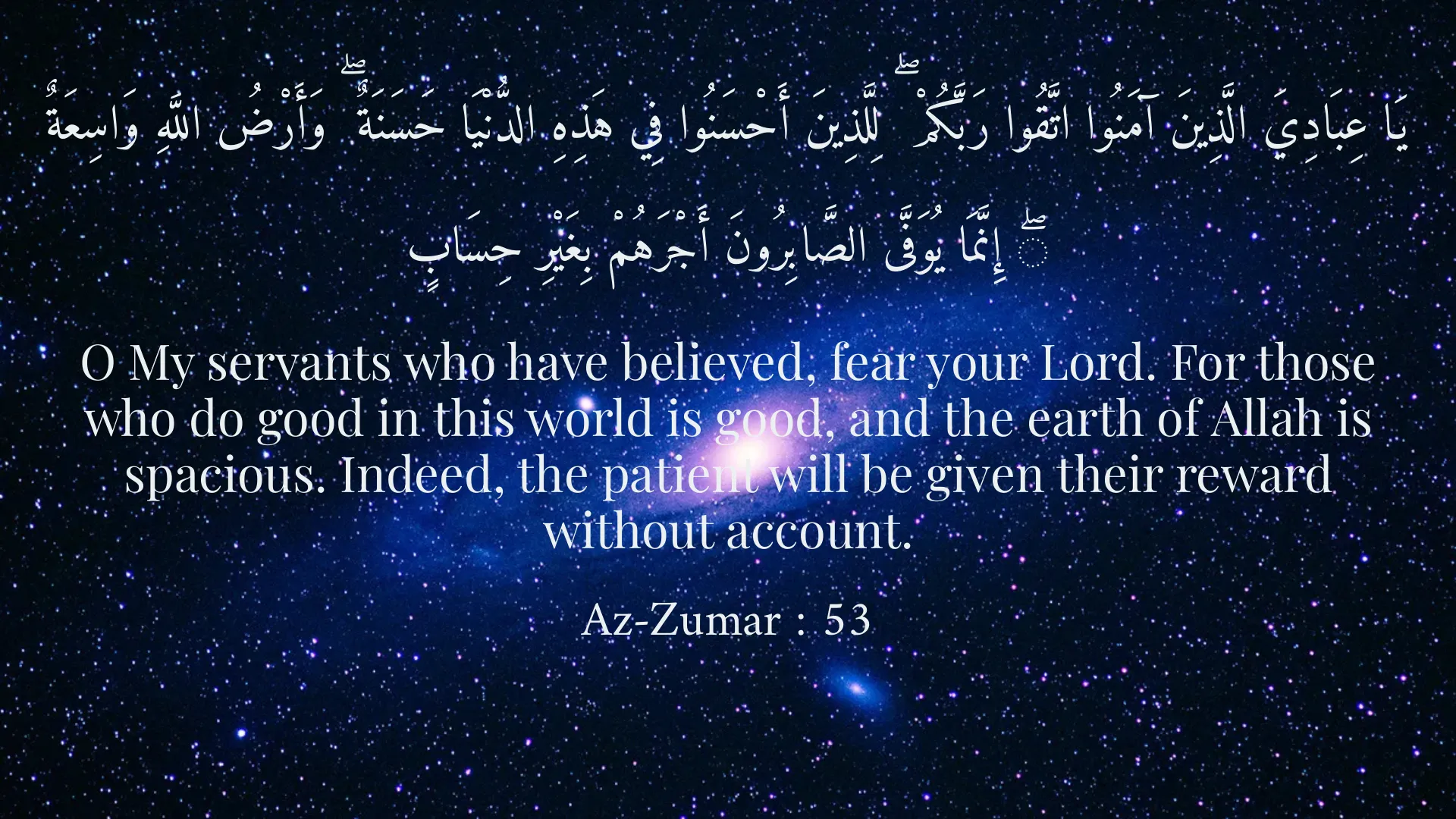
In the Holy Quran, the themes of God's mercy and forgiveness towards His servants are predominant and are elaborated upon in various verses. One of the most powerful statements that encapsulates these themes can be found in Surah Az-Zumar, verse 53: 'Say, O My servants who have believed, fear your Lord. For those who do good in this world is good, and the earth of Allah is spacious. Indeed, the patient will be given their reward without account.' This profound verse not only exemplifies the boundless mercy of Allah but also serves as a reminder to believers about the inherent hope and opportunity for redemption that exists for all, regardless of their past actions. This verse teaches us that no one is beyond the reach of God's mercy, and that He accepts us with all our weaknesses and mistakes. The message is immensely important, particularly for individuals navigating the complexities and challenges of everyday life. In moments of despair or regret, it’s easy for a person to feel that they have strayed too far from grace, making God's forgiveness seem unattainable. However, the Quran reassures us that God's mercy is everlasting and that He is always willing to embrace those who seek Him with sincerity. Whether one has made minor mistakes or grave sins, turning back to God with an open heart and a genuine intent can lead to profound transformations. Moreover, this concept is reinforced further in Surah Al-Baqarah, verse 286, which states, 'Allah does not burden a soul beyond that it can bear...' This illustrates another critical aspect of God's relationship with humanity. It signifies that God's expectations and the challenges He sends our way are always within the confines of what we can manage. It emphasizes His understanding of human limitations, vulnerabilities, and the trials we face in life. The sentiment here is that God, in His infinite wisdom, knows each of His creations intimately, and thus, He provides us with the necessary opportunities to rectify our wrongs, enhance our virtues, and ultimately grow as individuals. The Quran consistently emphasizes that God's mercy is ever-present and that our journey in life is one of endurance and patience. The verse from Surah Az-Zumar not only addresses those who find themselves in a position of fear or regret but also acts as a call to action for believers. It encourages proactive goodness; the emphasis on doing good deeds suggests that individuals are empowered to change their situations and contribute positively to the world around them. The concept of 'good' in this context is not solely about the actions taken but also includes the internal state of a person. Acknowledging one's faults and striving to improve, even amidst struggle, is perceived as an act of spiritual resilience. It is crucial to recognize the impact of despair and hopelessness on a person's spiritual journey. Many individuals may feel overwhelmed by their flaws and failures, leading to a sense of hopelessness that can paralyze personal growth. In contrast, the Quran's portrayal of God's mercy encourages us to rise above our despair and take steps towards improvement. It empowers us to reach out to God in prayer and supplication, reassuring us that we are never abandoned and that forgiveness is always within reach. The concept of forgiveness in Islam extends beyond mere words; it embodies a fundamental principle that encourages believers to embrace their humanity. Each person is likely to err, make mistakes, and have lapses in judgment. The essence of Islam lies not in the pursuit of perfection but in the sincere endeavor to be better each day, to apologize sincerely for wrongdoings, and to seek God's mercy wholeheartedly. In Islam, sin is not the end but rather an opportunity for growth and development. The idea that one must constantly improve and strive is cathartic—creating a space for believers to learn from their errors rather than being weighed down by them. To further illustrate this inherent hope, one can look at the lives of many prophets and figures in Islamic history. For instance, the stories of repentance and the ultimate forgiveness granted to characters such as Prophet Yunus (Jonah) serve as timeless reminders of God's willingness to forgive those who seek redemption. These narratives inspire and provide frameworks for believers to understand the transformative nature of acknowledging one’s sins and returning to God. In a practical sense, cultivating an attitude of seeking forgiveness can manifest in various ways in an individual's life. Regular prayer, self-reflection, and an active engagement with one's weaknesses pave the way for inner peace and fortitude. Moreover, reaching out to community members and creating a support system can help maintain one's spiritual journey. It’s pivotal to discuss struggles with friends or family members who share similar values and beliefs; in this collective effort, we can help one another in acknowledging our faults and finding perks of growth and forgiveness. In conclusion, the Holy Quran provides a clear and heartening message of God’s mercy and forgiveness—a message that transcends time and resonates deeply within the hearts of believers. Surah Az-Zumar, verse 53, alongside other significant verses, offers guidance and reassurance that no matter how far one may drift, turning back to God with sincerity and purpose will always invite His mercy. Despair should never occupy a believer's heart, for God’s compassion is boundless, and His embrace is open to all who seek Him. Understanding God's readiness to forgive allows us to navigate life with hope, patience, and an unwavering commitment to improving ourselves. Therefore, let us strive toward acts of goodness, hold onto our faith, and remember always that God is, indeed, waiting for each of us with open arms.
Related Verses
يَا عِبَادِيَ الَّذِينَ آمَنُوا اتَّقُوا رَبَّكُمْ ۖ لِلَّذِينَ أَحْسَنُوا فِي هَذِهِ الدُّنْيَا حَسَنَةٌ ۖ وَأَرْضُ اللَّهِ وَاسِعَةٌ ۖ إِنَّمَا يُوَفَّى الصَّابِرُونَ أَجْرَهُمْ بِغَيْرِ حِسَابٍ
O My servants who have believed, fear your Lord. For those who do good in this world is good, and the earth of Allah is spacious. Indeed, the patient will be given their reward without account.
Az-Zumar : 53
لَا يُكَلِّفُ اللَّهُ نَفْسًا إِلَّا وُسْعَهَا...
Allah does not burden a soul beyond that it can bear...
Al-Baqarah : 286
Short Story
One day, a young man named Sajjad went to the mosque, carrying a heavy heart due to his life mistakes, and prayed to God for forgiveness. He felt a strange warmth in his heart and suddenly recalled the verse from Az-Zumar: 'Do not despair of the mercy of God.' He said to himself, 'God accepts me as I am,' and from that day forward, he decided to start a new life, drawing closer to God.