Quranic Answer
Repentance is a fundamental theme in Islamic teachings, deeply woven into the fabric of a believer's relationship with Allah. The Holy Quran emphasizes the significance of repentance and highlights the unconditional acceptance of it by God for those who genuinely seek forgiveness. This article delves into the concept of repentance in Islam, examining the relevant verses from the Quran and reflecting on their implications for believers. Through a detailed exploration, we aim to understand the essence of repentance and its transformative potential in the life of a Muslim. The importance of repentance is vividly articulated in Surah At-Tahrim, verse 8, wherein Allah Most High states: 'O you who have believed, repent to Allah with sincere repentance. Perhaps your Lord will remove from you your misdeeds and admit you into gardens beneath which rivers flow.' This powerful verse serves as a call to action for all believers, urging them to engage in sincere repentance that is not merely an external display, but a heartfelt return to their Creator. Repentance, in this sense, is more than just seeking forgiveness; it is a means of drawing closer to Allah and seeking His infinite mercy. The verse underscores that sincere repentance comes with the promise of divine forgiveness and a reward greater than one can imagine—paradise. This promise instills hope in the hearts of believers and emphasizes that no matter how distant one may feel from Allah due to their misdeeds, there is always a pathway back through sincere repentance. Moreover, Surah Al-Baqarah, verse 160 reiterates the grace of Allah concerning the repentant: 'Indeed, Allah accepts the repentance of those who do wrong out of ignorance and then repent soon after.' This verse provides a comfort that, even when one stumbles due to ignorance or unawareness, the road to redemption remains open. It reflects Allah’s understanding of human nature and the recognition that we are fallible beings who are bound to err. The key takeaway is that the acceptance of repentance is tied to two central elements: a sincere intention to change and a genuine resolve to refrain from committing the sin again. The theme of repentance continues in Ayah 53 of Surah Az-Zumar, where Allah addresses His servants: 'Say, 'O My servants who have believed! Fear your Lord. For those who do good in this world is good, and the earth of Allah is spacious. Indeed, the patient will be given their reward without account.' Here, the concept of patience and faith is interwoven with the promise of goodness for those who strive to do right. It highlights that while repentance is important, consistent good deeds alongside a sincere heart also help cultivate a relationship with Allah. These verses collectively convey an extraordinary narrative of hope and mercy. They remind us that Allah's mercy knows no bounds and that He readily awaits our return. The nature of Allah, as described within the Quran, is one of The Oft-Forgiving and The Most Merciful. This characterization serves as a beacon for all who may feel overwhelmed by their failings. No matter how grievous the sin, as long as one approaches with sincerity, there is always a path back. The Quran teaches that genuine repentance requires several critical components. Firstly, it involves an acknowledgment of wrongdoing and a heart that feels remorse for one's actions. This indicates not just an understanding of the negativity of their actions but a longing to rectify them. Secondly, there must be a decisive intention to refrain from committing the sin again, coupled with a commitment to engage in acts that earn Allah's pleasure. The act of repentance is transformative in nature. It serves as a catalyst for personal growth and spiritual evolution. When individuals turn to Allah in repentance, they often experience a profound sense of relief and a reset in their spiritual journey. They are reminded that they are not defined by their sins but by their capacity to recognize their faults and strive for improvement. Furthermore, the societal aspect of repentance cannot be overlooked. Through the process of acknowledging our shortcomings and seeking forgiveness, believers create an environment of humility and compassion among their communities. It fosters an atmosphere where individuals support one another in the pursuit of righteousness and mutual growth, encouraging a communal spirit of accountability and righteousness. In summary, the importance of repentance in Islam cannot be overstated. The Quran repeatedly reassures believers of Allah's readiness to accept their sincere regret and their strive for improvement. Repentance is not merely a ritual; it is a profound connection that allows believers to rediscover their faith, nurture their relationship with God, and ultimately seek the tranquility of the gardens beneath which rivers flow. In the journey of life, let us embrace repentance as a continuous practice—an ever-reviving hope that aligns our actions with our faith. Thus, the wisdom encapsulated in the verses on repentance highlights that all believers possess the ability to change and are always welcome to return home to the mercy and love of their Creator. The road may be long, and the burdens heavy, but with every sincere attempt to repent, the doors of Allah’s mercy swing wide open, ready to embrace us as His faithful servants.
Related Verses
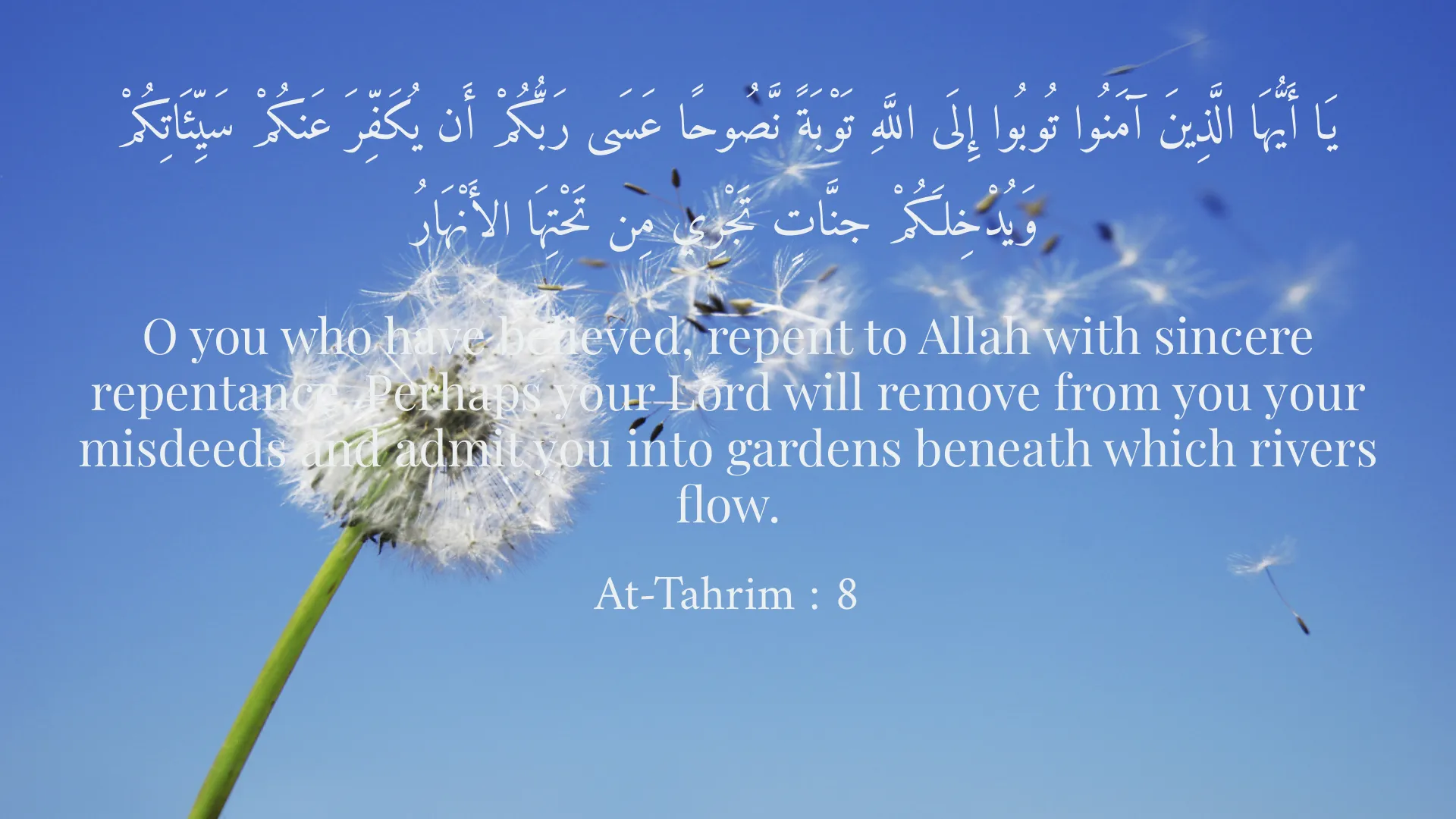
يَا أَيُّهَا الَّذِينَ آمَنُوا تُوبُوا إِلَى اللَّهِ تَوْبَةً نَّصُوحًا عَسَى رَبُّكُمْ أَن يُكَفِّرَ عَنكُمْ سَيِّئَاتِكُمْ وَيُدْخِلَكُمْ جنَّاتٍ تَجْرِي مِن تَحْتِهَا الأَنْهَارُ
O you who have believed, repent to Allah with sincere repentance. Perhaps your Lord will remove from you your misdeeds and admit you into gardens beneath which rivers flow.
At-Tahrim : 8
إِنَّمَا يَتُوبُ اللَّهُ عَلَى الَّذِينَ يَعْمَلُونَ السُّوءَ جَهَالَةً ثُمَّ يَتُوبُونَ قَرِيبًا ۚ وَأُولَـٰئِكَ هُمُ الْمُغْفَرُ لَهُمْ
Indeed, Allah accepts the repentance of those who do wrong out of ignorance and then repent soon after.
Al-Baqarah : 160
قُلْ يَا عِبَادِي الَّذِينَ آمَنتُمْ اتَّقُوا رَبَّكُمْ ۖ لِلَّذِينَ أَحْسَنُوا فِي هَذِهِ الدُّنْيَا حَسَنَةً ۖ وَأَرْضُ اللَّهِ وَاسِعَةٌ ۚ إِنَّمَا يُوَفَّى الصَّابِرُونَ أَجْرَهُمْ بِغَيْرِ حِسَابٍ
Say, 'O My servants who have believed! Fear your Lord. For those who do good in this world is good, and the earth of Allah is spacious. Indeed, the patient will be given their reward without account.'
Az-Zumar : 53
Short Story
One day, a sinner approached the ruler of the city and asked him to issue a judgment against him. The ruler smiled and said, 'Why don’t you turn to God and seek His forgiveness? His arms of mercy are wide open, and you can cleanse your heart with repentance.' That sinner, upon hearing these words, came to himself and decided to repent. He told the ruler, 'Indeed, Allah's mercy is infinite!' And from that day on, he led his life with obedience and faith.