Quranic Answer
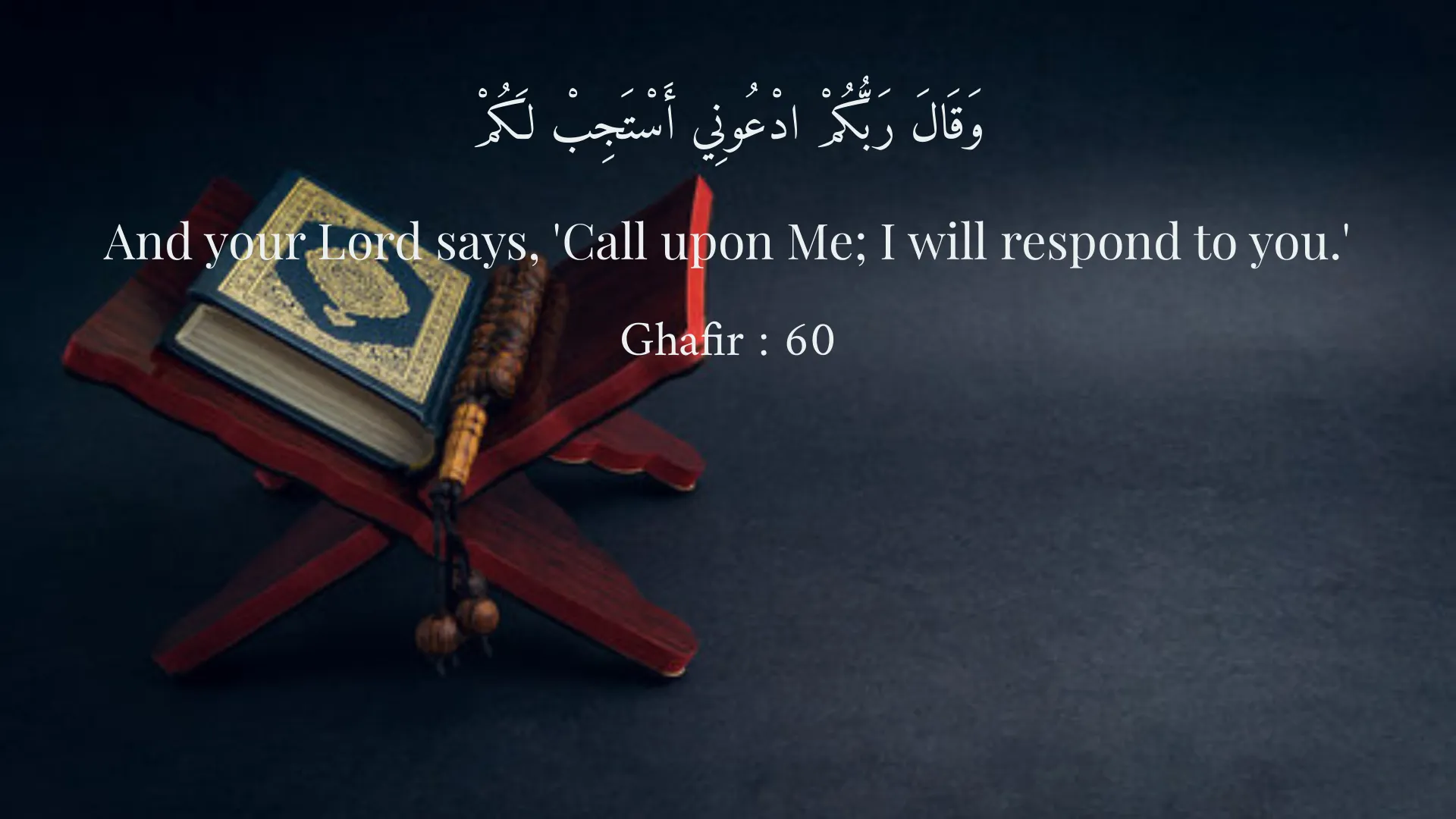
The concept of prayer holds a significant position in the belief systems of many religious traditions, and in Islam, the Holy Quran serves as the primary source of guidance for the faithful. Among its many teachings, prayer, or 'dua,' is emphasized as a direct line of communication between the servant and Allah (God). Within this context, the Quran provides several verses that underscore Allah’s promises regarding the efficacy of prayers offered by His servants. In this article, we will delve into the implications of these divine promises, exploring their nuances and relevance in the lives of believers. One of the most concise yet profound statements regarding prayer can be found in Surah Ghafir, verse 60, where Allah declares, "And your Lord says, 'Call upon Me; I will respond to you.'" This verse serves as both an invitation and a reassurance, encouraging believers to reach out to their Creator. The command to call upon Allah reflects His desire for an intimate relationship with His servants. This isn't just about seeking help; it's an affirmation of faith where individuals acknowledge their limitations and turn to a higher power for support. Moreover, Surah Al-Baqarah, verse 186 further emphasizes this relationship: "And when My servants ask you concerning Me, indeed, I am near. I respond to the invocation of the supplicant when he calls upon Me." This additional layer highlights Allah's proximity to His creation—He is not distant or indifferent but rather close and attentive. The use of the phrase "I am near" signifies that Allah is fully aware of the struggles, hopes, and aspirations of His servants. This closeness implies that the dialogues pray may have with their Creator are not one-sided; rather, they are part of a reciprocal relationship where Allah hears and responds. Understanding these verses paints a picture of a compassionate God who actively engages with His creation. However, there is an important caveat regarding the understanding of prayers and their responses. While believers are encouraged to invoke Allah and seek His assistance, the nature of the response may not align with their expectations. Allah's responses to prayers can manifest in various forms—sometimes He grants the request immediately, other times He may delay the answer, or He might respond in a completely different manner than what the supplicant envisioned. This variability raises the question: Why do some prayers seem unanswered? Many individuals experience moments in their lives where they fervently pray for something yet feel as though their pleas have gone unheard. This feeling can lead to frustration, doubt, and sometimes a crisis of faith. However, it is crucial to consider the divine wisdom that underlies Allah's decisions. Unlike human beings, whose understanding is limited and often clouded by personal bias and immediate desires, Allah possesses infinite wisdom and knowledge. He knows what is best for His servants, which may not always align with their desires at that particular moment. For instance, one might pray fervently for a specific job or relationship, experiencing disappointment when the desired outcome does not materialize. Yet, from an Islamic perspective, it is essential to trust in Allah's plan, which may involve redirecting one to better opportunities or preventing situations that could lead to harm or unrest. The concept of ‘Tawakkul’ or trust in Allah plays a vital role here; it encourages believers to have confidence in the divine plan, recognizing that every delay or denial could result in a greater good that may not be immediately visible. This leads us to another key aspect of prayer: the role of patience and perseverance in the practice of faith. In Islam, prayer is not merely a means to an end; it is an ongoing relationship with Allah that requires nurturing through consistent effort and sincerity. In Surah Al-Baqarah, Allah also states, 'Seek help through patience and prayer.' Here, prayer is interconnected with patience, suggesting that spiritual growth and development often occur through trials and tribulations. Therefore, during times of uncertainty or perceived silence from Allah, it is imperative for believers to maintain hope and faith. Continuing to pray and remain steadfast in one’s beliefs is a testament to one’s trust in Allah’s wisdom. Additionally, the Quran teaches the significance of collective prayer and supplication, suggesting that the community plays an essential role in individual spirituality. The act of praying together fosters a sense of unity among believers while enhancing the spiritual atmosphere supporting individual supplications. This community reinforces the understanding that they are not alone in their struggles and prayers; together, they can uplift one another, trusting that Allah hears each prayer collectively. Ultimately, while the journey of faith may bring uncertainties, the Quran continuously reassures that Allah is always accessible and listening to His servants’ supplications. The act of praying symbolizes an acknowledgment of one’s dependence on the divine, a recognition of the Creator's capability, and a humble request for guidance and assistance. In conclusion, the promises Allah makes regarding prayer in the Quran convey a significant message of hope, faith, and divine connection. By understanding the intended nature of prayer, believers can frame their expectations, embrace the inherent wisdom in Allah's responses, and persevere in their supplications. In doing so, they forge a deeper relationship with their Creator, characterized by trust and reliance on His infinite wisdom. The essence of prayer becomes not solely about obtaining answers to requests but rather nurturing an ongoing dialogue that enables one to navigate the complexities of life's journey with faith and resilience.
Related Verses
وَقَالَ رَبُّكُمْ ادْعُونِي أَسْتَجِبْ لَكُمْ
And your Lord says, 'Call upon Me; I will respond to you.'
Ghafir : 60
وَإِذَا سَأَلَكَ عِبَادِي عَنِّْي فَإِنِّي قَرِيبٌ ۖ أُجِيبُ دَعْوَةَ الدَّاعِ إِذَا دَعَانِ
And when My servants ask you concerning Me, indeed, I am near. I respond to the invocation of the supplicant when he calls upon Me.
Al-Baqarah : 186
Short Story
One day, a man named Ahmad was sitting in a corner pondering his prayers. He had faced many difficulties in life and decided to pray. He said in his heart, 'O Allah, do You hear my prayer?' As he was lost in thought, he suddenly remembered the verses of the Quran and realized that Allah was always attentive to his supplications. Ahmad returned with hope and faith towards God and understood that sometimes it requires patience to see the results of his prayers.