Quranic Answer
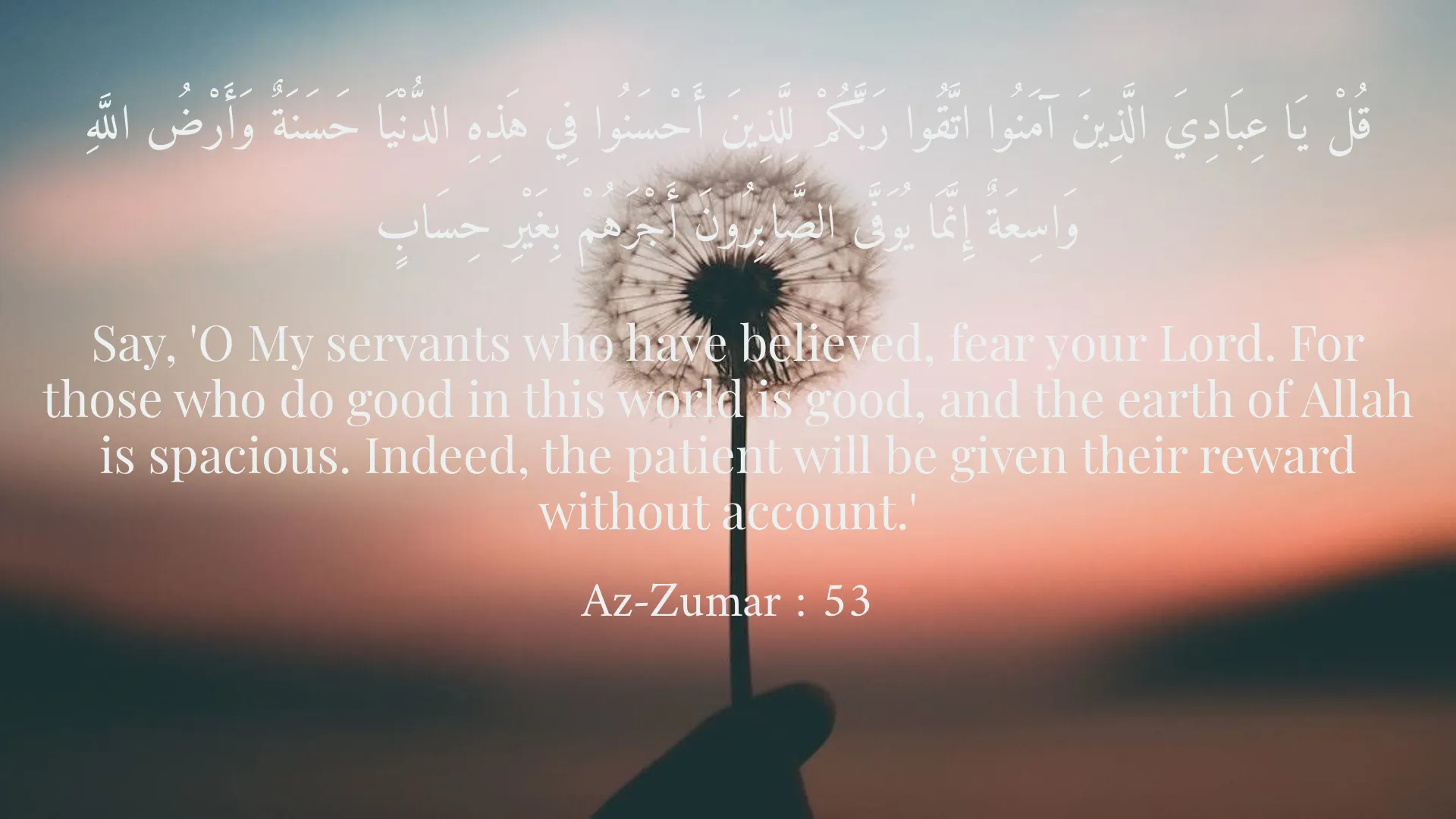
The concept of forgiveness in the Holy Quran is a profound and central theme that touches the lives of believers. Within its verses, we find clear guidance on God's infinite mercy and the framework for repentance that leads to spiritual redemption. One pivotal verse that encapsulates this message is found in Surah Az-Zumar, verse 53, where Allah invites His servants to turn to Him: 'Say, O My servants who have believed, fear your Lord. For those who do good in this world is good, and the earth of Allah is spacious. Indeed, the patient will be given their reward without account.' This verse not only reassures believers of Allah's readiness to forgive but also emphasizes the importance of faith and good deeds in this world. The crux of this message lies in the notion that while sins may weigh heavily on the conscience, the mercy of Allah is even more profound. The verse illustrates that Allah is cognizant of human struggles and weaknesses. Moreover, the conditions of earning His mercy include genuine fear of God, belief, and engagement in virtuous actions. In this context, the term 'fear' does not evoke dread but rather a sense of reverence and commitment to living a life that aligns with divine guidance. Thus, believers are motivated to engage in good deeds that not only serve their interests but also contribute positively to society. Additionally, we find support for the concept of repentance in the Quran in Surah Al-Furqan, verse 70: 'Except for the one who repents, believes and does righteousness. For those will enter Paradise and will not be wronged at all.' This verse further clarifies the path to salvation and suggests that repentance is more than just a verbal declaration; it requires a sincere belief in Allah and an active commitment to righteousness. One who hopes for Allah's forgiveness must not only ask for it but also strive to transform themselves through righteous deeds. The act of repentance is multifaceted. At the heart of it is the intention, or 'niyyah,' with which a person approaches God. The sincere act of repenting should spring from a place of authenticity – a realization of one's missteps and a yearning to realign with divine expectations. Repeating sins can create a cycle of guilt and despair; however, what is critical is that any remorse must lead to a heart-felt desire to change, shifting focus back towards Allah's mercy. Therefore, even if one stumbles and falls into the same sins repeatedly, the door of forgiveness remains wide open, provided that they approach God with sincerity and determination to amend their ways. Contrary to the common misconception that repeated sins lead to divine abandonment, the Quran offers a hopeful perspective. Allah's compassion encompasses those who earnestly seek His forgiveness while being aware of their shortcomings. The beauty of His mercy is illustrated in the hadith where the Prophet Muhammad (PBUH) said that if a servant commits a sin and quickly repents, Allah forgives them, no matter how often it happens. This narration embodies the essence of Allah's mercy, that He is waiting for His servants to turn back to Him and promising unfathomable forgiveness. It is crucial to understand that even when believers find themselves faltering, there is always a chance for redemption and improvement. The key is to maintain faith and seek out opportunities to do good in life. The Quran reassures us that as long as we are committed to doing good and striving to correct our faults, God's mercy encompasses all, transcending our errors. Thus, anyone who turns their heart toward God and harbors regret for their sins can aspire for divine pardon and find solace in the vastness of Allah's mercy compelling them toward self-improvement. To approach the concept of repentance, it is essential to adopt a holistic view of our relationship with Allah. Belief in Him, which forms the cornerstone of a believer's life, serves as a guiding principle throughout one's spiritual journey. Equally important is the notion of righteous deeds, as they act as the vehicles that carry one closer to divine mercy. This partnership between faith and actions plays a pivotal role in attaining forgiveness. Total reliance on Allah's mercy, coupled with sincere acts for the betterment of self and community, ensures that one is never truly lost in the whirlwind of sin. In conclusion, the teachings of the Holy Quran regarding forgiveness suggest that no matter how grave one's sins, the mercy of Allah is boundless and always available for those who truly repent. Believers are encouraged to find a balance between hope and accountability. Through sincere repentance, steadfast faith, and consistent righteous actions, individuals are not only guided to seek forgiveness but are also inspired to evolve into better versions of themselves. Ultimately, it is this journey of faith, remorse, and redemption that leads one towards the expansive love and compassion of Allah, fostering a community of believers committed to embracing and spreading this transformative message. Embracing this divine perspective on forgiveness allows us to learn, grow, and contribute positively to the world around us.
Related Verses
قُلْ يَا عِبَادِيَ الَّذِينَ آمَنُوا اتَّقُوا رَبَّكُمْ لِلَّذِينَ أَحْسَنُوا فِي هَذِهِ الدُّنْيَا حَسَنَةٌ وَأَرْضُ اللَّهِ وَاسِعَةٌ إِنَّمَا يُوَفَّى الصَّابِرُونَ أَجْرَهُمْ بِغَيْرِ حِسَابٍ
Say, 'O My servants who have believed, fear your Lord. For those who do good in this world is good, and the earth of Allah is spacious. Indeed, the patient will be given their reward without account.'
Az-Zumar : 53
إِلَّا مَن تَابَ وَآمَنَ وَعَمِلَ صَالِحًا فَأُو۟لَـٰئِكَ يَدْخُلُونَ ٱلْجَنَّةَ وَلَا يُظْلَمُونَ شَيْئًا
Except for the one who repents, believes and does righteousness. For those will enter Paradise and will not be wronged at all.
Al-Furqan : 70
Short Story
One day, a devoted servant spoke to God, saying, 'My Lord, I confess to my sins and ask for Your forgiveness.' God replied, 'O My servant, have you repented and sought to improve yourself?' The servant responded, 'Yes, every time I turned back from sin towards You, You forgave me.' This story illustrates that God's mercy is for all His servants, and He is always willing to accept our sincere repentance.