Quranic Answer
In the Holy Quran, the concept of God's forgiveness and mercy towards sinners is a core principle that resonates throughout its verses. It provides a sense of solace and hope to believers, emphasizing that regardless of one's transgressions, the door to divine mercy remains perpetually open. The Quran is replete with messages that encourage individuals to turn back to Allah, seek His forgiveness, and embrace a life of righteousness. This article aims to explore the profound aspects of God's forgiveness and mercy as outlined in several key verses of the Quran, while delving into their implications in the lives of believers. One of the most striking verses in relation to God's forgiveness can be found in Surah Az-Zumar, verse 53. The verse states: 'Say, O My servants who have believed, fear your Lord. For those who do good in this world is good, and the earth of Allah is spacious. Indeed, the patient will be given their reward without account.' This profound assertion underscores two significant aspects of divine mercy and forgiveness: First, the verse addresses the believers, indicating that fear of Allah—a recognition of His greatness and authority—must accompany their devotion. However, it does not stop at cautioning believers; it offers an encouraging reminder of the rewards awaiting those who engage in good deeds. The phrase 'the earth of Allah is spacious' is particularly noteworthy, suggesting that from a spiritual standpoint, there is always room for repentance and growth. No believer is beyond redemption; rather, they are invited to forge a connection with God, regardless of their past transgressions. Furthermore, the articulation that 'the patient will be given their reward without account' signifies that patience in the face of trials and unwavering faith in God's mercy will yield boundless rewards. The essence of this verse rests on the message that while humans may falter, God's mercy is limitless, continually providing opportunities for redemption and spiritual elevation. In Surah Al-Baqarah, verse 222, Allah further emphasizes His active role in the forgiveness of sins: 'Indeed, Allah is Forgiving and Merciful.' This succinct statement is a reminder of God's innate qualities. It implies that rather than being quick to punish, Allah holds the attribute of forgiveness in high esteem. Individuals who might feel weighed down by their sinful actions are encouraged to reflect on the benevolent nature of God. Understanding that He is inherently forgiving can inspire believers to approach Him with their regrets and seek His pardon without fear. The act of repentance, or Tawbah, is an essential step towards receiving divine forgiveness. Allah encourages sinners to return to Him with a pure heart, which leads us to a key takeaway: Allah does not seek perfection; rather, He seeks sincerity and genuine remorse for one's actions. By acknowledging their shortcomings and striving to amend their ways, believers can experience the transformative power of repentance. Moreover, the Quran provides reassurance that the conditions attached to receiving forgiveness are neither burdensome nor unattainable. As mentioned in Surah Al-Furqan, verse 70: 'Except for those who repent, believe, and do righteous work.' This verse identifies three critical actions that a sinner should undertake: 1. Repentance: The conscious decision to turn back to Allah with a heartfelt plea for forgiveness. 2. Belief: A reaffirmation of faith and trust in God's infinite mercy and willingness to pardon. 3. Righteous Work: The endeavor to translate faith into action by committing to good deeds and virtuous living. This triad of requirements underscores the holistic nature of seeking forgiveness in Islam. It is not sufficient to merely express regret; one's actions must reflect a commitment to positive change. Thus, believers are asked to engage in righteous behavior as a testament to their sincerity and transformation. The beauty of divine forgiveness transcends the individual; it promotes a communal culture rooted in mercy. As believers embrace God's forgiveness, they are encouraged to extend that same compassion and understanding to others. The Quran advocates for fostering a society that values empathy and forgiveness, underlining the importance of balancing justice with mercy. This principle affirms that forgiveness is not an act of weakness but a powerful decision to transcend personal grievances and reflect the divine attributes taught by God. In practicing forgiveness in our interpersonal relationships, we emulate God's mercy, creating a ripple effect of compassion within communities. In conclusion, the Quran serves as an invaluable guide for individuals seeking solace, hope, and redemption in an often tumultuous existence. Through verses that articulate God's limitless forgiveness and mercy, believers are reassured that there is always a pathway back to Him. The messages contained within the scriptures urge us to view our mistakes as opportunities for growth and improvement rather than hopeless failures. The commitment to turn to God with sincerity, practice righteousness, and foster forgiving attitudes towards others cultivates a cycle of grace and redemption. Thus, it is paramount for individuals, irrespective of their past misdeeds, to understand that the potential for forgiveness is eternal, encouraging them to take that courageous step towards a renewed spiritual journey.
Related Verses
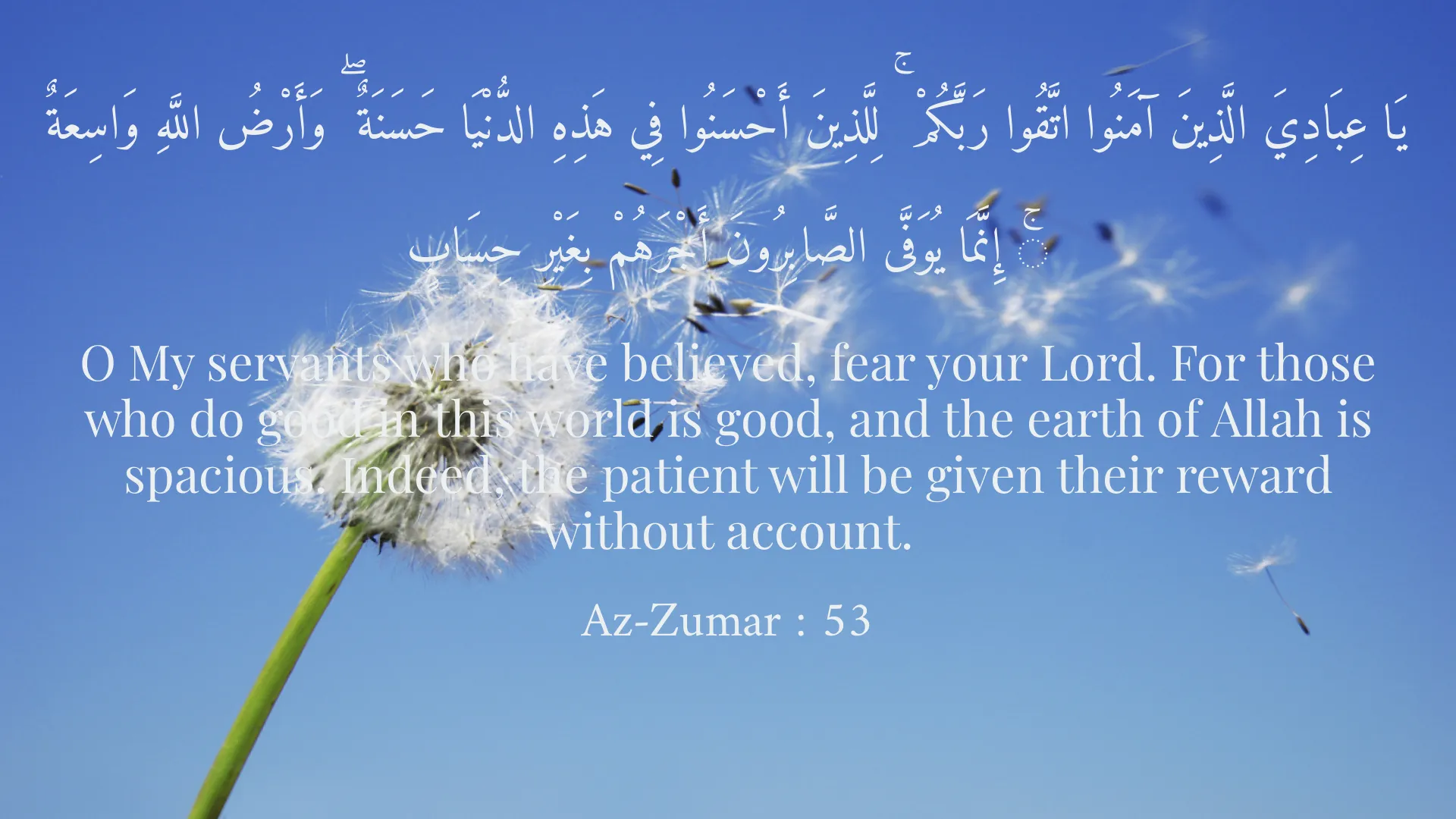
يَا عِبَادِيَ الَّذِينَ آمَنُوا اتَّقُوا رَبَّكُمْ ۚ لِلَّذِينَ أَحْسَنُوا فِي هَذِهِ الدُّنْيَا حَسَنَةٌ ۖ وَأَرْضُ اللَّهِ وَاسِعَةٌ ۚ إِنَّمَا يُوَفَّى الصَّابِرُونَ أَجْرَهُمْ بِغَيْرِ حِسَابٍ
O My servants who have believed, fear your Lord. For those who do good in this world is good, and the earth of Allah is spacious. Indeed, the patient will be given their reward without account.
Az-Zumar : 53
إِنَّ اللَّهَ يُحِبُّ التَّوَّابِينَ وَيُحِبُّ الْمُتَطَهِّرِينَ
Indeed, Allah loves those who are constantly repenting and loves those who purify themselves.
Al-Baqarah : 222
إِلَّا مَنْ تَابَ وَآمَنَ وَعَمِلَ صَالِحًا
Except for those who repent, believe and do righteous work.
Al-Furqan : 70
Short Story
One day, a man named Sohrab was reflecting on his past sins and felt as though he could never be forgiven. Suddenly, he remembered a verse from the Quran that spoke about God's mercy and the acceptance of repentance. This verse gave him hope, and he decided to repent from his sins. With a heart full of regret, he prayed to God and realized that after repenting, a sense of relief and peace washed over him. From that day on, Sohrab tried to walk the right path and start a new life.