Quranic Answer
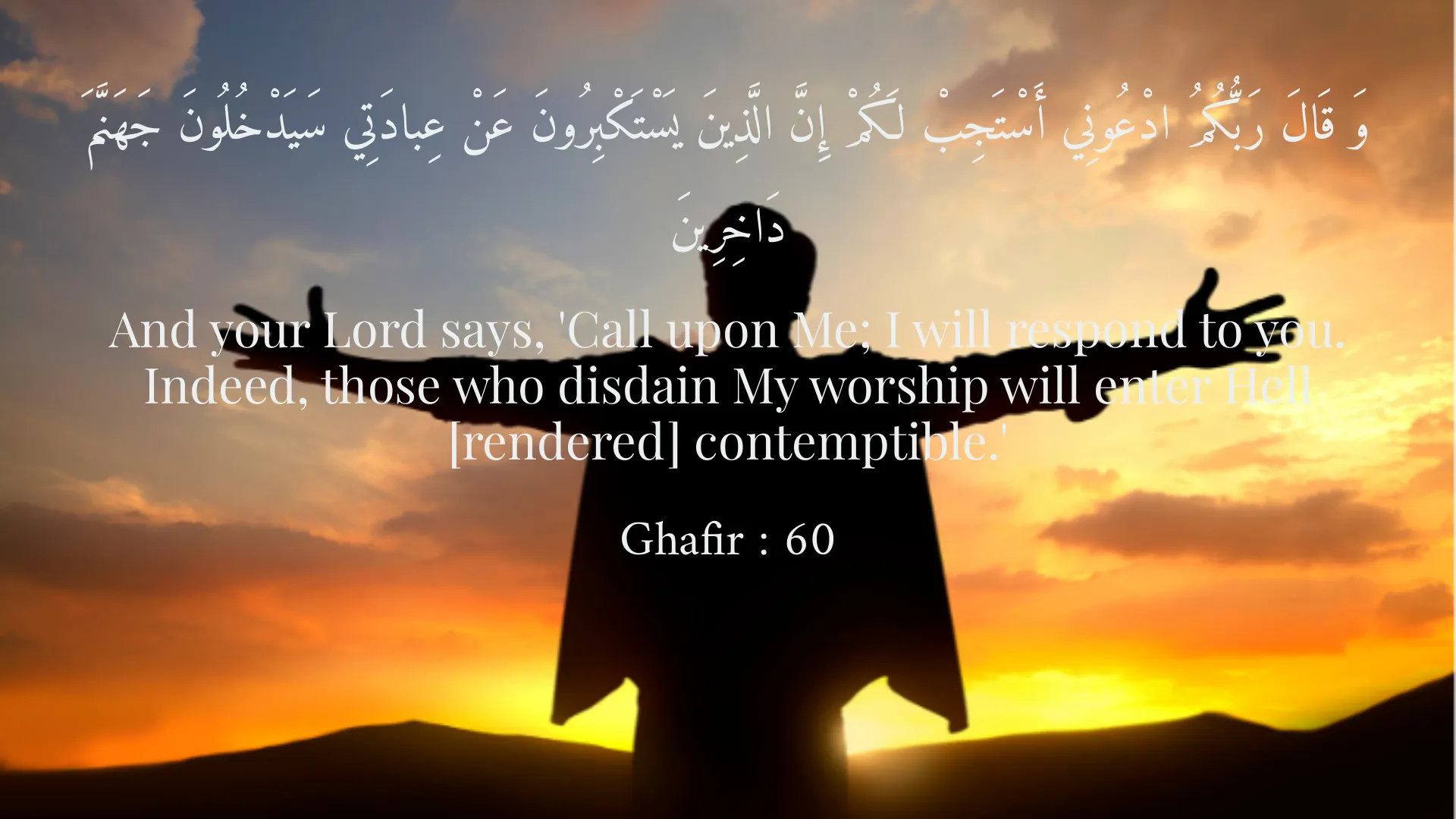
The concept of prayer holds a significant position within the Islamic faith, particularly as articulated in the Holy Quran. It is not merely a ritual; rather, it represents a sacred form of communication between an individual and Allah, embodying both sincerity and an unshakeable faith. The Holy Quran stresses the importance of persistent prayer - a practice that fosters a connection with God and exemplifies a believer's unwavering trust in His wisdom and grace. In Surah Ghafir, verse 60, Allah proclaims, "And your Lord says, 'Call upon Me; I will respond to you. Indeed, those who disdain My worship will enter Hell [rendered] contemptible.'" This verse captures the essence of God's readiness to respond to the prayers of His servants. The divine decree to call upon Him is not an invitation but a promise. The direct nature of the wording highlights God's eagerness to establish a dialogue with humanity. Allah's readiness to respond reflects His understanding and compassionate nature; He yearns for His creation to reach out to Him. Moreover, the Quran further solidifies the notion of God's closeness in Surah Al-Baqarah, verse 186. This verse states, "And when My servants ask you concerning Me, indeed I am near. I respond to the invocation of the supplicant when he calls upon Me." This passage conveys that the act of prayer is more than a mere recitation of needs; it is a profound engagement that demonstrates one's desire for divine proximity. God emphasizes His nearness, ensuring believers understand that their pleas will not be ignored or sidelined. The importance given to persistent prayer in these verses illustrates several key concepts. First, it encapsulates the principle of Tawheed, or the oneness of God, where believers are encouraged to rely solely on Him for their needs and desires. This reliance is rooted in a profound understanding that He is not only aware of their struggles but also intimately involved in the tapestry of their lives. In the realm of spirituality, prayer serves as a vital instrument for self-purification and moral alignment. It provides believers with a mechanism to reflect upon their actions, seek forgiveness, and reconnect with their faith. The act of engaging in persistent prayer allows for a continual reassessment of one’s relationship with Allah. Each prayer is a moment of introspection and humility, positioning the believer in a state of mindfulness. Furthermore, continuous prayer reinforces the virtue of patience. In a world rife with immediate gratification and instantaneous results, the commitment to uphold a steady regimen of prayer teaches individuals the value of perseverance. In challenging times, when responses may seem delayed, persistent prayer provides comfort and reassurance that God is acutely aware of every whisper of the heart, even if His response appears to arrive at a later point. The act of waiting fosters a deeper faith, allowing individuals to cultivate the understanding that divine timing is paramount. Prayer also acts as a source of serenity and tranquility. By willingly submitting to the will of Allah through prayer, individuals can find solace amidst the turbulence of life. Persistent prayer offers believers a refuge — a sanctum where their fears, worries, and aspirations can be laid bare. In this sacred space, one can experience peace, knowing that the Creator of the universe is attuned to their cries. Additionally, the consistent practice of prayer nurtures gratitude. Each invocation is an acknowledgment that all blessings are ultimately derived from Allah. It serves as a reminder to appreciate the myriad aspects of life that often go unnoticed. Through persistent prayer, believers cultivate an attitude of thankfulness, which in turn enriches their spiritual journey and enhances their emotional well-being. The reciprocation of Allah’s grace through prayer is depicted as a nurturing cycle. As believers call upon God, He bestows His mercy, acceptance, and blessings upon them. This interaction is incredibly profound; it evokes a sense of belonging, where believers understand that they are part of a greater tapestry woven by a loving Creator. Thus, rather than seeing persistent prayer as a burden or a chore, it is perceived as a cherished opportunity to connect with God. In conclusion, the Holy Quran underscores the importance of persistent prayer as a key element in the relationship between Allah and His creation. Through verses such as those in Surah Ghafir and Surah Al-Baqarah, believers are invited to engage actively in sincere supplication, recognizing that their efforts are met with divine acknowledgment and response. The practice of prayer embodies faith, patience, gratitude, and the transformative power of connection with the Divine. As believers respond to the divine call to pray, they embark on a journey that not only fulfills their spiritual needs but also enriches their lives, illuminating their path in this world and the next. Allah's promise to respond to the invocations of His servants serves as a poignant reminder of His everlasting love and mercy, encouraging believers to devote themselves to this sacred act without reservation or hesitation.
Related Verses
وَ قَالَ رَبُّكُمُ ادْعُونِي أَسْتَجِبْ لَكُمْ إِنَّ الَّذِينَ يَسْتَكْبِرُونَ عَنْ عِبادَتِي سَيَدْخُلُونَ جَهَنَّمَ دَاخِرِينَ
And your Lord says, 'Call upon Me; I will respond to you. Indeed, those who disdain My worship will enter Hell [rendered] contemptible.'
Ghafir : 60
وَ إِذَا سَأَلَكَ عِبَادِي عَنِّي فَإِنِّي قَرِيبٌ أُجِيبُ دَعْوَةَ الدَّاعِ إِذا دَعَانِ
And when My servants ask you concerning Me, indeed I am near. I respond to the invocation of the supplicant when he calls upon Me.
Al-Baqarah : 186
Short Story
One day, a man named Ali was constantly praying and doubted whether God would get tired of his prayers. He decided to visit a local Sheikh for advice. The Sheikh kindly told him, 'My son, prayer is a sign of your connection with God. He never tires of hearing your voice. Each time you pray, you become closer to Him.' Ali found peace in these words and realized that he should never grow weary of praying.