Quranic Answer
The Holy Quran, revered as the ultimate guide for humanity, provides profound insights into the complexities of human existence, particularly focusing on the themes of doubt and uncertainty. Within the pages of this divine text, believers find a sanctuary to confront their doubts and seek comfort in their faith. It is essential to appreciate that doubt and uncertainty are intrinsic aspects of the human experience; they arise from our inherent nature to question, to seek understanding, and to explore the depths of our beliefs. Yet, while doubt is a natural phenomenon, the Quran emphasizes the importance of nurturing our faith in the face of uncertainties that may lead us away from belief and towards despair. In Surah Al-Baqarah, verse 285, the Quran asserts, "The Messenger has believed in what was revealed to him from his Lord, and [so have] the believers. All of them have believed in Allah and His angels and His Books and His messengers, [saying], 'We make no distinction between any of His messengers.'..." This verse serves as a poignant reminder of the obligation of believers to engage with the prophetic revelations and divine scriptures in a state of complete faith. It underscores the unity of belief amongst believers as they acknowledge the authenticity of all messengers sent by Allah. Doubts can manifest in myriad forms, from existential questions about the purpose of life to concerns regarding the moral or ethical implications of one’s actions. It is these uncertainties that can sometimes feel overwhelming and lead individuals to question their faith. However, the Quran encourages believers to navigate these moments of doubt with resilience. In Surah Al-Imran, verse 139, the faithful are reassured with the words, "And do not weaken or grieve, for you will surely be superior if you are believers." This verse is a clarion call, urging believers to stand firm against the storms of uncertainty, with the assurance that divine support will encompass them. The distinction between healthy inquiry and destructive doubt is crucial within Islamic theology. God does not frown upon logical, healthy questioning; rather, He welcomes it as a means of intellectual and spiritual growth. The pursuit of knowledge and truth is heralded as a noble endeavor, and believers are encouraged to ask questions and seek answers, all the while maintaining their faith. Such inquiries might relate to everyday life situations or more profound philosophical dilemmas, but they should never be seen as an affront to one's belief. Moreover, the Quran underscores that doubts become problematic when they lead an individual astray from the straight path, sowing seeds of disbelief in their hearts. Herein lies the core of the message: while faith may be tested through uncertainty, believers are advised to confront their doubts head-on, yet remain anchored to the truth of their faith. The essence of core Islamic teachings revolves around finding certainty in Allah's existence, His sovereignty, and His mercy. For instance, life presents numerous scenarios where believers may encounter challenges to their faith. The loss of a loved one, the occurrence of injustice, or personal suffering can all provoke profound questions. In these moments of distress, it becomes imperative for believers to lean into their faith rather than away from it. By turning to Quranic teachings, they are reminded of the trials faced by prophets and believers throughout history, illustrating that suffering is an integral part of the human experience. Furthermore, the process of questioning and seeking truth can lead to a more profound understanding of one’s beliefs. This is echoed in many Quranic verses where contemplation and reflection are encouraged—demonstrating that faith is not blind but informed, dynamic, and participatory. Such contemplation empowers believers to deepen their relationship with Allah, transforming doubt into an opportunity for spiritual development. The Quran serves as a guide not just for individual belief but for collective unity among Muslims. When believers openly discuss their doubts and inquiries, they foster a sense of community and support, encouraging one another to remain steadfast on their religious journey. This collective resilience against doubt can alleviate the fears of the individual, acting as a buffer against the isolating effects of uncertainty. It is imperative to recognize that doubt, in its essence, is not a flaw but a facet of the human condition. Consequently, it is vital for individuals to nurture their faith constructively, using their doubts as a catalyst for spiritual introspection and growth rather than allowing them to forge a divide between them and their faith. The Quran’s messages remind believers that they are not alone in their struggles; they share this path with all of humanity, who, at some point, wrestle with similar uncertainties. In conclusion, the Quran addresses the complex relationship between faith, doubt, and human nature with great compassion and wisdom. While God is displeased with doubts that lead individuals astray and diminish their faith, He embraces honest inquiries that foster understanding and conviction. It is through confronting and engaging with doubt that believers can emerge stronger in their faith, deeper in their convictions, and more closely aligned with the teachings of the Holy Quran. Ultimately, this journey of faith is one of discovery, understanding, and an unwavering commitment to the truth, firmly anchored in the belief that Allah is always with those who seek Him sincerely.
Related Verses
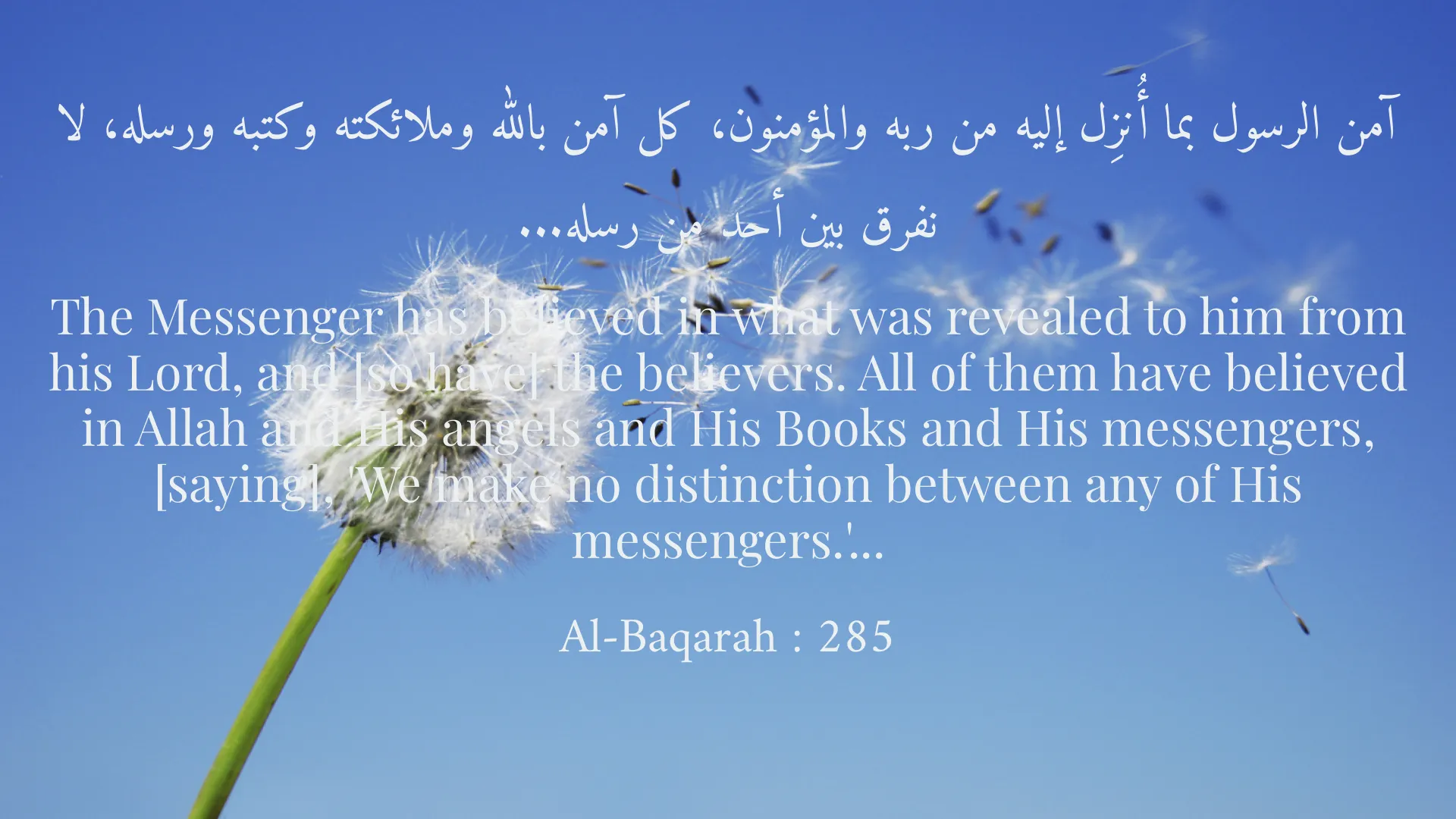
آمن الرسول بما أُنزِل إليه من ربه والمؤمنون، كل آمن بالله وملائكته وكتبه ورسله، لا نفرق بين أحد من رسله...
The Messenger has believed in what was revealed to him from his Lord, and [so have] the believers. All of them have believed in Allah and His angels and His Books and His messengers, [saying], 'We make no distinction between any of His messengers.'...
Al-Baqarah : 285
ولا تهنوا ولا تحزنوا وأنتم الأعلون إن كنتم مؤمنين.
And do not weaken or grieve, for you will surely be superior if you are believers.
Al-Imran : 139
Short Story
Once upon a time, there was a young man named Ali who faced uncertainties in his life. He had never been able to connect well with God, and now his questions were causing him despair. He decided to go to the mosque and speak with a religious scholar. After their conversation, Ali realized that many of his doubts were natural and that God was not disappointed in him. With renewed hope and faith, Ali continued his life and found that God was always by his side.