Quranic Answer
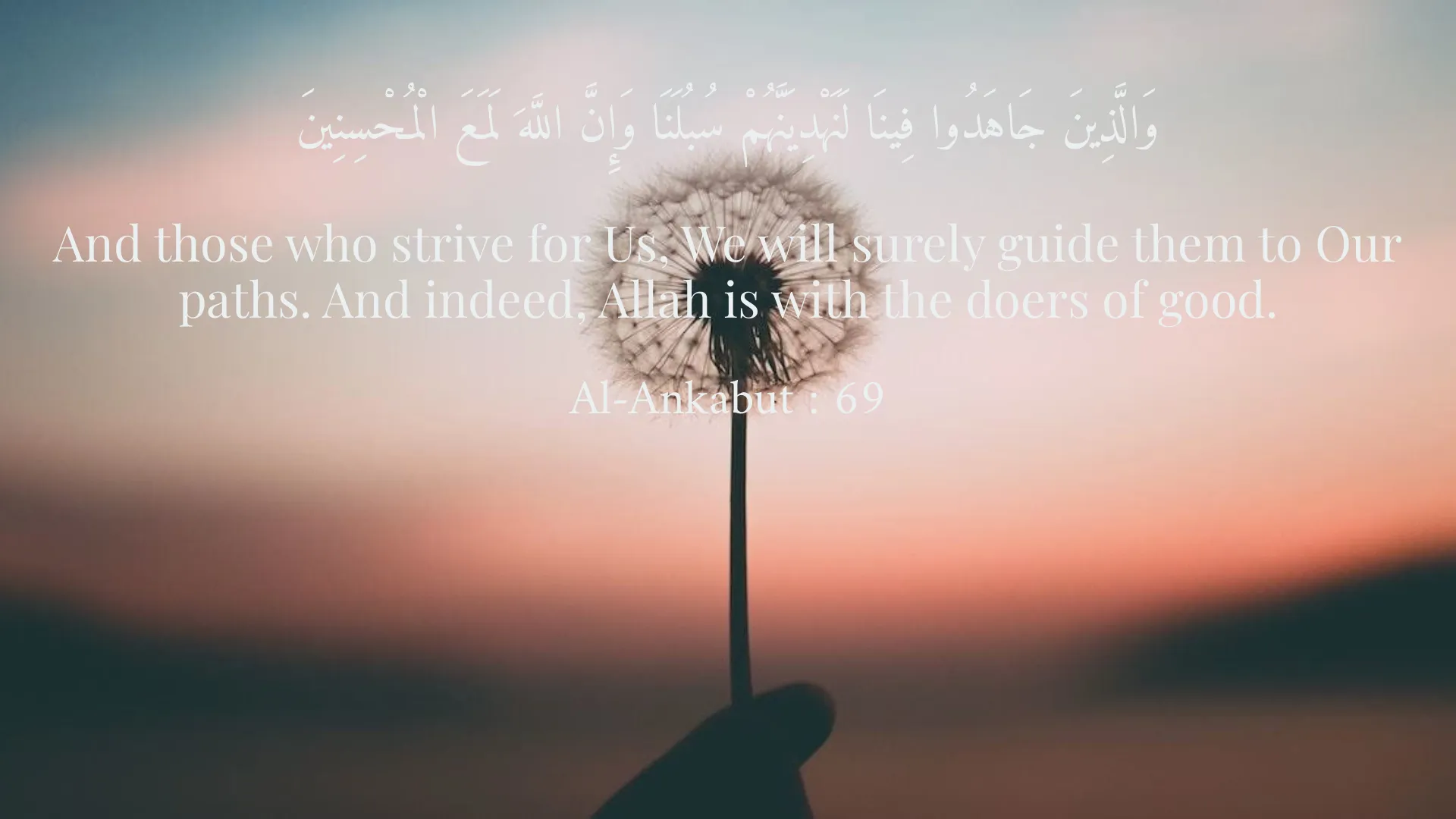
The Holy Quran, as the sacred text of Islam, holds significant spiritual and moral guidance for Muslims around the world. Its verses are often reflections on the nature of faith, the importance of perseverance, and the divine support offered to those who dedicate their lives to Allah. One of the core tenets emphasized throughout the Quran is the assurance that those who strive sincerely in the path of God will receive His guidance and assistance in their endeavors. This promise is beautifully encapsulated in Surah Al-Ankabut, verse 69, where Allah proclaims: "And those who strive for Us, We will surely guide them to Our paths. And indeed, Allah is with the doers of good." This verse lays the foundation for understanding jihad, not just as a physical struggle but as a broader, spiritual commitment to seek and serve God with sincerity. The notion of jihad, which commonly translates to "striving" or "struggle," is often misunderstood. In the Islamic context, it is primarily about personal and communal efforts to lead a life in accordance with divine commandments, promote justice, and uphold the truth even in the face of adversity. Thus, the Quran underscores the importance of sincerely striving in every aspect of life, whether spiritual, social, or individual. It emphasizes that true strength lies in determination and faith in the face of challenges. The assurance that God is present with those who do good serves as a profound source of motivation for countless believers, encouraging them to continue their struggles with patience and faith. Moreover, Surah Al-Baqarah, verse 153 adds another layer of understanding to the believers' journey through hardships. In this verse, Allah advises: "O you who have believed, seek help through patience and prayer. Indeed, Allah is with the patient." This guidance highlights the essential roles of patience and prayer as tools for maintaining faith and resilience. Life is replete with challenges—be it personal trials, societal injustices, or broader crises. During such times, the Quran teaches that turning to Allah through prayer not only fortifies one’s spirit but also reinforces the bond between the believer and their Creator. It is a reminder that patience is not a passive state but an active engagement with faith in the face of life's trials. The stress on prayer as a means to seek divine help is significant. It reflects a belief that a routine of regular prayers fosters a sustained connection with God, which in turn cultivates both hope and determination. Each moment of prayer acts as a replenishing wellspring of motivation and strength, allowing believers to carry on even when the road seems long and arduous. The verse indicates that Allah is especially present with those who remain patient, offering not just emotional but also spiritual support during trials. Further reinforcing the idea of striving in God's way is the verse from Surah Al-Ma'idah, verse 35, which states: "O you who have believed, fear Allah and seek the means of nearness to Him and strive in His cause that you may succeed." Here, the Quran invites believers to adopt a holistic approach to their faith—encouraging them to not only fear Allah but also actively seek ways to become closer to Him. This pursuit includes both personal spiritual development and collective efforts in the community to uphold what is just and righteous. The call to action in this verse is unmistakable; it instructs believers to take initiative in their faith and engage in endeavors that contribute to societal good. This holistic striving, combining both personal piety and communal responsibility, is central to the Islamic faith. When believers unite in striving for good—be it through charitable acts, spreading knowledge, or advocating for justice—they embody the spirit of jihad as intended in the Quran. Their collective efforts are not only viewed as noble acts but are also seen as essential for achieving success in both this world and the hereafter. The implications of these teachings are vast and profoundly applicable to contemporary audiences. As individuals navigate through modern life's complexities, the Quran's emphasis on striving, patience, and prayer provides a framework for resilience. Whether facing personal crises, engaging in activism, or pursuing spiritual enlightenment, these verses serve as guiding principles that encourage believers to remain steadfast. Additionally, the concept of divine support in times of hardship offers reassurance for those feeling overwhelmed. It nurtures a mindset that encourages faith over fear, action over inaction, and love over hate. The recognition that God is with the doers of good empowers believers to persist in their efforts, fostering a culture of tenacity and hope. In conclusion, the Holy Quran emphasizes a profound truth: those who strive sincerely for the sake of God will not find themselves alone in their efforts. Through various verses, such as those outlined in Surah Al-Ankabut, Surah Al-Baqarah, and Surah Al-Ma'idah, we find a consistent message advocating for hard work, patience, and prayer. These principles are not merely spiritual platitudes but are actionable steps that guide believers toward greater fulfillment and success. As one embarks on the journey of faith, these Quranic teachings serve as both a beacon of hope and a catalyst for action, ultimately reinforcing the idea that endeavors in goodness, aligned with divine purpose, are significant and will indeed garner support from God.
Related Verses
وَالَّذِينَ جَاهَدُوا فِينَا لَنَهْدِيَنَّهُمْ سُبُلَنَا وَإِنَّ اللَّهَ لَمَعَ الْمُحْسِنِينَ
And those who strive for Us, We will surely guide them to Our paths. And indeed, Allah is with the doers of good.
Al-Ankabut : 69
يَاأَيُّهَا الَّذِينَ آمَنُوا اسْتَعِينُوا بِالصَّبْرِ وَالصَّلَاةِ ۚ إِنَّ اللَّهَ مَعَ الصَّابِرِينَ
O you who have believed, seek help through patience and prayer. Indeed, Allah is with the patient.
Al-Baqarah : 153
يَا أَيُّهَا الَّذِينَ آمَنُوا اتَّقُوا اللَّهَ وَابْتَغُوا إِلَيْهِ الْوَسِيلَةَ وَجَاهِدُوا فِي سَبِيلِهِ لَعَلَّكُمْ تُفْلِحُونَ
O you who have believed, fear Allah and seek the means of nearness to Him and strive in His cause that you may succeed.
Al-Ma'idah : 35
Short Story
One day, a man named Hasan was walking through the streets of the city. He was facing many challenges in life and felt hopeless. Suddenly he recalled the verses of the Quran and decided to strive. Hasan became closer to God through more prayers and supplications and devoted himself to striving in His way. After some time, he noticed that God was helping him, and his problems were being resolved one by one.