Quranic Answer
The Holy Quran, revered as the central religious text of Islam, offers extensive insight into human existence, emotions, and the divine knowledge that governs life. Among the myriad themes presented within its verses, Allah's awareness and understanding of human matters stand out as particularly significant. One notable verse that encapsulates this divine awareness is verse 58 of Surah Ar-Rahman, which eloquently states: 'O assembly of jinn and mankind, if you are able to pass beyond the zones of the heavens and the earth, then pass beyond. You will not pass beyond except with authority.' This verse highlights the omnipotence and omnipresence of Allah; nothing escapes His notice, and His authority overshadows all creation. This sentiment reinforces the idea that every human experience, emotion, and circumstance is known to Allah, offering comfort and reassurance to believers. The vastness of creation mentioned in Surah Ar-Rahman is a profound reminder of the limitations that human beings face when trying to comprehend the divine. The verse compels us to acknowledge that, despite our struggles and aspirations, we exist within the parameters set by Allah. This understanding invokes a sense of humility in our hearts; recognizing that we are part of a grand design serves to remind us of our place in the universe. We often find ourselves grappling with feelings of insignificance amidst the vast expanse of the heavens and the earth, yet these words from Allah's scripture affirm that we are seen and valued. Moreover, our emotional landscape is profoundly intricate. Humans are endowed with the capability to feel a plethora of emotions, from joy to sorrow, hope to despair, and love to loneliness. In the fabric of human experience, loneliness is a thread that many inevitably encounter. This feeling is not just an absence of companionship, but a deep sense of isolation that can be overwhelming. It can arise during times of loss, separation, or even moments when we find ourselves in a crowd yet still feel emotionally disconnected. In Surah Al-Imran, verse 153, it is beautifully stated: 'Indeed, Allah is with the patient.' This verse serves as a poignant reminder of Allah’s companionship and support to those who endure hardship. When facing loneliness, it is crucial to remember that Allah is not distant or aloof. Instead, He is present with us, offering solace and comfort during our toughest times. This divine partnership encourages believers to approach Allah in prayer, seeking not only His help but also His companionship. The act of praying can be incredibly therapeutic; it allows individuals to articulate their feelings, share their burdens, and ask for guidance. When loneliness diminishes the light of hope in our hearts, submitting ourselves to prayer invites Allah’s presence into our lives. Spiritual practices such as supplication and gratitude serve as conduits for reconnecting with our Creator, reminding us that we are never truly alone. In these intimate moments of prayer, we can find strength and resilience, allowing us to face challenges with a renewed spirit. Additionally, engaging in good deeds can be a powerful antidote to feelings of loneliness. Helping others, participating in community service, or simply being present for a friend in need can foster deeper connections and remind us of humanity's collective struggle. The Quran encourages us to be of service to one another. Acts of kindness create bonds and friendships, ultimately reducing the sense of isolation we may feel. The wonderful irony of life is that by reaching out to others, we often find the companionship and understanding we seek ourselves. It is within these relationships that we can find reflection and solace. The beauty of Islamic teachings lies in their capacity to bind people together, rooted in empathy and mutual support. Allah, in His infinite wisdom, understands that these connections are vital for our emotional well-being and growth. Furthermore, remembrance of Allah (Dhikr) serves as a powerful tool during times of loneliness. Engaging in Dhikr can illuminate our hearts and provide an overwhelming sense of peace. Simple recitations or reflections on Allah's attributes allow us to reconnect with the divine, cultivating an environment of tranquility within ourselves. This experience reinforces the belief that Allah is not only aware of our circumstances but is actively present to guide and uplift our spirits. The profound acknowledgment of Allah’s presence during our trials leads us to a path of patience and perseverance. Life's trials and tribulations can often be daunting, and the burden of loneliness can feel insurmountable. Yet, with the knowledge that Allah is with us, we can draw strength from our faith. This belief instills a sense of inner peace; we can trust that Allah has a purpose for our hardships, even when we cannot see them clearly. It encourages a state of surrender, allowing us to accept our circumstances while remaining open to divine wisdom. In conclusion, the verses from the Holy Quran shed light on Allah's unmatched knowledge of human matters and His compassionate presence beside those who endure loneliness and trials. The divine connection that believers are encouraged to cultivate through prayer and good deeds not only deepens their relationship with Allah but also fosters a sense of belonging within the community. By recognizing that we are never alone in our feelings and struggles, we can navigate through life with a sense of purpose, resilience, and hope. In the end, it is this understanding that enables us to rise above our loneliness, drawing closer to Allah and embracing the beauty of human connection as a vital aspect of our existence.
Related Verses
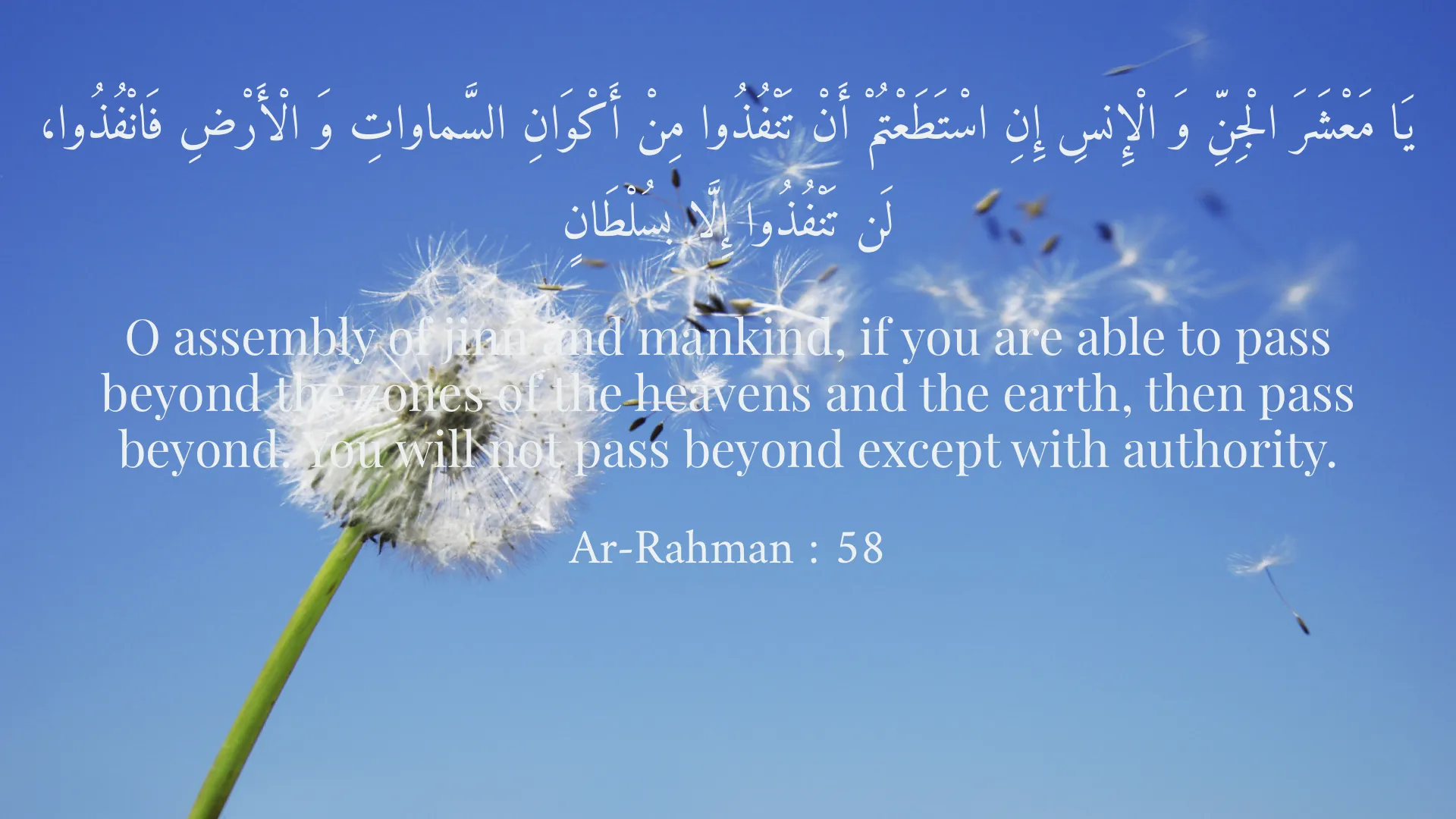
يَا مَعْشَرَ الْجِنِّ وَ الْإِنسِ إِنِ اسْتَطَعْتُمْ أَنْ تَنْفُذُوا مِنْ أَكْوَانِ السَّماواتِ وَ الْأَرْضِ فَانْفُذُوا، لَن تَنْفُذُوا إِلَّا بِسُلْطَانٍ
O assembly of jinn and mankind, if you are able to pass beyond the zones of the heavens and the earth, then pass beyond. You will not pass beyond except with authority.
Ar-Rahman : 58
إِنَّ اللَّهَ مَعَ الصَّابِرِينَ
Indeed, Allah is with the patient.
Al-Imran : 153
Short Story
One day, a man named Royan experienced a profound feeling of loneliness. He was distant from his family for various reasons and pondered deeply in his solitude. In this state of despair, he decided to turn to the Quran. He read a verse that said Allah is close to all His servants and understands their hardships. This message made him feel that he was not alone, that God was always with him. He then started to pray, leading to a greater sense of comfort and peace.