Quranic Answer
In the Holy Quran, the profound concept of God's omniscience is a recurring theme that resonates deeply within the hearts and minds of believers. The notion that Allah possesses complete and unlimited knowledge is not only a testimony to His divine nature but also a source of comfort and guidance for humanity. This article delves into the multifaceted aspects of God's knowledge as depicted in the Quran, emphasizing its implications for human existence, spirituality, and moral conduct. The assertion of Allah's total knowledge can be clearly found in Surah Al-Mu'minun, verse 107: 'Indeed, Allah has encompassed all things in knowledge.' This powerful declaration encapsulates the essence of Allah's understanding, which is not limited by time, space, or circumstance. His knowledge transcends the boundaries that bind human comprehension. The verse suggests a comprehensive awareness that includes the infinitesimal details of life, events, and even the most intimate thoughts and intentions of human beings. Additionally, the Quran describes God's knowledge as a reflective attribute of His sovereignty. In Surah Al-An'am, verse 59, it states: 'And with Him are the keys of the unseen; none knows them except Him.' This verse highlights the exclusivity of God's awareness regarding all that is concealed from human sight. While human beings grapple with uncertainty and ambiguity in their lives, Allah is fully cognizant of everything that has transpired and everything that is yet to come. This idea instills a profound sense of trust in believers, as they are assured that Allah's knowledge is thorough and all-encompassing. Human experience is characterized by a perpetual state of seeking understanding in a world fraught with complexities and nuances. Often, individuals find themselves confronted with uncertainty, navigating through challenges that test their faith and resolve. In such moments of doubt, the assurance that God possesses complete knowledge serves as an anchor for believers. It offers solace during trials, reminding them that Allah understands their struggles and knows their needs better than they do themselves. This divine attribute encourages believers to surrender their worries and anxieties to God, reinforcing their reliance upon Him in all matters. Furthermore, the implications of God's knowledge extend beyond mere awareness of events or outcomes. It signifies His ability to intervene and influence the course of human affairs. From a theological perspective, there exists a crucial interplay between God’s knowledge, human free will, and predestination. While Allah is fully aware of the choices individuals will make, humans are still granted the agency to choose their paths. This delicate balance fosters a sense of moral responsibility and accountability. In understanding that God knows our innermost secrets and intentions, believers are encouraged to cultivate sincerity in their actions and thoughts. Moreover, the Quranic verses addressing God's knowledge often serve as an invitation for introspection. When individuals are reminded of Allah’s omniscience, it prompts a critical evaluation of their behavior and intentions. Believers are encouraged to align their actions with divine guidance, fostering a relationship rooted in ethical conduct and righteousness. The acknowledgment of God's all-knowing nature encourages an attitude of mindfulness, inspiring individuals to engage in just actions and to seek forgiveness for their misdeeds, knowing that they cannot hide anything from the Creator. In addition, Allah’s knowledge creates an atmosphere of hope and reassurance for believers. In challenging circumstances, people often feel despondent, questioning their worth and future. However, by believing in God's perfect knowledge, they find reassurance in His plans. They understand that the trials they face may have divine wisdom beyond their understanding. Surah Ash-Shura, verse 30 illustrates this concept: 'And whatever strikes you of disaster - it is for what your own hands have earned; but He pardons much.' Here, believers are reminded of the consequences of their actions, yet they are also given hope for forgiveness and mercy from Allah. The understanding of God’s knowledge also nurtures a sense of humility in human beings. Recognizing our limitations compared to the boundless wisdom of the Creator promotes an attitude of submission and reverence. It encourages believers to turn to Allah for guidance and support in every step of their lives. This relationship of dependence fosters spiritual growth, allowing individuals to transform their challenges into opportunities for deeper faith and connection with God. Conclusively, the concept of God’s omniscience, as evident in the Holy Quran, plays a transformative role in shaping the spiritual and moral framework of believers. Through the acknowledgment of Allah’s limitless knowledge, individuals find reassurance, guidance, and motivation in their daily lives. It empowers them to navigate through uncertainty with trust in God's plans and encourages them to uphold ethical standards in their actions. The divine promise that God knows everything offers hope amid despair, invoking a sense of responsibility and humility that aligns individuals with the will of their Creator. Understanding God's comprehensive knowledge leads believers not only to seek His understanding but also to embody a life that reflects His attributes of justice, mercy, and compassion.
Related Verses
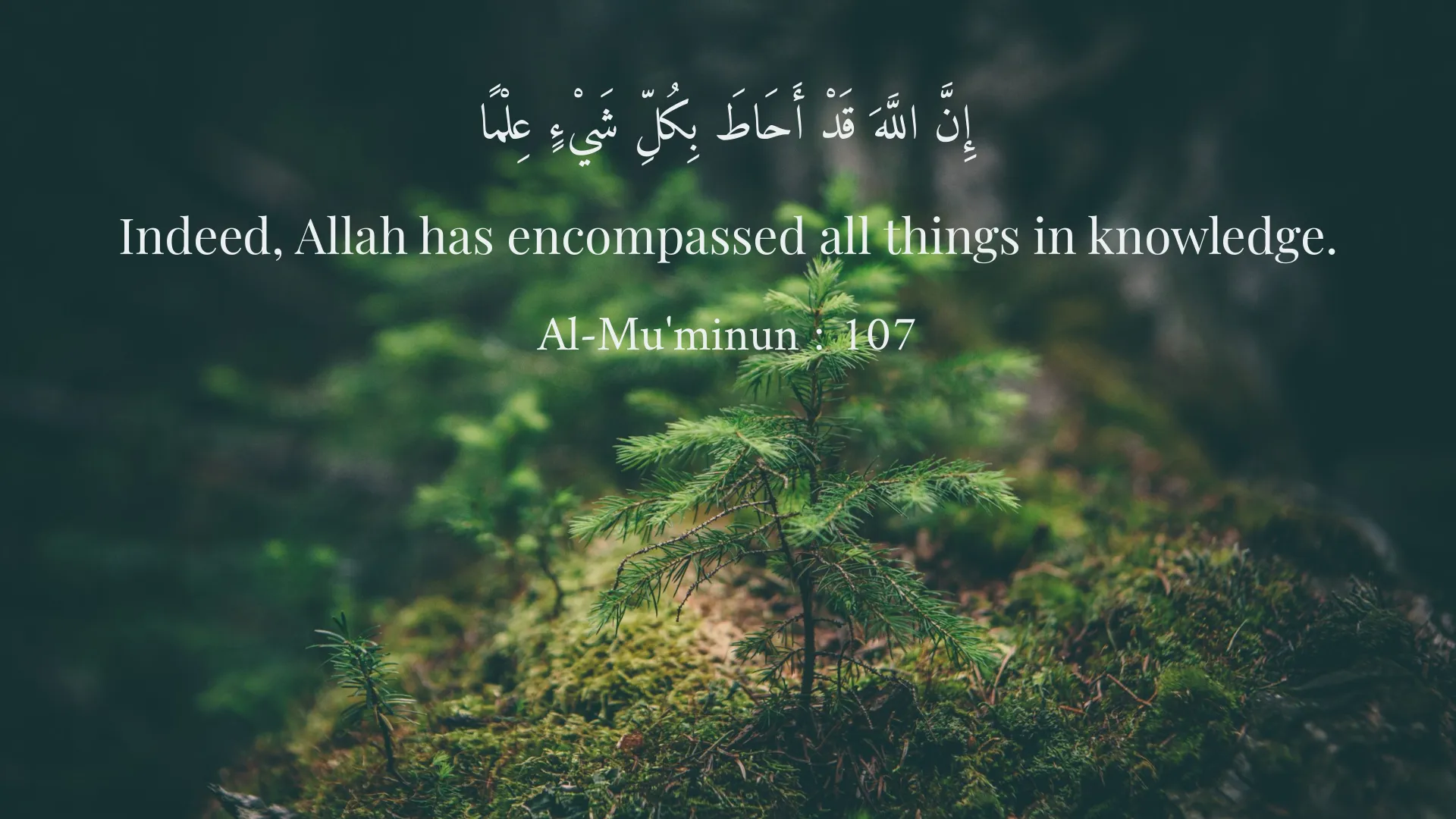
إِنَّ اللَّهَ قَدْ أَحَاطَ بِكُلِّ شَيْءٍ عِلْمًا
Indeed, Allah has encompassed all things in knowledge.
Al-Mu'minun : 107
وَ عِندَهُ مَفَاتِحُ الْغَيْبِ لَا يَعْلَمُهَا إِلَّا هُوَ
And with Him are the keys of the unseen; none knows them except Him.
Al-An'am : 59
Short Story
One day, a man went to the market and while buying tea, he fell into deep thought about his life and circumstances. Questions arose within him, and he wondered: Does God know what will happen to me? Moments later, he recalled the verses of the Quran that state: 'God is aware of everything.' This verse instilled peace in his heart and reminded him that he must trust in God in all circumstances.