Quranic Answer
In Islamic theology, the Quran serves as the ultimate guide for understanding the relationship between Allah and His servants. This intricate relationship is multifaceted, as it encompasses divine love, mercy, and justice. Through various verses, Allah elucidates His profound affection for mankind; however, this love is not unconditional. Instead, it hinges significantly upon the actions and intentions of His creations. This conditional aspect is vital for Muslims to comprehend, as it shapes their approach to worship, conduct, and moral accountability. One of the most poignant references to Allah's love can be found in Surah Al-Imran (3:31). Here, Allah invites the believers to affirm their love for Him through their adherence to the teachings of Prophet Muhammad (peace be upon him). The verse states, 'Say, "If you love Allah, then follow me, so Allah will love you and forgive your sins."' This passage underscores the symbiotic relationship between divine love and human action. It suggests that Allah's love is not a mere sentiment but a reciprocated feeling, which is activated by following the righteous path laid down by His messenger. This emphasizes the importance of obedience and servitude in nurturing one's spiritual relationship with Allah. Furthermore, in Surah Al-Ma'idah (5:54), Allah clearly articulates a profound warning regarding faith. He states, 'O you who have believed! Whoever of you should revert from his religion - Allah will bring forth for the people whom He will love and who will love Him.' This verse reflects a vital principle in Islamic teachings: that steadfastness in faith is paramount. The message is crystal clear: those who waver in their belief or turn away from the tenets of Islam forfeit the love of Allah. This acts as both a cautionary note and an encouragement for believers to remain firm in their faith and to cultivate a deep, abiding love for Allah through their dedication. In addition to following the Prophet’s example, the Quran emphasizes a broader notion of piety, which is beautifully encapsulated in the definition of righteousness provided in Surah Al-Baqarah (2:177). Allah elaborates, 'Righteousness is not that you turn your faces toward the east or the west, but [true] righteousness is in one who believes in Allah, the Last Day, the Angels, the Scripture, and the Prophets and gives his wealth, in spite of love for it, to relatives, orphans, the needy, the traveler, those who ask [for help], and for freeing slaves.' This verse sheds light on the distinctive characteristics that signify true believers: their unwavering faith coupled with tangible acts of charity and benevolence. From this perspective, it becomes evident that Allah's affection is intrinsically linked to virtuous deeds. It presents a comprehensive understanding of what it means to be righteous in Islam, transcending mere rituals or external show. Instead, righteousness is intimately connected with sincerity in belief and altruistic actions aimed at helping those who are less fortunate. By listing various groups that deserve assistance, the verse conveys the message that Allah’s love seeks to engender compassion and care within the community. These verses collectively paint a rather intricate picture of divine love in Islam. It is crucial to recognize that while Allah’s love is extended to all His servants, the Quran elucidates that this love is intertwined with spiritual and ethical responsibilities. The more one embodies the qualities of faith, integrity, and goodwill, the closer one moves toward earning Allah's love. This multi-layered dynamic emphasizes personal accountability in one’s journey of faith and spiritual growth. Moreover, Allah's love also serves as a driving force for personal improvement and development. When Muslims understand that their actions significantly impact their standing in the eyes of the Almighty, it encourages them to strive for excellence in all aspects of life. This concept aligns with the broader Islamic principle that life is a test, and each individual is accountable for their choices and behavior. In essence, the divine love of Allah is not bestowed blindly; it requires an active commitment to righteousness and moral uprightness. This notion cultivates a culture of self-improvement and responsibility, urging believers to constantly reflect on their actions and seek to better themselves. It inspires a relationship with Allah that emphasizes effort alongside devotion, manifesting in acts of kindness, charity, and a steadfast commitment to faith. In conclusion, the Quran serves as a guiding light in understanding the nuanced nature of Allah’s love for His servants. Through adherence to His guidance, steadfastness in faith, and commitment to righteous deeds, believers cultivate a relationship with the Divine characterized by mutual affection and mercy. Islam teaches that divine love is active, requiring effort and sincerity from individuals. By embracing their responsibilities, Muslims can aspire to not only receive Allah's love but also embody the values that reflect His mercy and compassion in this world. As Muslims navigate their spiritual journeys, the teachings of the Quran serve as a constant reminder of the responsibility inherent in the gift of faith. By recognizing that their actions matter and that they have the ability to shape their relationship with Allah, they are empowered to pursue a life filled with love, purpose, and devotion. Ultimately, understanding Allah's love is not merely a matter of theology; it serves as the cornerstone for a life committed to loving and serving others in the way that Allah commands.
Related Verses
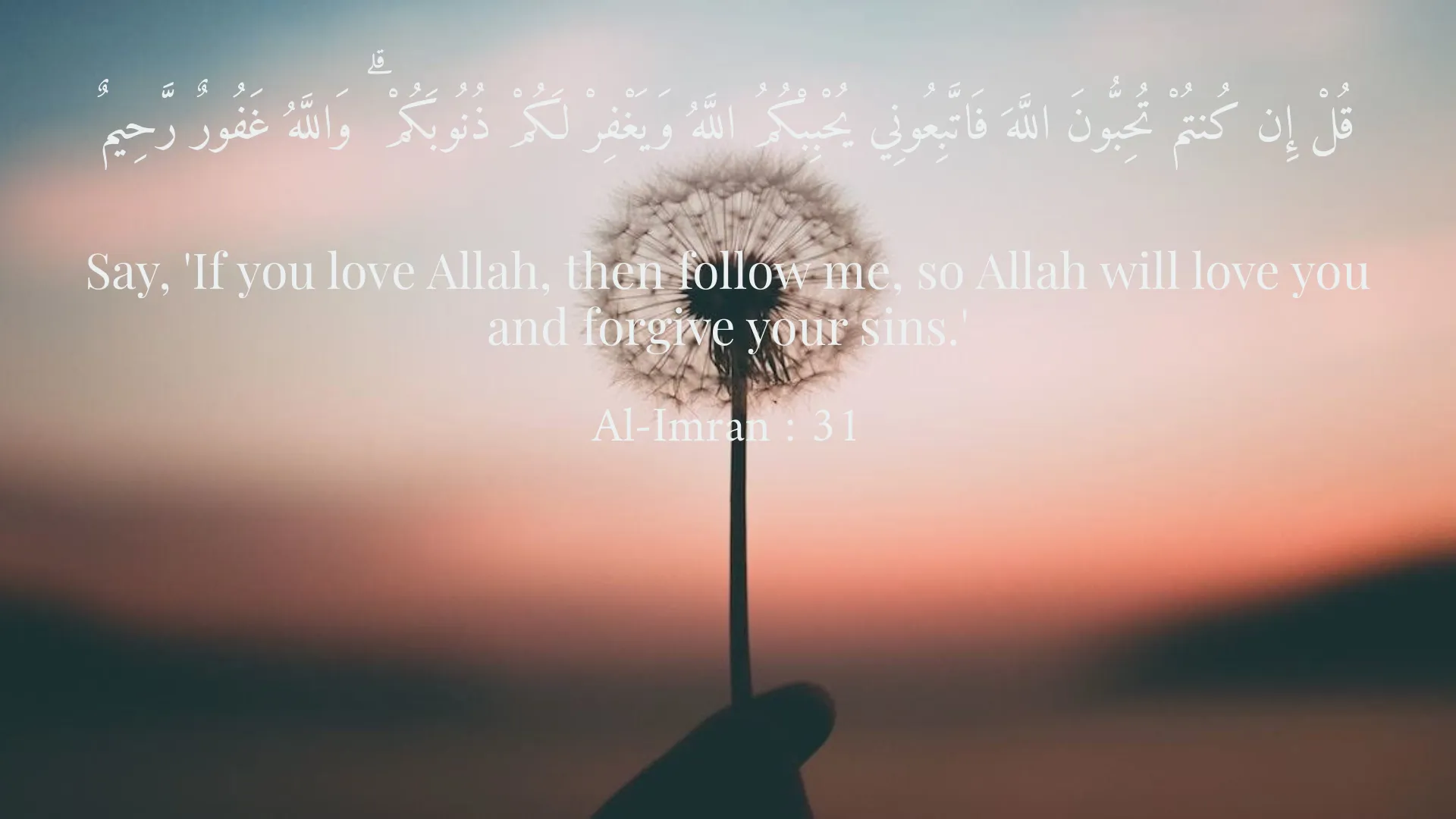
قُلْ إِن كُنتُمْ تُحِبُّونَ اللَّهَ فَاتَّبِعُونِي يُحْبِبْكُمُ اللَّهُ وَيَغْفِرْ لَكُمْ ذُنُوبَكُمْ ۗ وَاللَّهُ غَفُورٌ رَّحِيمٌ
Say, 'If you love Allah, then follow me, so Allah will love you and forgive your sins.'
Al-Imran : 31
يَا أَيُّهَا الَّذِينَ آمَنُوا مَن يَرْتَدَّ مِنكُمْ عَنْ دِينِهِ فَسَوْفَ يَأْتِي اللَّهُ بِقَوْمٍ يُحِبُّهُمْ وَيُحِبُّونَهُ أَذِلَّةٍ عَلَى الْمُؤْمِنِينَ أَعِزَّةٍ عَلَى الْكَافِرِينَ يُجَاهِدُونَ فِي سَبِيلِ اللَّهِ وَلَا يَخَافُونَ لَوْمَةَ لائِمٍ ۚ ذَٰلِكَ فَضْلُ اللَّهِ يُؤْتِيهِ مَن يَشَاءُ ۗ وَاللَّهُ وَاسِعٌ عَلِيمٌ
O you who have believed! Whoever of you should revert from his religion - Allah will bring forth for the people whom He will love and who will love Him.
Al-Ma'idah : 54
لَيْسَ الْبِرَّ أَنْ تُوَلُّوا وَجُوهَكُمْ قِبَلَ الْمَشْرِقِ وَالْمَغْرِبِ وَلَكِنَّ الْبِرَّ مَن آمَنَ بِاللَّهِ وَالْيَوْمِ الْآخِرِ وَالْمَلَائِكَةِ وَالْكِتَابِ وَالنَّبِيِّينَ وَآتَى الْمَالَ عَلَى حُبِّهِ ذَوِي الْقُرْبَى وَالْيَتَامَى وَالْمَسَاكِينِ وَابْنَ السَّبِيلِ وَالسَّائِلِينَ وَفِي الرِّقَابِ.
Righteousness is not that you turn your faces toward the east or the west, but [true] righteousness is in one who believes in Allah, the Last Day, the Angels, the Scripture, and the Prophets.
Al-Baqarah : 177
Short Story
One day, a young man named Muhammad was searching for the meaning of his life. He talked with his friends and heard about God's love for His servants. By reflecting on the verses of the Quran and his beliefs, he concluded that Allah's love for His servants is conditional on doing good and following His commands. Muhammad decided to increase his benevolence in life and show love to others. Over time, with Allah's love in his heart, he felt a greater sense of peace and joy.