Quranic Answer
Title: The Divine Essence of Love and Mercy in the Holy Quran Introduction In the realm of religious and spiritual texts, the Holy Quran stands as a profound guide, providing insights not only into the nature of God but also into the ethical principles that shape human behavior. Central to the teachings of the Quran are the concepts of love and mercy, which Allah presents as fundamental traits that signify true faith. These attributes are not merely abstract ideals; they represent the core of social interactions and communal harmony. This article delves into the Quranic verses that emphasize love and mercy, highlighting their significance and the impact they have on both personal relationships and societal structures. Love and Mercy as Divine Attributes The Quran explicitly portrays love and mercy as essential characteristics of Allah. One notable example can be found in Surah Al-Imran, verse 159, where it states: 'So by mercy from Allah, [O Muhammad], you were lenient with them. And if you had been rude in speech and harsh in heart, they would have disbanded from about you.' This verse encapsulates the profound impact of mercy on interpersonal relationships. It implies that a leader, or anyone in a position of authority, should exhibit kindness and gentleness. The underlying message is intrinsic to the notion that an open heart invites loyalty and fosters community. The ability to connect with others through compassion and kindness is a recurring theme in the Quran. In a world often filled with conflict and division, these verses remind believers that showing love and understanding is paramount. People are often moved by acts of kindness; they gravitate toward those who exhibit patience and soft-spoken words. Thus, mercy and love are not just ethical obligations but strategies that cultivate unity and prevent discord. Additionally, in Surah Al-Ma'idah, verse 54, it states: 'O you who have believed, whoever of you should revert from his religion - Allah will bring forth for the people He will love and who will love Him, [who are] humble toward the believers, dignified toward the disbelievers.' This verse expands on the concept of love, introducing the notion of humility and dignity as essential attributes of believers. Here, Allah distinguishes between the treatment of fellow believers and disbelievers, urging followers to maintain dignity and respect regardless of differing beliefs. This attitude fosters an environment where dialogue and respect can thrive, encouraging peace even amid disagreement. The Importance of Compassion in Faith Compassion, as presented in the Quran, serves as a bridge connecting individuals and communities. The virtues of love and mercy create a nurturing environment for human development and growth. They encourage individuals to approach conflicts with understanding rather than hostility and challenge the notion of revenge with forgiveness. The representation of compassion in these verses reaffirms that faith is not solely about rituals but also about how individuals treat one another in their daily lives. Moreover, these values are not confined to mere personal interactions. They extend throughout society, where the principles of mercy and love can lead to a more harmonious existence. A society built on the teachings of compassion, as emphasized in the Quran, is likely to experience lower levels of conflict. When individuals prioritize love and mercy, they contribute to fostering relationships that are enriching, supportive, and cooperative. Mercy and Love as Keys to Spiritual Growth For believers striving for a close relationship with God, embodying the attributes of love and mercy is paramount. The pursuit of spiritual growth is closely intertwined with the practice of these virtues. Engaging with others through kindness and understanding reflects an inward state of being aligned with divine principles. When individuals adopt a merciful approach to life, they open themselves to divine blessings and the love of Allah. The Quran encourages believers to mirror these characteristics, as it creates a cycle of positive reinforcement. By treating others with love and compassion, they not only ignite a transformative power in their relationships but also draw closer to the divine. This quest for spiritual elevation emphasizes the need for self-reflection. Believers are called to evaluate their actions and sentiments, always aiming to embody love and mercy within their families, workplaces, and communities. The practice of these virtues not only enhances personal relationships but also contributes to a collective atmosphere of peace and harmony. This holistic approach is essential for cultivating a community that reflects the essence of divine love and mercy. Conclusion In essence, the teachings of the Holy Quran regarding love and mercy offer rich guidance for both personal and societal conduct. They remind us that these attributes are not merely scripted ideals but are integral to achieving a meaningful existence. The verses discussed underscore the significance of approaching life with an open and compassionate heart, inspiring others and creating genuine bonds. The divine attributes of love and mercy invite people to rise above divisions and conflicts, fostering a communal spirit rooted in kindness and understanding. Therefore, embracing these traits can lead to a transformative experience, making it essential for believers to strive incessantly toward love and mercy in their relationships with others. This commitment lays the groundwork for both individual redemption and societal harmony, ultimately reflecting the divine essence of the teachings found in the Holy Quran.
Related Verses
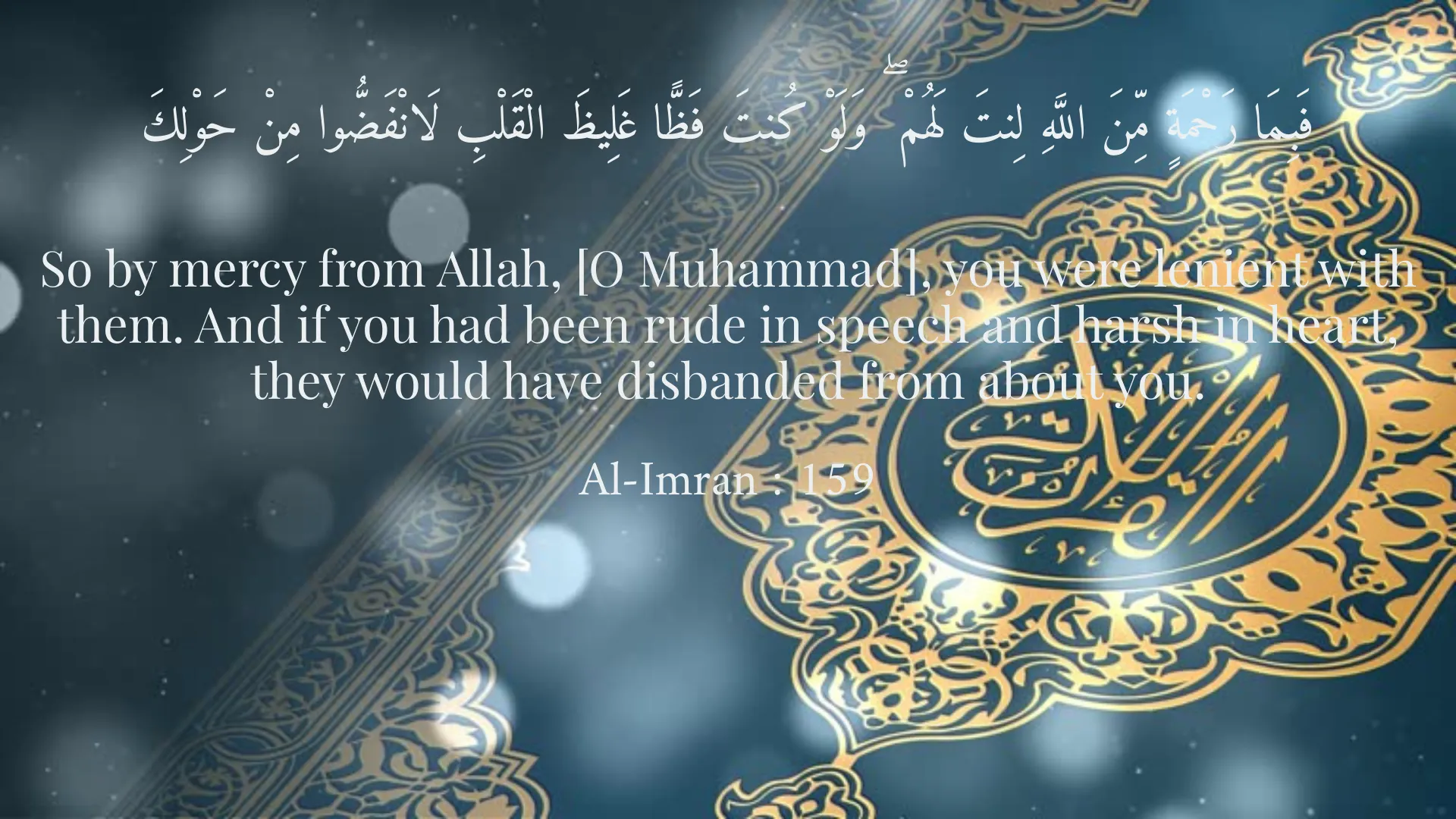
فَبِمَا رَحْمَةٍ مِّنَ اللَّهِ لِنتَ لَهُمْ ۖ وَلَوْ كُنتَ فَظًّا غَلِيظَ الْقَلْبِ لَانْفَضُّوا مِنْ حَوْلِكَ
So by mercy from Allah, [O Muhammad], you were lenient with them. And if you had been rude in speech and harsh in heart, they would have disbanded from about you.
Al-Imran : 159
يَا أَيُّهَا الَّذِينَ آمَنُوا مَن يَرْتَدَّ مِنكُمْ عَنْ دِينِهِ فَسَوْفَ يَأْتِيَ اللَّهُ بِقَوْمٍ يُحِبُّهُمْ وَيُحِبُّونَهُ أَذِلَّةٍ عَلَى الْمُؤْمِنِينَ أَعِزَّةٍ عَلَى الْكَافِرِينَ
O you who have believed, whoever of you should revert from his religion - Allah will bring forth for the people He will love and who will love Him, humble toward the believers, dignified toward the disbelievers.
Al-Ma'idah : 54
Short Story
One day, a mother told her son, 'My son, if you want God to love you, be kind to people and show them mercy. Compassion is a divine command.' Upon hearing this, the son became more compassionate and caring, and his life transformed.