Quranic Answer
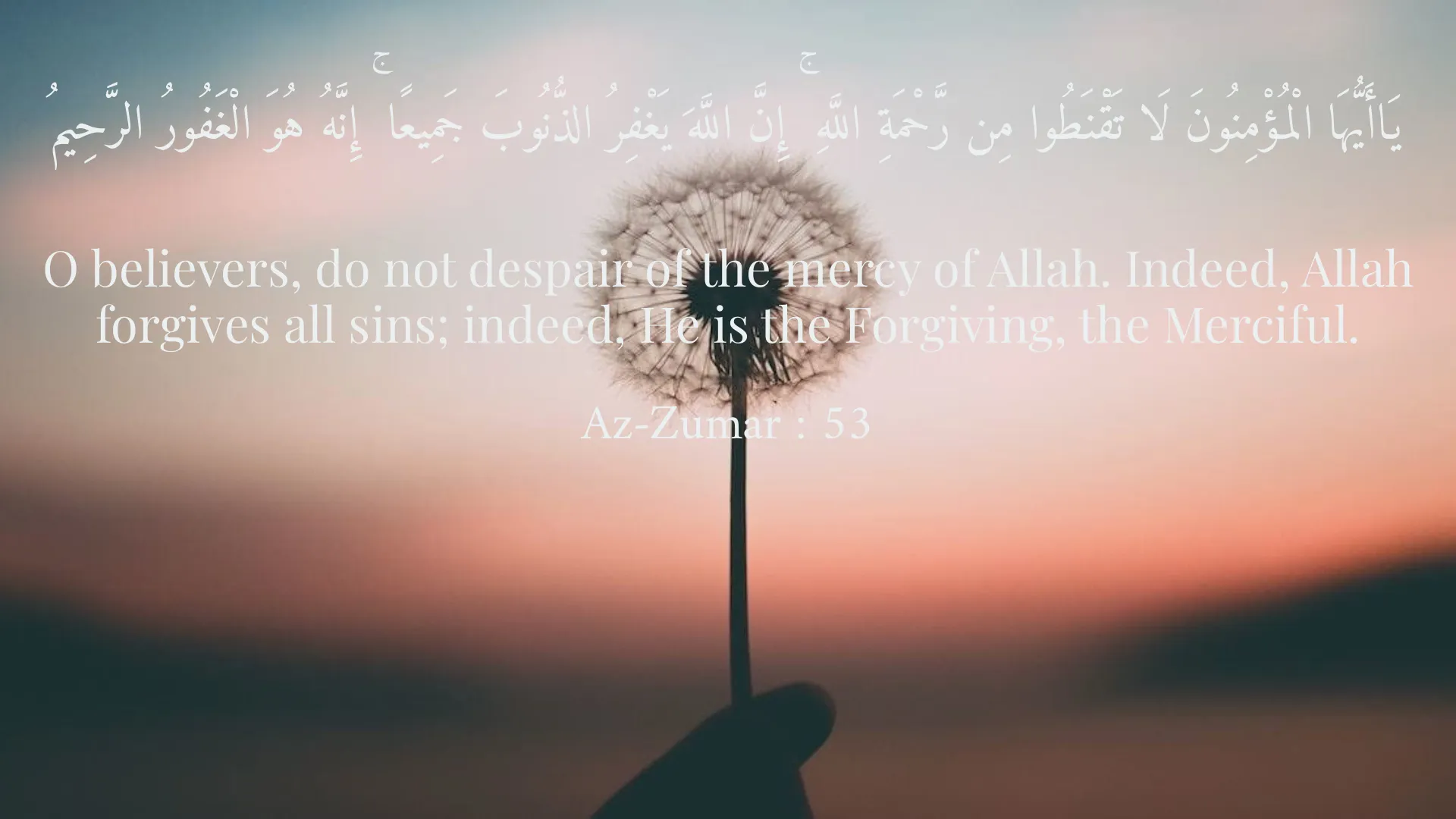
The Holy Quran is revered as the sacred text of Islam, providing guidance and direction for the Muslim community. Among its core themes, the notions of mercy and love of Allah stand out prominently. Unlike many narratives throughout religious texts that may portray a wrathful deity, the Quran presents a God who is exceedingly merciful and compassionate towards all humanity, including those who may have strayed off the righteous path. This overarching message of mercy is crucial in understanding the relationship between Allah and His creation, especially the concept of sin and repentance. In Surah Az-Zumar, verse 53, Allah states, 'O My servants who have believed, do not despair of the mercy of Allah. Indeed, Allah forgives all sins. Indeed, it is He who is the Forgiving, the Merciful.' This profound verse serves as an invitation to believers, encouraging them not to lose hope despite their shortcomings or sins. In a world where many might feel isolated due to their faults, this verse reassures them that God's mercy is not only vast but also inclusive, encompassing even the most sinful among individuals. The wording here is critical — Allah calls believers to remember their identity as His servants, thus reinforcing the intimate relationship that exists between the Creator and His creations. The title 'My servants' establishes a sense of belonging and recognition of being part of something greater than oneself, offering solace and strength to those seeking redemption. The significance of such verses extends beyond mere encouragement; it serves as a powerful reminder that repentance is always a viable path for an individual, no matter how grave the transgressions may be. The Quran promotes the action of turning back to God, suggesting that the door of forgiveness is always open, and it awaits those who genuinely seek to change their ways. This aspect of divine mercy contrasts sharply with various cultural attitudes that often dismiss people based on their past, showcasing the Quran's unique perspective that facilitates spiritual growth regardless of previous actions. The ongoing theme of forgiveness is an essential element of the Islamic faith, meant to foster a deep sense of hope and love for God, inspiring individuals to improve and seek His proximity. Furthermore, in Surah Al-Imran, verse 135, the scripture elaborates: 'And those who, when they commit an immorality or wrong themselves by transgression, remember Allah and seek forgiveness for their sins.' Here, the text highlights an important psychological and spiritual process — the act of remembering Allah amidst transgression. It speaks to human nature's tendency to falter, yet emphasizes that awareness of one's misdeeds should propel individuals towards seeking forgiveness. This reflection forms the first step in the process of repentance; it acknowledges the fallibility of humans yet empowers them to return to a loving God. The phrase 'remember Allah' suggests that one's relationship with the divine wield a transformative power — it reminds individuals that, despite sin, they can invoke God's mercy through genuine remorse and the pursuit of forgiveness. This notion creates a dynamic framework within which individuals navigate their spiritual journeys, highlighting the agency they possess to change their trajectories. Moreover, the characteristics of Allah as 'the Forgiving, the Merciful' not only underline His supreme power to forgive but also reflect His intrinsic nature. This depiction of God is one deeply embedded in Islamic theology, where mercy is not just a transient feeling but an integral part of the divine essence. The Quran extends the teaching that those who desire divine love and acceptance must first embrace repentance and strive to cultivate a sincere relationship with their Creator. This is the essence of hope conveyed throughout the Quran, where failing does not equate to entrepreneurship but, rather, provides an opportunity for change and growth. The relationship between humanity and divine mercy necessitates continuous engagement in the form of prayer, reflection, and repentance. It signifies that while the opportunity for sin exists due to free will, the ultimate destination may always be forgiveness and tranquility should one actively seek it. Allah's compassion is a relentless current that flows towards those who reach out for it, fostering a nurturing environment for spiritual development. Considering this approach, it becomes evident that repentance is not merely a one-time act; it is a continual process crafted from the understanding that all humans are imperfect and reliant on divine grace. In conclusion, the teachings of the Holy Quran emphasize that God's mercy is accessible to everyone, regardless of the severity of their sins. Surah Az-Zumar, verse 53 and Surah Al-Imran, verse 135 clearly illustrate this divine love and the continuous opportunity for repentance. Thus, believers are encouraged to not despair but to embrace their innate ability to seek mercy, transforming themselves and rekindling their relationship with their Creator. This transformative journey embodies the essence of faith and serves as an example of how one can navigate through the challenges of life while continuously striving towards a closer connection with Allah. Through the lens of these verses, it is evident that God's love and mercy are waiting to envelop all who wish to turn back toward Him, opening a path to redemption and spiritual fulfillment.
Related Verses
يَاأَيُّهَا الْمُؤْمِنُونَ لَا تَقْنَطُوا مِن رَّحْمَةِ اللَّهِ ۚ إِنَّ اللَّهَ يَغْفِرُ الذُّنُوبَ جَمِيعًا ۚ إِنَّهُ هُوَ الْغَفُورُ الرَّحِيمُ
O believers, do not despair of the mercy of Allah. Indeed, Allah forgives all sins; indeed, He is the Forgiving, the Merciful.
Az-Zumar : 53
وَالَّذِينَ إِذَا فَعَلُوا فَاحِشَةً أَوْ ظَلَمُوا أَنفُسَهُمْ ذَكَرُوا اللَّهَ فَاسْتَغْفَرُوا لِذُنُوبِهِمْ
And those who, when they commit an immorality or wrong themselves by transgression, remember Allah and seek forgiveness for their sins.
Al-Imran : 135
Short Story
One day, a person named Hassan made a mistake and felt guilty. He remembered the verses of the Quran and decided to seek forgiveness from God. After some time, Hassan felt peace and forgiveness and realized that God was always waiting for him.