Quranic Answer
The concept of mercy in Islam is deeply rooted in the teachings of the Holy Quran, where Allah frequently emphasizes His kindness and compassion toward humanity. This theme of mercy is not only central to Islamic theology but also serves as a guiding principle for the behavior of believers towards themselves and others. One of the most striking examples of Allah's mercy can be found in Surah Az-Zumar, verse 53, which poignantly states: "Say, O My servants who have believed, fear your Lord. For those who do good in this world is good, and the earth of Allah is spacious. Indeed, the patient will be given their reward without account." This verse serves as an invitation for believers to recognize the vastness of Allah's mercy and to understand their place within it, encouraging those who may falter and commit sins to return to their Creator in hope of His forgiveness. At the heart of this verse is a profound reassurance that Allah is aware of the struggles faced by humanity. The phrase "O My servants who have believed" indicates a direct and personal relationship between Allah and His followers, implying that despite their imperfections and transgressions, they are still recognized as His servants. This acknowledgment alone instills a sense of dignity and hope. Through the subsequent phrases, Allah invites believers to cultivate a fear of their Lord, which is not a fear rooted in dread, but rather a fear that inspires love and obedience. This fear, paired with hope in Allah's mercy, encourages individuals to strive for good deeds in their lives. The verse further demonstrates the enormous breadth of Allah's mercy by stating that "the earth of Allah is spacious," suggesting that there is ample opportunity for everyone to engage in righteous deeds and seek personal growth in their spiritual journey. It affirms the belief that despite the sins a person may commit, there is always the opportunity for redemption through good actions. The conclusion of the verse reinforces this promise of reward for those who exhibit patience, implying that Allah's mercy does not depend on the quantity of sins one has committed but rather on the sincerity of one's intentions and efforts to return to Him. In another impactful verse, Surah Al-Ma'idah, verse 39 states, "But whoever repents after his wrongdoing and reforms his conduct, indeed, Allah will accept his repentance." This powerful assertion illustrates the core Islamic belief that regardless of the magnitude or number of sins a person may have committed, repentance opens the door to forgiveness. This verse not only highlights Allah's willingness to forgive but also emphasizes the transformative power of sincere repentance. It signifies that the path towards redemption is available to all, reinforcing the notion that true regret can lead to spiritual rejuvenation. The act of repentance (Tawbah) in Islam is not merely a verbal proclamation but entails a profound internal change. It involves feeling genuine remorse for past actions, ceasing the sinful behavior, and making a firm intention not to return to those sins. This holistic approach to repentance contributes significantly to a believer's growth and strengthens their relationship with Allah. The emphasis on reforming one's conduct highlights that true repentance is accompanied by a strong commitment to positive change, further reflecting Allah's mercy that encompasses the potential for human transformation. Moreover, Surah Al-Imran, verse 135 elaborates on the concept of repentance by stating, "And those who, when they commit an immorality or wrong themselves by [engaging in] sin, remember Allah and seek forgiveness for their sins—and who can forgive sins except Allah?" This verse emphasizes that even amidst human failings, those who remember and seek Allah's forgiveness will find mercy. It underscores the reality that sin is a part of the human experience, yet what defines a believer is their ability to recognize their transgressions and turn back to Allah in humility. A crucial aspect of understanding Allah's mercy is acknowledging His wisdom. Allah's expectations and decrees are rooted in infinite knowledge and mercy. The Quran's verses consistently illustrate that while Allah does not condone sin, He is aware of the human condition—our weaknesses, challenges, and temptations. Thus, His mercy is not arbitrary; it is a carefully considered response to the genuine efforts of individuals seeking to align themselves with His will. The balance between hope and fear serves as a profound motivator for believers to strive toward righteousness. In this dynamic relationship, believers are encouraged to cultivate a deep sense of awareness of their actions while recognizing the ever-available opportunity for redemption. In conclusion, the Holy Quran offers a comprehensive understanding of Allah's mercy and kindness, illustrating how they extend far beyond the bounds of human transgressions. Verses such as those from Surah Az-Zumar, Surah Al-Ma'idah, and Surah Al-Imran form a cohesive narrative urging believers to engage in self-reflection, repentance, and positive transformation. While sin is acknowledged as part of the human experience, Allah's merciful nature ensures that there is always hope for forgiveness and a path back to Him. Ultimately, this understanding fosters a compassionate worldview, urging individuals not only to seek their own redemption but also to embody mercy and kindness towards others, reflecting the divine attributes of their Creator.
Related Verses
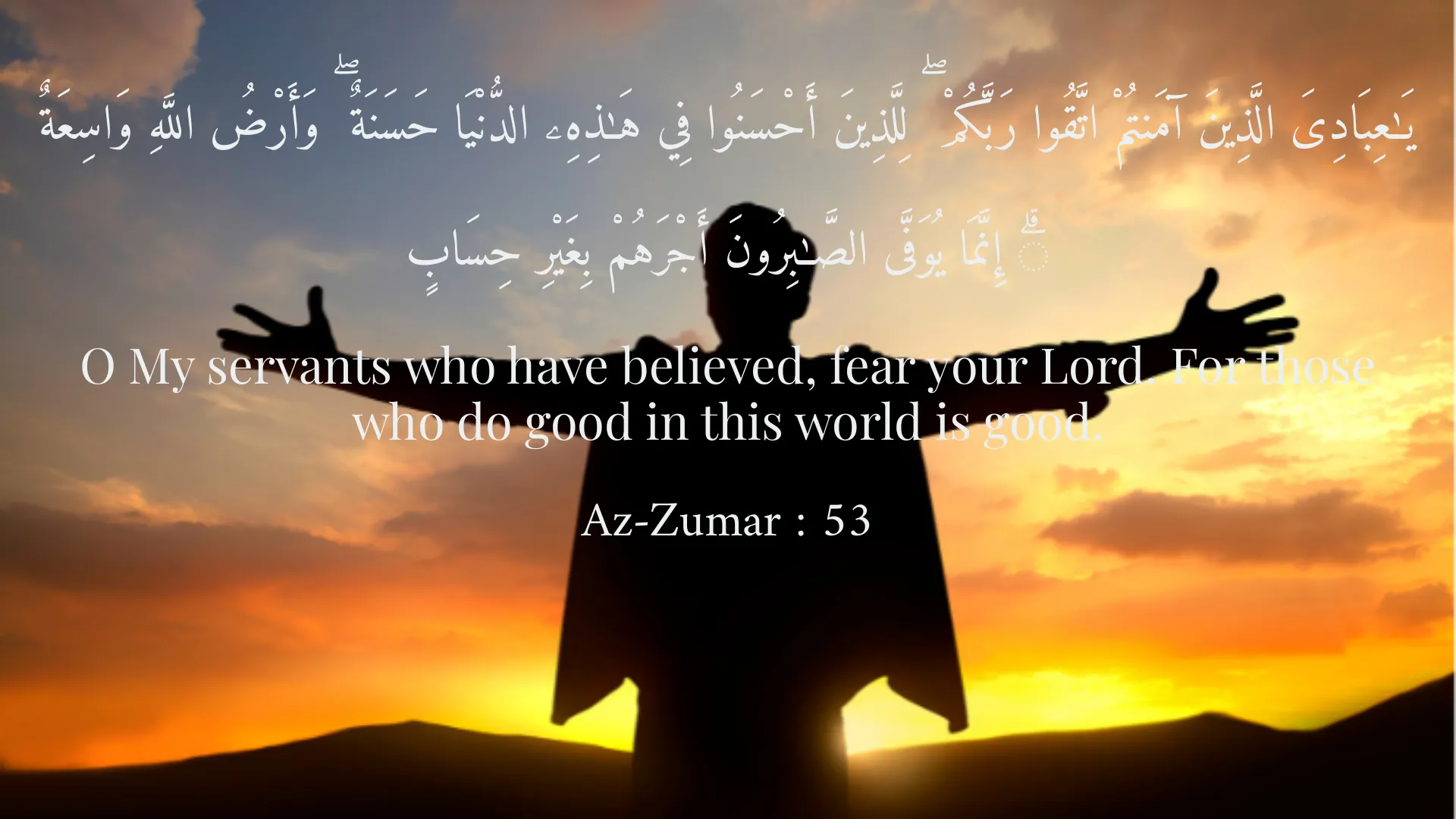
يَـٰعِبَادِىَ الَّذِينَ آمَنتُمْ اتَّقُوا رَبَّكُمْ ۖ لِلَّذِينَ أَحْسَنُوا فِي هَـٰذِهِۦ الدُّنْيَا حَسَنَةٌ ۖ وَأَرْضُ اللَّهِ وَاسِعَةٌ ۗ إِنَّمَا يُوَفَّى الصَّـٰبِرُونَ أَجْرَهُمْ بِغَيْرِ حِسَابٍ
O My servants who have believed, fear your Lord. For those who do good in this world is good.
Az-Zumar : 53
إِلَّا مَنْ تَابَ وَأَمَنَ وَعَمِلَ عَمَلًا صَالِحًا فَأُو۟لَـٰئِكَ يَدْخُلُونَ الْجَنَّةَ وَلَا يُظْلَمُونَ شَيْئًا
Except for one who repents and believes and does righteousness. For those will enter Paradise and will not be wronged at all.
Al-Ma'idah : 39
الَّذِينَ يُنفِقُونَ فِي السَّرَّاء وَالْضَّرَّاء وَالْكَاظِمِينَ الْغَيْظَ وَالْعَافِينَ عَنِ النَّاسِ ۗ وَاللَّهُ يُحِبُّ الْمُحْسِنِينَ
Those who spend in the cause of Allah during ease and hardship and who restrain anger and who pardon the people; and Allah loves the doers of good.
Al-Imran : 135
Short Story
One day, a sinful man remembered his wrongdoings and felt hopeless about his life. However, within him was a glimmer of hope; he read the verses of the Quran and realized that Allah was waiting for his repentance. He decided to return to Allah and seek forgiveness for his past. Through genuine repentance, he felt a lightness and the love of Allah in his heart, and afterward, he leaned towards a righteous life.