Quranic Answer
The Holy Quran, the central religious text of Islam, addresses the significance of intentions, emphasizing the importance of good intentions in the life of a believer. One of the most poignant discussions about the value of intentions can be found in Surah Al-Baqarah, specifically verse 271. In this verse, Allah states that if a person has good intentions and is unable to act upon them, He will reward them based solely on those intentions. This profound insight underscores the idea that a person's internal motivations and desires hold significant weight in the eyes of Allah, even if they are unable to translate those intentions into tangible actions. The importance of intention (niyyah) in Islam is further highlighted in a well-known hadith, where the Prophet Muhammad (peace be upon him) articulated that actions are judged by intentions, and everyone will have what they intended. This statement encapsulates a fundamental principle in Islamic teachings – that the essence of an act lies not only in the deed itself but also in the motivation behind it. Thus, it becomes clear that cultivating good intentions is a transformative practice that enables individuals to align their lives with spiritual values, even in circumstances where circumstances may thwart direct action. The concept of good intentions can be understood in various dimensions of life, including the social, moral, and spiritual realms. One way to reflect on the power of intentions is to consider how they can lead to positive actions in the community. When individuals aspire to perform charitable acts or community service out of goodwill, they contribute to social harmony and upliftment. Moreover, the sincere intention to help others can inspire collective action, leading to positive societal change. Here, good intentions serve as the seed from which altruism and compassion blossom into action. In the context of personal development, good intentions can act as guiding principles for self-improvement. For example, when a person sets an intention to become more patient, disciplined, or empathetic, they are not only nurturing their character but also taking purposeful steps toward a more fulfilling life and deeper spirituality. By focusing on the intention behind their pursuits, individuals can cultivate a more meaningful and reflective approach to their personal and spiritual growth. Furthermore, Surah Al-Imran, verse 29, captures the essence of Allah’s omniscience and understanding of human intentions: "Say, 'Whether you conceal what is in your breasts or reveal it, Allah knows it.'" This verse serves as a reminder that Allah is fully aware of what lies in our hearts and the motivations that drive our actions. Such awareness can be both humbling and liberating for believers, as it reassures them that their struggles to uphold good intentions are recognized and rewarded, regardless of the outcome of their actions. In the journey of faith, believers often face challenges that impede their ability to act on their intentions. Life's unpredictability may prevent them from engaging in philanthropic endeavors or fulfilling their spiritual obligations as they desire. Nevertheless, the notion that Allah rewards individuals based on their intentions alleviates feelings of guilt or inadequacy that may arise from inaction. It serves to reinforce the idea that Allah’s mercy is boundless and that He genuinely values the conscious effort to cherish and pursue good intentions. The effects of good intentions are not limited to an individual's relationship with Allah; they extend into interpersonal dynamics and community well-being. When intentions are pure, they amplify positive energy in social contexts. For example, when a person interacts with others with a sincere intention to connect, foster understanding, or lend support, a conducive environment for cooperation, love, and unity emerges. Conversely, ill intentions can lead to discord and debilitating effects on both individuals and communities. Moreover, good intentions can have a ripple effect, inspiring others to cultivate similar aspirations. Individuals who live with good intentions are often viewed as role models, thus beckoning others to emulate their virtues. This creates a community where intentions are transformed into actions, ultimately leading to a collective upliftment in faith and morality. Good intentions, therefore, serve as the foundation upon which social cohesion and mutual respect flourish. The interplay between intentions and actions also plays a significant role in the realm of self-awareness and accountability. Acknowledging the importance of intentions encourages individuals to reflect on their motivations frequently. Such reflection can lead to a deeper understanding of oneself, facilitating personal growth and reinforcing the importance of aligning one's values with their actions. In being mindful of their intentions, believers are encouraged to pursue a state of self-awareness that not only promotes ethical behavior but also strengthens their faith. The practice of regularly assessing one's internal motivations can nurture a sense of purpose and direction, enhancing spiritual fulfillment. Ultimately, the concept of good intentions is a powerful reminder of the mercy, love, and understanding of Allah towards His creation. It assures believers that while actions are significant, the intentions behind those actions are equally if not more important. It encourages a culture of goodwill, compassion, and introspection, fostering an environment where faith becomes intertwined with everyday life. As we navigate the complexities of existence, the teachings of the Quran and the prophetic traditions guide us to focus on our intentions. When we set out each day with a heart full of good intentions, we not only nurture our relationship with Allah but also contribute positively to the world around us. Whether in our personal endeavors, interactions with loved ones, or engagements within our communities, the importance of good intentions remains an essential guiding light. By embracing and acting upon this principle, we can collectively foster a more compassionate, understanding, and loving society, both in this world and the hereafter.
Related Verses
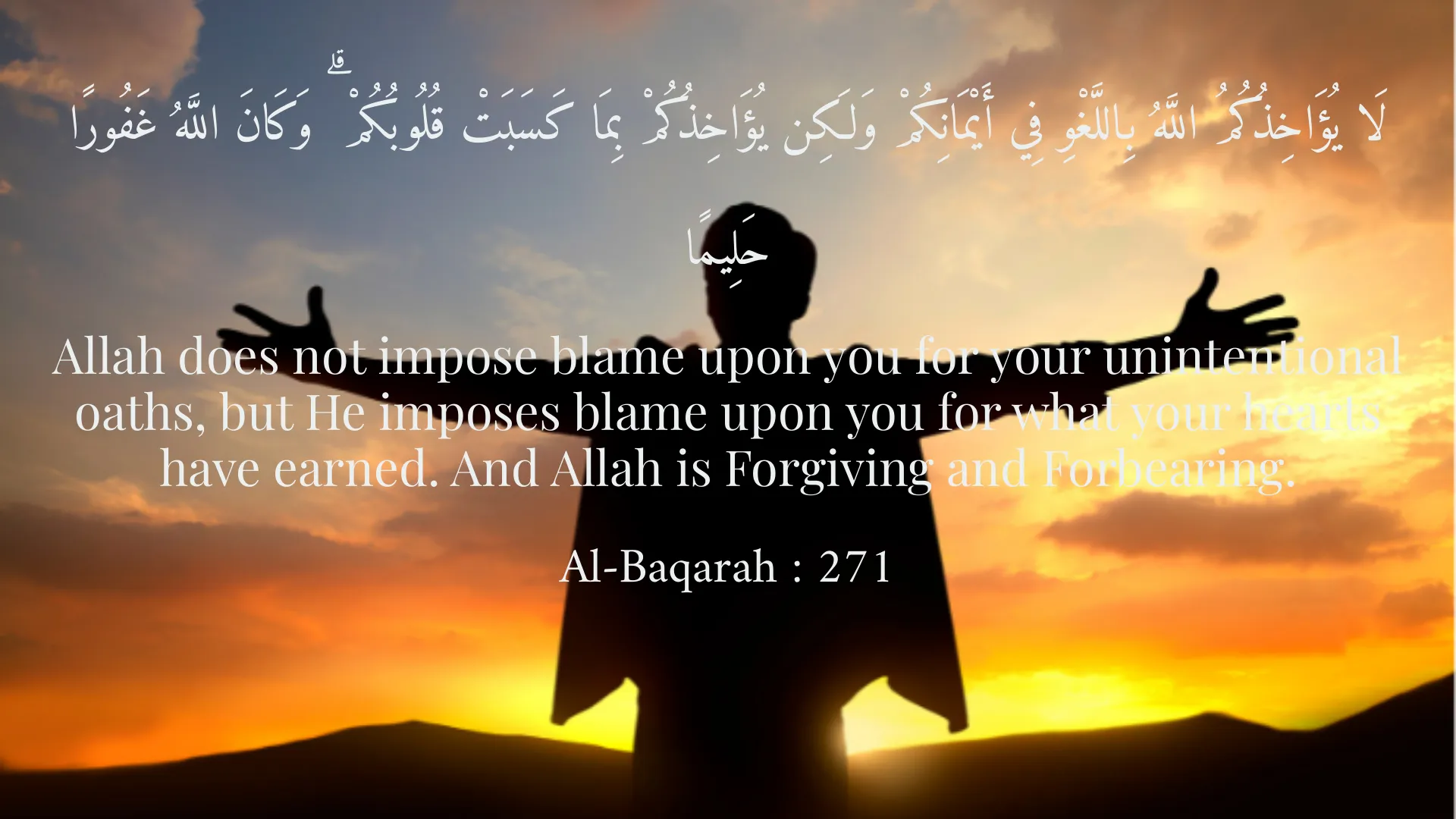
لَا يُؤَاخِذُكُمُ اللَّهُ بِاللَّغْوِ فِي أَيْمَانِكُمْ وَلَكِن يُؤَاخِذُكُمْ بِمَا كَسَبَتْ قُلُوبُكُمْ ۗ وَكَانَ اللَّهُ غَفُورًا حَلِيمًا
Allah does not impose blame upon you for your unintentional oaths, but He imposes blame upon you for what your hearts have earned. And Allah is Forgiving and Forbearing.
Al-Baqarah : 271
قُلْ إِن تُخفُوا مَا فِي صُدُورِكُمْ أَوْ تُبْدُوهُ يَعْلَمْهُ اللَّهُ ۗ وَيَعْلَمُ مَا فِي السَّمَاوَاتِ وَمَا فِي الْأَرْضِ ۗ وَكَانَ اللَّهُ عَلَى كُلِّ شَيْءٍ قَدِيرًا
Say, 'If you conceal what is in your breasts or reveal it, Allah knows it. And He knows what is in the heavens and what is in the earth. And Allah is All-Powerful.'
Al-Imran : 29
Short Story
Once upon a time, there was a man named Mohsen who decided to improve his life by having good intentions. He always kept in his heart the intention to bring blessings to others and make a difference in their lives. One day, while he was helping someone in need, he realized that merely intending was not enough; action needed to follow. But he told himself, "Allah sees my good intentions and will reward me." From that day on, he focused more on his good intentions and tried to turn them into actions. Over time, his life became full of blessings and peace.