Quranic Answer
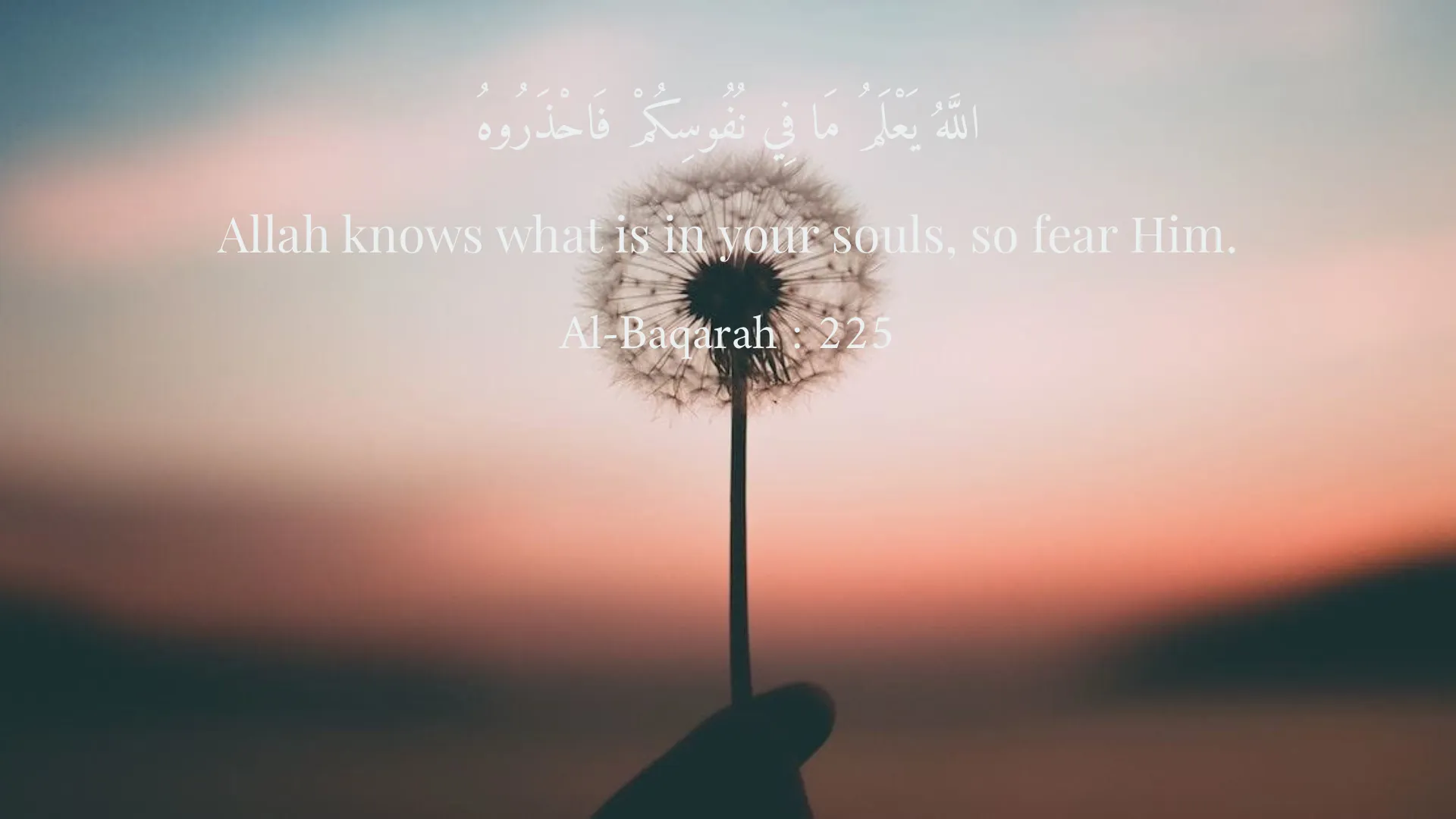
The concept of intentions and thoughts being observed by a higher power is a profound aspect of Islamic belief, as articulated in the Holy Quran. Allah, the all-knowing and all-seeing, emphasizes in several verses that He is fully aware not only of our actions but also of the hidden intentions and thoughts that lie within our hearts. This insight is not merely a theological notion; it serves as a significant moral guide for Muslims, encouraging them to cultivate purity of heart and righteousness in their behaviors. In Surah Al-Baqarah, for instance, we find a powerful reminder in verse 225 that 'Allah knows what is in your souls, so fear Him.' Here, the directive is remarkably clear: consciousness of Allah's omniscience should inspire reverence and a sense of accountability within believers. This notion of fear is not one that relates to dread but rather to a profound awe and respect for Allah's comprehensive knowledge, which should motivate one to be diligent in moral conduct and sincere in intentions. Similarly, in Surah Al-Imran, verse 29, the Quran reiterates this idea by stating: 'Say, 'Whether you hide what is in your breasts or reveal it, Allah knows it.' This verse emphasizes the inescapable nature of divine awareness. It reassures us that even our hidden struggles and whispered thoughts are known to Allah. This awareness can be comforting as it assures individuals that they are never alone in their innermost conflicts, but it also instills a sense of responsibility to ensure that their hearts harbor good intentions, even when no one else is watching. Understanding that Allah knows our intentions provokes a deep reflection on the motivations behind our actions. In many cases, people may perform good deeds or engage in acts of kindness for various reasons, including social recognition or personal gain. However, the Quranic perspective compels believers to reevaluate these motives critically. It invites individuals to engage in self-examination, ensuring that their intentions are aligned with the pursuit of divine pleasure and moral integrity. The notion of purity in intentions has significant implications for daily life. Each choice we make, whether it pertains to worship, interpersonal relationships, or community involvement, should be rooted in a genuine desire to please Allah and assist others. This paradigm shift in approaching our actions transforms ordinary interactions into opportunities for spiritual growth, as each moment can be an occasion to manifest our faith through the quality of our intentions. One of the most beautiful aspects of Islamic teachings is the emphasis on sincere intentions, known as 'Niyyah.' The Prophet Muhammad (Peace Be Upon Him) famously stated, 'Actions are judged by intentions, so each person will have what they intended.' This saying encapsulates the essence of what it means to cultivate righteousness in both thought and action. If the heart is pure, then even the smallest acts, done sincerely for the sake of Allah, can carry immense spiritual weight and lead to rewards in both this life and the hereafter. In practical terms, this means that every day presents new chances to reaffirm our commitment to purity of intentions. Whether we are in pursuit of knowledge, engaging in charitable actions, or simply interacting with those around us, we should consciously remind ourselves of Allah's encompassing knowledge. This mindfulness can reinforce our focus and ensure that we act with integrity. Moreover, nurturing the right intentions can have a ripple effect on the community. When individuals strive for sincere intentions in their actions, they inspire others within their sphere of influence to do the same. This collective effort toward fostering a supportive and spiritually vibrant community can bring about profound changes in social dynamics. It encourages collaboration and compassion and discourages hypocrisy and self-serving behavior. The principle of being conscious of our hidden intentions also intersects with the practice of self-accountability, known as 'Muhasaba.' Engaging in self-reflection allows us to align our daily actions with our higher aspirations, ensuring that our journey through life is a purposeful one. Self-accountability acts as a safeguard against complacency, allowing individuals to regularly check their motivations, rectify their intentions, and seek forgiveness for any missteps in their thought processes. The teachings in the Quran, therefore, extend beyond mere belief; they act as a blueprint for ethical living. By being reminders of Allah's omniscience, these verses anchor a believer's sense of morality in the divine awareness of intentions. Consequently, there is an inherent duty to cultivate a heart that seeks to love and serve others sincerely, devoid of ulterior motives or hidden agendas. To encapsulate the significance of intentions and Allah's encompassing knowledge, it becomes apparent that each thought we nurture within our hearts can profoundly shape our reality. Therefore, every action taken should be a step toward fostering goodness, reflecting both an external manifestation of faith and an internal alignment with divine will. We are constantly reminded to strive for sincerity in every intention, allowing us to uplift our souls in the process of serving ourselves, others, and ultimately, Allah. In conclusion, the understanding that Allah knows our hidden intentions should not instill fear but inspire growth, accountability, and a greater commitment to righteousness. Utilizing the guidance provided in the Quran to cultivate purity in our thoughts and intentions, we enhance our spiritual practice and live a life that reflects the beauty of our faith. With each day, we are blessed with opportunities to connect our hearts to our actions, serving humanity while drawing closer to our Creator.
Related Verses
اللَّهُ يَعْلَمُ مَا فِي نُفُوسِكُمْ فَاحْذَرُوهُ
Allah knows what is in your souls, so fear Him.
Al-Baqarah : 225
قل إن تخفوا ما في صدوركم أو تبدوه يعلمه الله
Say, 'Whether you hide what is in your breasts or reveal it, Allah knows it.'
Al-Imran : 29
Short Story
One day, a young man named Amir had various intentions in his heart. He was trying to purify his intentions because he recognized that Allah was aware of them. Amir decided to make his intentions pure for Allah in every action and seek His help. As days passed, he felt that his life was heading towards a better path and he was finding more peace.