Quranic Answer
In the Holy Quran, patience (Sabr) occupies a pivotal place among the moral and spiritual attributes that Allah encourages believers to embody. The Quran is replete with verses that not only underscore the significance of patience but also assure rewards for those who exercise it in their lives. From a theological standpoint, patience is not merely a passive ability to endure suffering; rather, it is an active commitment to remain steadfast in one’s faith, engage in prayer, and continue striving for goodness even amid adversity. One profound example can be found in Surah Al-Baqarah, where Allah addresses the believers directly in verse 153: 'O you who have believed, seek help through patience and prayer. Indeed, Allah is with the patient.' This commanding verse serves as a reminder of two fundamental aspects of human existence—patience and prayer. By intertwining prayer with patience, Allah emphasizes that while we endure difficulties, we must also turn to Him for assistance. It is a spiritual duo that strengthens a believer's resolve. When faced with trials, believers ought to seek solace in prayer, understanding that it is not a solitary struggle but one where Allah stands in support of the patient. This assurance offers immense comfort, inspiring many to see patience not merely as an obligation but as a cherished trait that brings them closer to Allah. Moreover, patience is not just an isolated virtue; it shines through in the collective narrative of the prophets and their followers. In Surah Al-Ankabut, verse 127, Allah speaks of how the prophets faced immense challenges without faltering: 'And how many a prophet fought alongside him were many [and were] not weakened by what they experienced in the cause of Allah, nor did they weaken or submit. And Allah loves the patient.' Here, Allah provides a historic context of endurance which believers can look up to. The verse highlights how steadfastness during times of distress characterizes the faithful. To combat hardships, the prophets did not just rely on their valor or strength; they leaned heavily on their patience. This passage illustrates that patience is a hallmark of true believers, deeply respected and loved by Allah. Additionally, patience becomes a profound source of inner strength against the trials of life. In Surah Al-Imran, verse 186, Allah articulates the challenges believers are bound to face: 'You will surely hear from those who were given the Scripture before you and from those who associate others with Allah much abuse. But if you are patient and fear Allah - indeed, that is of the matters [worthy] of determination.' This verse is a reminder that the path of faith is laden with obstacles, including verbal abuse and external opposition. For many individuals today, this resonates deeply as being faithful can often result in social or interpersonal difficulties. However, the verse also gives hope; it asserts that through patience and a God-conscious attitude, believers will not only deal with adversity but also emerge stronger. This collective determination is vital; it outlines a roadmap for the believer, showcasing that patience and fear of Allah are integral components of a successful life. On a practical level, implementing the virtue of patience leads to various spiritual and psychological benefits. Psychologically, patience can enhance emotional stability, allowing individuals to better cope with stress and anxiety. Believers who practice patience often find their emotional health improves, as they learn to manage their reactions to difficult circumstances and remain calm amidst chaos. The collective benefit of patience cultivates resilience; it builds a form of spiritual immunity against life's unpredictabilities. Patience is also essential in fostering interpersonal relationships. A patient individual is more likely to approach conflicts with openness and tolerance, leading to healthier and more fruitful interactions. In a world often characterized by haste and immediate gratification, cultivating patience allows a believer to take a step back, reflect, and respond thoughtfully rather than impulsively. This quality promotes lasting bonds, understanding, and compassion within the community. Furthermore, Quranic teachings on patience encourage a sense of hope. Life's tribulations can leave one feeling despondent and defeated, but the Quran's reminder that patience is beloved to Allah instills a sense of purpose and optimism. The belief that Allah is always aware and supportive of one’s patience can transform a hardship into a test of faith while concurrently offering hope of divine assistance and reward. This promise keeps believers anchored amidst the trials of this world, reinforcing the notion that patience today leads to rewards both in this life and in the afterlife. In conclusion, patience is a fundamental quality that every believer should cherish and cultivate. The verses from Surah Al-Baqarah, Surah Al-Ankabut, and Surah Al-Imran illustrate how vital it is to remain steadfast in the face of trials and difficulties. Allah’s assurance that He is with the patient serves as a comfort and motivation for believers. In practicing patience, individuals do not just develop a personal virtue; they also contribute to a collective resilience within the faith community. Ultimately, patience fosters spiritual growth and pleases Allah, thereby granting believers not just earthly tranquility, but also the promise of eternal rewards.
Related Verses
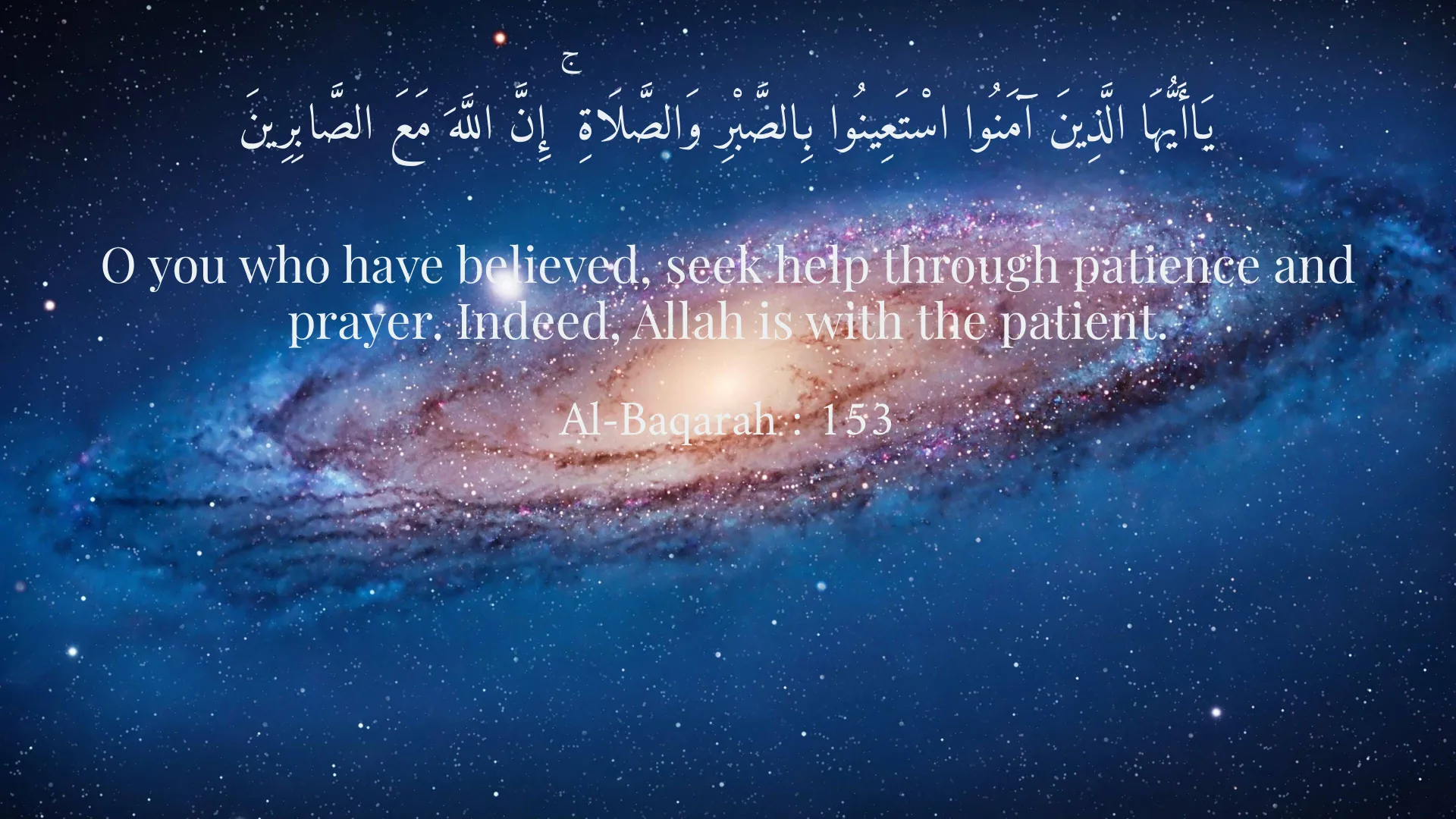
يَاأَيُّهَا الَّذِينَ آمَنُوا اسْتَعِينُوا بِالصَّبْرِ وَالصَّلَاةِ ۚ إِنَّ اللَّهَ مَعَ الصَّابِرِينَ
O you who have believed, seek help through patience and prayer. Indeed, Allah is with the patient.
Al-Baqarah : 153
وَكَأَيِّن مِّن نَبِيٍّ قَاتَلَ مَعَهُ رِجَالٌ كَثِيرٌ ۖ فَمَا وَهَنُوا لِمَا أَصَابَهُمْ فِي سَبِيلِ اللَّهِ وَلَمْ يَخْضَعُوا ۗ وَاللَّهُ يُحِبُّ الصَّابِرِينَ
And how many a prophet fought alongside him were many [and were] not weakened by what they experienced in the cause of Allah, nor did they weaken or submit. And Allah loves the patient.
Al-Ankabut : 127
تَأَلَّمُوْنَ فِي أَشْيَاءِ كَثِيرَةٍ وَإِن تَصْبِرُوا وَتَتَّقُوا فَإِنَّ ذَٰلِكَ مِنْ عَزْمِ الْأُمُورِ
You will surely hear from those who were given the Scripture before you and from those who associate others with Allah much abuse. But if you are patient and fear Allah - indeed, that is of the matters [worthy] of determination.
Al-Imran : 186
Short Story
One day, a man sat in his garden reflecting on the hardships he had faced in life. He realized how much he had persevered and concluded that his patience in the face of challenges had led to his growth and progress. Contemplating the verses of the Quran, he felt that Allah had always been with him, supporting him through his difficulties, and this belief gave him renewed strength.