Quranic Answer
In the Holy Quran, the concept of divine tests and trials plays a significant role in shaping the understanding of life, faith, and human purpose. This central theme is not merely a theological assertion but a practical guide on how believers should navigate the complexities of existence. The Quran serves as a source of wisdom, offering insights into the nature of God’s tests, the importance of patience and faith, and the ultimate purpose behind such challenges. To grasp the full significance of divine tests, one must first recognize that they are an integral part of the human experience. In Surah Al-Baqarah, verse 155, Allah states, 'And We will surely test you with something of fear and hunger and a loss of wealth and lives and fruits, and give good tidings to the patient.' This verse encapsulates the essence of the trials faced by individuals—fear, hunger, financial loss, and the grief of losing loved ones. Each of these trials serves a specific purpose, challenging believers to reflect on their faith and resilience. Fear and hunger are universal experiences that evoke feelings of vulnerability and insecurity. The mention of fear in the Quran signals the human apprehension regarding the unknown and the uncertainties that life presents. Such feelings can lead to doubt and despair; however, they also provide an opportunity for individuals to turn to God, seeking solace and support in their faith. The Quran encourages believers to seek refuge in God during such tumultuous times, reminding them that these feelings are part of the human experience and that faith can offer comfort and guidance. Hunger, similarly, can be understood not just in the physical sense but also metaphorically. It signifies human desires and needs, and when unfulfilled, leads to a spiritual longing for divine intervention. This longing can cultivate patience—an essential quality emphasized across various verses in the Quran. The believers are reminded that enduring hunger, whether it be physical or spiritual, tests their devotion and commitment to God. In facing such adversities, believers are urged to maintain their faith, for it is through these trials that they can discover the depth of their spiritual strength. The loss of wealth and lives mentioned in the verse also plays a crucial role in this examination of human character. Financial loss can shake an individual's sense of security and self-worth, while the loss of loved ones can lead to profound grief and despair. Yet, these experiences are pivotal in shaping a person's character and resilience. Surah At-Tawbah, verse 53 reinforces the idea that patience and endurance are not only expected by God during these suffering periods, but they are also rewarded in the Hereafter. Life is depicted as a trial where one’s reactions to loss reveal their true character and commitment to their faith. In Surah Al-Mulk, verse 2, God states, 'Who created death and life to test you as to which of you is best in deed.' This verse emphasizes the transient nature of life and the inevitability of death, reinforcing the notion that life itself is a series of tests meant to measure the quality of one’s actions. The concept of life and death as tests implies that every moment lived should be purposeful, filled with intention and sincerity towards fulfilling one’s duties as a believer. These divine tests are not merely punitive measures but are fundamentally opportunities for growth and self-discovery. They challenge individuals to delve deeper into their values and beliefs, fostering personal development and spiritual enlightenment. Through trials, believers have the chance to exhibit virtues such as patience, gratitude, perseverance, and trust in God's wisdom. These qualities become essential tools in overcoming life's challenges and achieving success in the grand test laid before them. In addition to patience and gratitude, the Quran encourages believers to remain steadfast in their daily lives—maintaining consistent prayers, engaging in acts of charity, and supporting one another in their faith endeavors. Such actions not only strengthen personal faith but also build a community of support where individuals can rely on each other during difficult times. Moreover, the concept of divine testing instills an understanding of the temporality of worldly possessions and relationships. It reminds believers that material wealth and physical life are transient and not the ultimate sources of happiness. Instead, true contentment and success lie in one’s connection with God and the acts performed in His name. Surah Al-Baqarah reassures believers that these trials ultimately lead to spiritual rewards and a closer relationship with God, further illustrating the merciful nature of divine testing. The trials faced by humanity, as spelled out in the Holy Quran, encourage a holistic view of life—one that embraces both its joys and its sorrows. It accents the importance of viewing challenges as catalysts for faith reinforcement and character development. This perspective shifts the focus from merely surviving adverse situations to thriving in them through the practice of patience, trust, and consistent prayer. In conclusion, the divine tests described in the Holy Quran are fundamental elements of the human experience. They serve to assess faith, stir character development, and enhance values that are critical in this world and the Hereafter. All individuals, regardless of their backgrounds or circumstances, are called to prepare themselves for life's inevitable challenges while leaning on their faith and the teachings of the Quran. Ultimately, patience, gratitude, and trust in God during life's trials and tribulations are the keys to success in this grand test, which leads to spiritual awakening, personal growth, and eternal rewards.
Related Verses
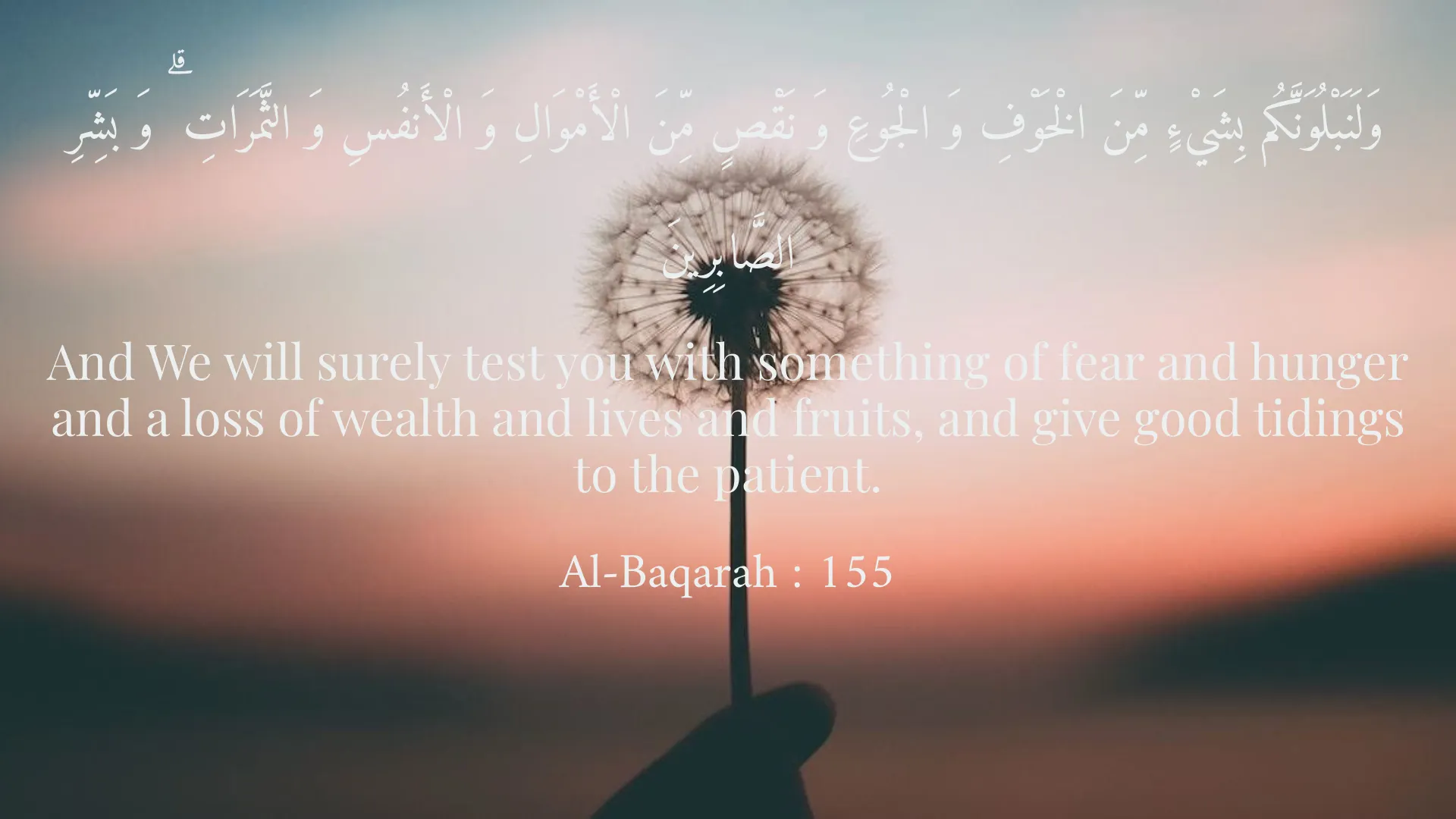
وَلَنَبْلُوَنَّكُم بِشَيْءٍ مِّنَ الْخَوْفِ وَ الْجُوعِ وَ نَقْصٍ مِّنَ الْأَمْوَالِ وَ الْأَنفُسِ وَ الثَّمَرَاتِ ۗ وَ بَشِّرِ الصَّابِرِينَ
And We will surely test you with something of fear and hunger and a loss of wealth and lives and fruits, and give good tidings to the patient.
Al-Baqarah : 155
قُلْ إِنَّمَا تَوَكَّلْتُ عَلَى اللَّهِ وَ قَدْ أَشْرَفْتُ عَلَى هَذَا السَّبِيلِ.
Say, 'Indeed, I have relied upon Allah, and I have taken this path to heart.'
At-Tawbah : 53
الَّذِي خَلَقَ الْمَوْتَ وَ الْحَيَاةَ لِيَبْلُوَكُم أَيُّكُمْ أَحْسَنُ عَمَلًا
Who created death and life to test you as to which of you is best in deed.
Al-Mulk : 2
Short Story
One day, a man named Ahmad faced many challenges in his life. He wondered why such tests were upon him. However, one day while reading the Quran, he came across a verse that showed that God tests human beings to assess their faith and patience. Ahmad decided to view these tests as an opportunity and trust in God. After some time, he realized that these challenges helped him discover his strengths and become a better person.