Quranic Answer
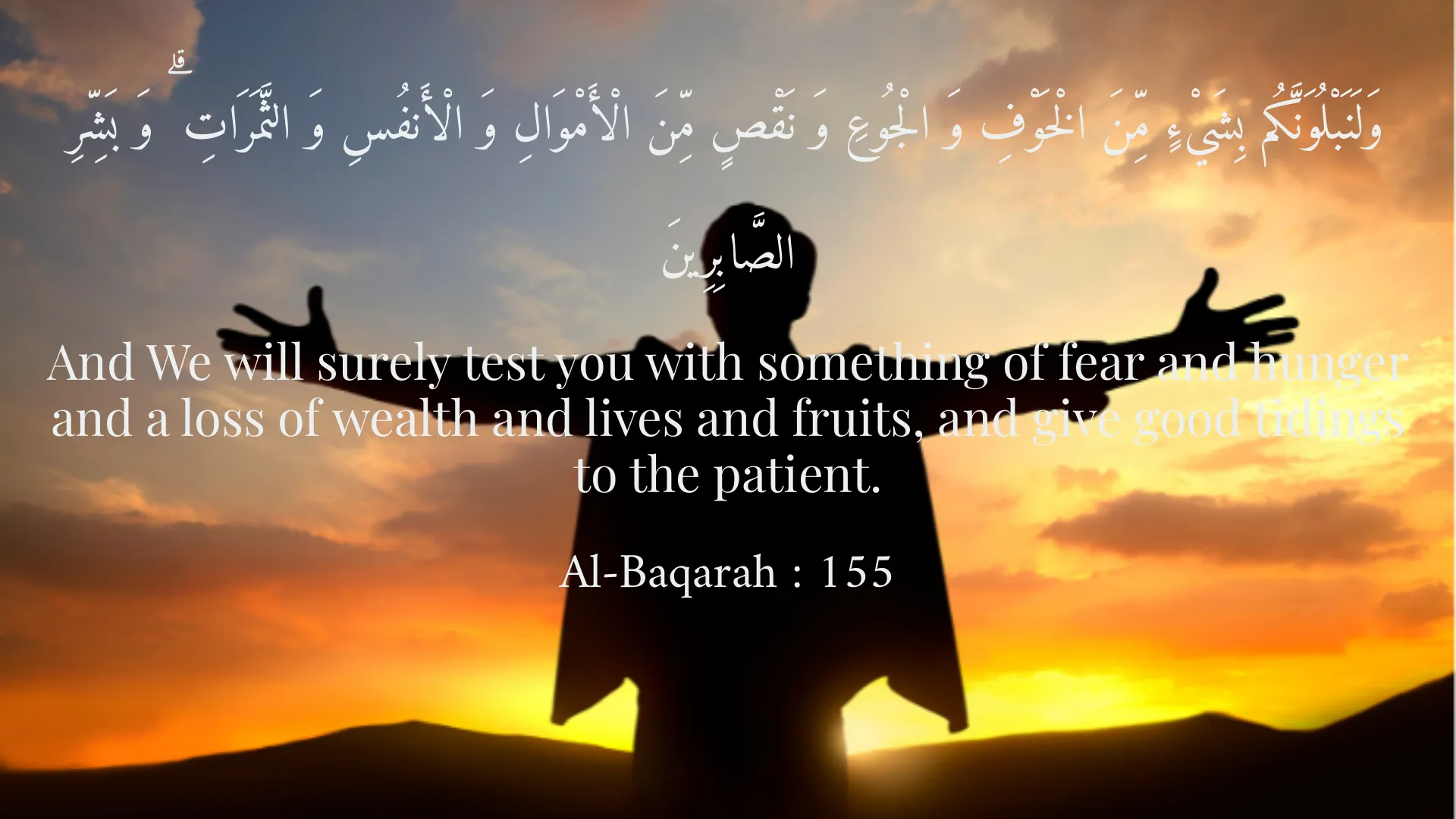
In the Holy Quran, the concept of divine testing is deeply woven into the fabric of human existence. The phrase from Surah Al-Baqarah, verse 155, prominently states: "And We will surely test you with something of fear and hunger and a loss of wealth and lives and fruits, and give good tidings to the patient." This striking declaration underscores the reality that tests are not merely incidental but are rather fundamental to our lives as believers. Allah, in His infinite wisdom, utilizes these trials as a means to not only assess but also to refine the faith and patience of His servants. The trials may take various forms, manifesting in fear, hunger, financial loss, or the grief of losing loved ones. Each test serves a purpose that transcends our immediate understanding; they are pathways through which we can augment our spiritual connection with the divine. The core message behind these trials is an invitation to resilience. As individuals navigating through life's unpredictable journey, we must cultivate an attitude of readiness to face challenges. The call to patience therein is vital. Patience, as expressed in the Quran, is not just a passive endurance of hardship; it is an active engagement with our circumstances, a conscious choice to trust in Allah’s wisdom, and a commitment to respond with gratitude. The trials we endure should not be viewed with despair but rather seen as opportunities for fortitude and spiritual growth. In alignment with this, Surah Al-Alaq, verse 15 states, "Indeed, upon Us is guidance," which reinforces the idea that with trials come opportunities for divine guidance. Every hardship can be seen as a guiding light that directs our thoughts and actions back to Allah. It beckons us to seek assistance from Him, which demonstrates our awareness of our limitations as human beings. It serves as a humbling reminder that while we may face adversities, the means to navigate through them lies in seeking refuge in the Most Merciful. Moreover, the significance of these trials extends beyond individual challenges. They reflect the communal and shared experiences of humanity, wherein each person's struggle contributes to a collective understanding of existence. The losses paired with gains, the fears encountered alongside moments of joy—all contribute to the richness of life. The tests posed are not reminders of despair but are lessons embedded within our journey that foster empathy and compassion for one another. Through our struggles, we become deeply aware of the vulnerabilities that exist in human life, which in turn, invigorates a sense of community, where believers offer support and encouragement to each other. Recognition of the divine testing provides a framework through which we can appreciate our life experiences. Trials can lead to significant milestones of personal achievement, spiritual awakening, or transformation. When we face loss, for example, we learn to appreciate the transient nature of life, cultivating gratitude for the fleeting moments when life seemed more joyous. Fear can manifest into courage; hunger can blossom into appreciation for sustenance. Such paradoxes illuminate the multifaceted character of our trials and tribulations. Additionally, these divine tests are an invitation for self-reflection. Each trial forces us to introspect and examine the foundations of our faith. Are we steadfast in our beliefs? Do we trust Allah’s plan? This self-examination is paramount to spiritual growth. It is through these moments of self-reflection that we come to realize our strengths and weaknesses, enabling us to approach our circumstances with a renewed sense of purpose. Consequently, the tests from Allah serve as a wake-up call, encouraging us to fortify our relationships with Him and with others. From a broader perspective, divine testing is not limited to individual trials; it has societal implications as well. Communities that endure hardship often emerge more integrated and resilient, bonding through shared experiences. These collective trials underscore the power of faith in overcoming adversity. The manifestations of community support—be it through prayers, humanitarian assistance, or moral support—showcase the inherent value of unity in the face of challenges. It is through these communal trials that humanity learns to cultivate strength, showing that reliance on Allah is best approached within the embrace of community. In conclusion, the essence of divine testing in life as outlined in the Quran is a multifaceted experience that molds our character, faith, and relationships with others. It invites us to navigate through life's hardships with an attitude of patience and gratitude, recognizing that they are pivotal to our spiritual development. Each trial we encounter is a testimony to the resilience embedded within us, calling for us to submit to the will of Allah while striving to draw closer to Him through our challenges. Therefore, we should strive to perceive tests not as burdens but as enriching opportunities that evolve our lifelong journey towards spiritual growth and a deeper connection with the Creator. As we face life's uncertainties, let us always remember to embrace Allah’s guidance: that in patience lies our fortitude, and in adversity lies our awakening.
Related Verses
وَلَنَبْلُوَنَّكُم بِشَيْءٍ مِّنَ الْخَوْفِ وَ الْجُوعِ وَ نَقْصٍ مِّنَ الْأَمْوَالِ وَ الْأَنفُسِ وَ الثَّمَرَاتِ ۗ وَ بَشِّرِ الصَّابِرِينَ
And We will surely test you with something of fear and hunger and a loss of wealth and lives and fruits, and give good tidings to the patient.
Al-Baqarah : 155
إِنَّ عَلَيْنَا لَهْدًى
Indeed, upon Us is guidance.
Al-Alaq : 15
Short Story
One day, a man faced a difficult test and felt hopeless. He remembered the verses of the Quran and realized that this test was part of God's plan to strengthen his faith. So, he decided to rely on patience and trust in Allah to overcome this challenge. After some time, he noticed that this test had led to his personal and spiritual growth.