Quranic Answer
In the Holy Quran, a significant emphasis is placed on the intertwined nature of faith in God (Iman) and the performance of good deeds (Amal Salih) as cornerstones in a Muslim’s life. This relationship underscores the essence of Islamic teachings and defines how a believer should navigate their existence within the framework of their religious obligations. The Quranic verses articulate a holistic methodology, wherein faith is not just a mental acknowledgment of God’s existence, but a guiding force that inspires and motivates individuals to engage in righteous actions. One of the key verses that encapsulates this sentiment is found in Surah Al-Baqarah, verse 277, where Allah states, "Indeed, those who have believed and done righteous deeds will have for them the gardens of Paradise as a reward from their Lord." This verse succinctly highlights the dual significance of belief and actions, presenting them as two essential pillars for achieving ultimate success in the hereafter. The notion of Paradise serves as an incentive for believers to maintain their faith while actively participating in righteous deeds. It is not merely an academic understanding of faith; rather, it is a call to actively embody that belief through tangible actions in the world. Similarly, Surah Al-Mu'minun, verse 51 reinforces this relationship by directing a message to the messengers of God: "O messengers, eat from the good foods and work righteousness. Indeed, I, of what you do, am Knowing." This directive to consume what is good and engage in righteous activity emphasizes the importance of ethical conduct and purity in both sustenance and actions. This further illustrates the principle that one's actions must align with their beliefs; thus, separating faith from deeds diminishes the value of both. The Quran asserts that outwardly good actions devoid of genuine faith lack intrinsic worth. A person may engage in charitable acts, volunteerism, or community service, yet if these deeds are not intended for the sake of drawing nearer to God and seeking His pleasure, they will ultimately be devoid of merit in the eyes of the Almighty. This idea is crucial in understanding the sincerity of intention (Niyyah) in Islamic thought. The underlying motivation for performing good deeds must stem from a place of belief and from a desire to fulfill the commands of God, demonstrating that sincerity is at the core of all righteous actions. A powerful elucidation of this principle can be found in Surah Al-Imran, verse 92, which states, "Never will you attain the good reward until you spend in the way of Allah from that which you love." This verse serves as a reminder that true faith necessitates sacrifices and commitments. It draws attention to the idea that deeper, more meaningful involvement in good deeds requires an individual to engage with their own resources and preferences. Such a perspective emphasizes that God desires the essence of one's spirit and worldly possessions as a testament to their faith. By inviting believers to contribute from what they love – whether material wealth, time, or effort – it reinforces the notion that genuine attachment to God's path requires a true investment of self. The validity of good deeds thrives on the foundation of faith, thus asserting that righteous actions must stem from a belief system deeply rooted in Islamic principles. This relationship between faith and actions can be viewed as a motivational cycle whereby one's faith incites them to act righteously, and engaging in such acts in turn strengthens their belief in God. Such reciprocal reinforcement between Iman and Amal Salih illustrates an extraordinary aspect of human experience within Islamic theology – where the pursuit of a higher moral standard is continuously propelled by one’s connection to the Divine. Moreover, the relationship between faith and good deeds expands beyond the individual sphere into the community at large. The Quran emphasizes that righteous actions positively influence not only the doer but also the society they inhabit. Good deeds performed with sincere faith contribute to a more equitable, compassionate, and understanding world. When individuals act upon their beliefs collectively, they create a ripple effect that fosters unity and collaboration, steering society towards a more just and balanced existence. However, it is essential to recognize that the absence of faith renders good deeds limited in their effectiveness. Historical examples are plentiful in depicting individuals who acted virtuously yet were devoid of a connection with God; often their actions were motivated by personal gain or recognition rather than genuine altruism. The fruits of their labor often fade in significance, leaving behind a hollow legacy that lacks the richness imbued with the essence of faith. Conversely, believers who strive to carry out righteous deeds for God’s sake gain a form of eternal currency that transcends worldly accolades, thus unlocking the possibility for greater rewards in the afterlife. In conclusion, the intricate relationship between faith in God and the performance of good deeds is central to the Islamic way of life. The Quran embodies this principle in a manner that not only instructs but inspires individuals to nurture their faith and act accordingly. Faith serves as the catalyst, prompting believers to execute good deeds, while those deeds reinforce their faith, establishing a balance that allows for spiritual growth and societal harmony. Episode of faith and action in one's life engenders a compounding effect that serves to elevate the human experience, transcending beyond worldly measures of success into a realm of Divine blessings and eternal significance. Consequently, it is paramount for believers to cultivate both faith and righteousness, aiming to encompass them in all aspects of their life, thereby striving for not only personal salvation but also the betterment of the society around them.
Related Verses
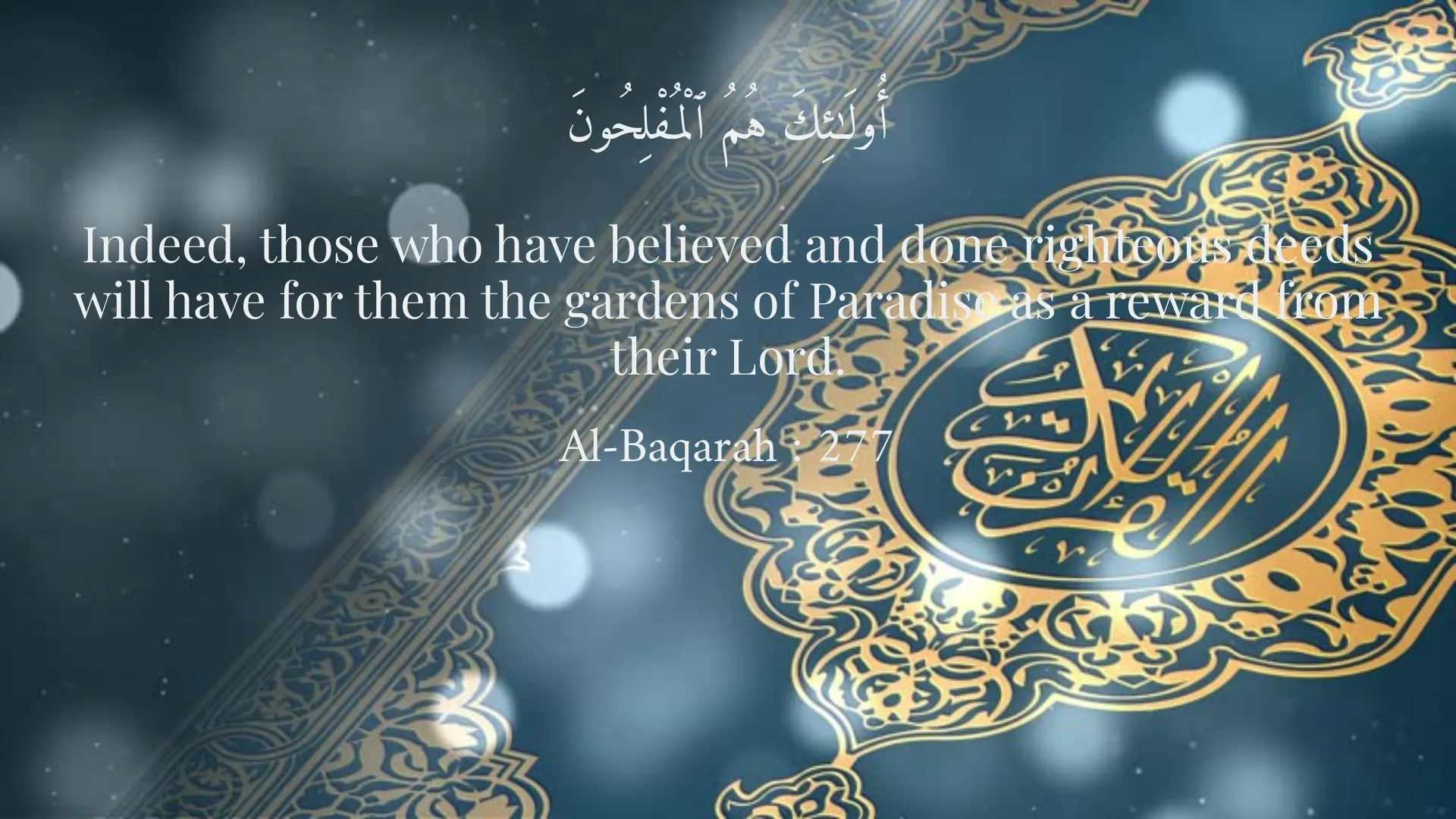
أُولَـٰئِكَ هُمُ ٱلْمُفْلِحُونَ
Indeed, those who have believed and done righteous deeds will have for them the gardens of Paradise as a reward from their Lord.
Al-Baqarah : 277
يَا أَيُّهَا ٱلْمُرْسَلُونَ كُلُوا۟ مِمَّآ أُحِلَّ لَكُمْ وَٱعْمَلُوا۟ صَـٰلِحًۭآ ۖ إِنِّي بِمَا تَعْمَلُونَ عَلِيمٌ
O messengers, eat from the good foods and work righteousness. Indeed, I, of what you do, am Knowing.
Al-Mu'minun : 51
لَن تَنالُوا ٱلْبِرَّ حَتَّىٰ تُنفِقُوا۟ مِمَّا تُحِبُّونَ ۗ وَمَا تُنفِقُوا۟ مِن شَيْءٍۢ فَإِنَّ ٱللَّهَ بِهِۦ عَلِيمٌ
Never will you attain the good reward until you spend in the way of Allah from that which you love.
Al-Imran : 92
Short Story
One day, an elderly man said to a young man, "Devote your life to good deeds, but remember that no good deed has value without faith in God." The young man felt some doubt, but after a while, he concluded that only through faith in God could he truly help others. He began performing good deeds and felt that his life had changed.