Quranic Answer
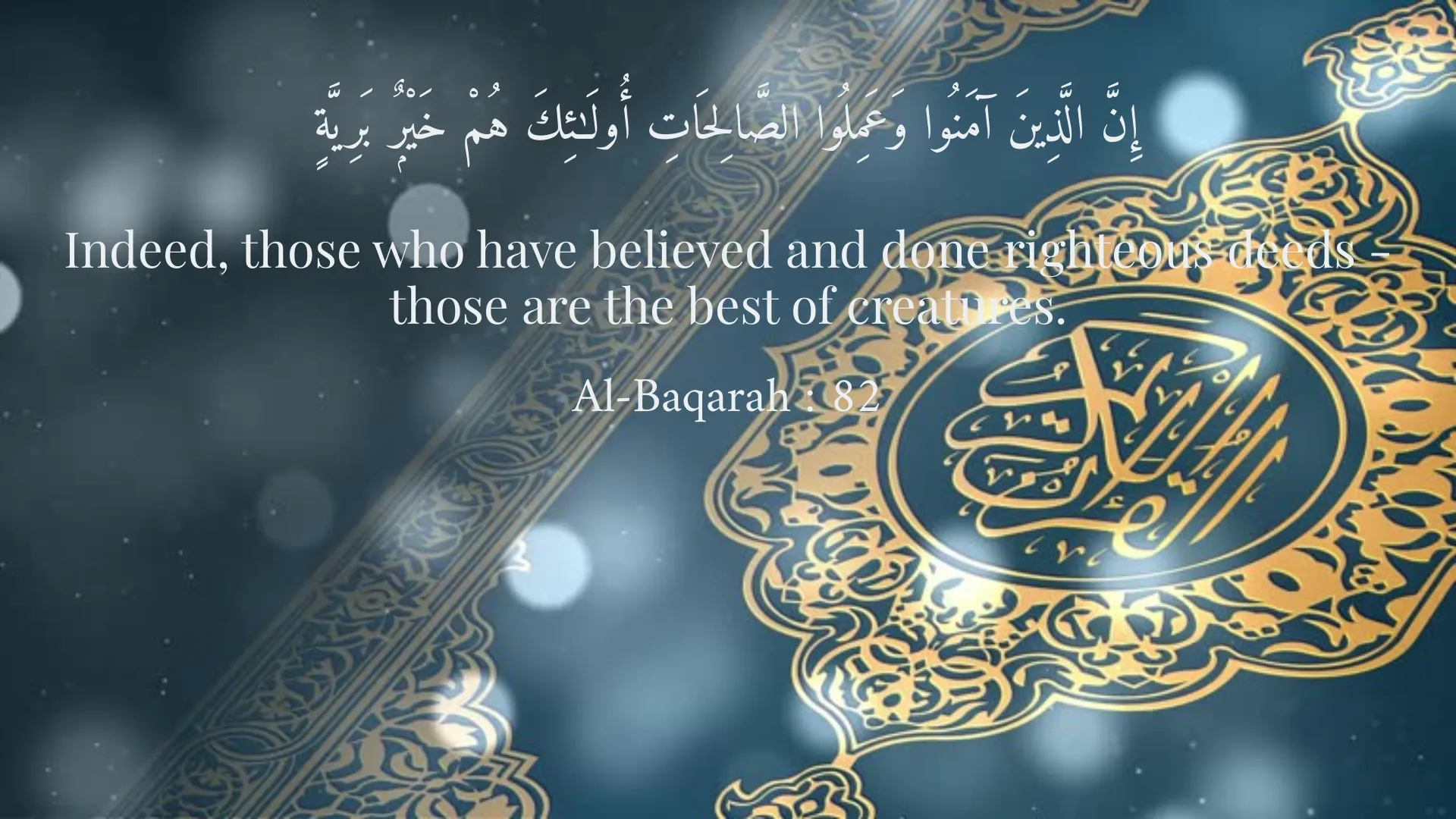
The relationship between faith and goodness, as elaborated in the Holy Quran, presents a deep and intricate understanding of human morality, spirituality, and the relationship with the Divine. Numerous verses throughout this sacred text emphasize not only the significance of belief in God and the Day of Judgment but also the essential connection between such belief and the performance of righteous actions. Through carefully assessing these verses, one can derive a foundational understanding of how faith serves as a catalyst for goodness in a believer's life. In Islamic theology, faith, known as 'Iman,' comprises the belief in the oneness of God (Tawhid), the acceptance of the prophethood of Muhammad (PBUH), the acknowledgment of angels, the holy scriptures, divine predestination, and the Day of Judgment. These elements form a comprehensive belief system that significantly shapes the ethical framework within which Muslims operate. As articulated in Surah Al-Baqarah, verse 82, the Quran asserts, 'Indeed, those who have believed and done righteous deeds - those are the best of creatures.' This declaration highlights a dual requirement: belief must be accompanied by action. It emphasizes that the highest rank granted to mankind is reserved for those who embody both faith and goodness. The verse's construction suggests that mere belief alone is insufficient; actions driven by faith are essential to achieving a higher status in God's eyes. Moreover, Surah Al-Imran, verse 57 affirms the rewards of those who blend faith with righteous deeds: 'And as for those who have believed and done righteous deeds, He will give them their rewards in full and will admit them to gardens beneath which rivers flow.' This imagery not only depicts the beauty of paradise but also reinforces the notion that faith underpins one’s eligibility for divine rewards. The interplay between faith and righteous deeds emphasizes their interdependence - one cannot genuinely aspire for paradise without fulfilling the responsibilities that accompany belief in God. These verses indicate that faith instills a sense of accountability in the believer, shaping their actions in this world. When one acknowledges the Day of Judgment, it creates a profound sense of awareness and responsibility concerning their actions. Such accountability encourages individuals to strive for moral excellence, fostering goodness that transcends mere compliance with religious obligations. Furthermore, the Quran makes it clear that acts devoid of faith are ultimately devoid of value in the Hereafter. This significant teaching serves as a philosophical foundation for the Islamic worldview, suggesting that even the most altruistic acts, when not rooted in faith, lack enduring merit. The act of charity, for example, can merely serve societal needs, yet it does not achieve the spiritual elevation that accompanies giving for the sake of God. Goodness for its own sake, without the awareness of God’s existence and commands, remains incomplete. In many instances throughout history, philosophers and moralists have debated the concept of morality independent of religion. While many argue that ethical behavior can exist outside the framework of belief in God, the Quran challenges this notion by asserting that true goodness stems from the divine connection and the recognition of one’s responsibilities to God and society. The Quran sternly suggests that justice, kindness, and other virtues should not exist in the void of faith. This underscores the belief that the intention behind an act is as critical as the act itself. A charitable deed performed without a recognition of God equates to a mere transactional act devoid of spiritual dimensions. Moreover, the profound connection between faith and goodness is further reiterated in Surah Al-Imran, where it is stated that 'pure acts' for God are essential for salvation on the Day of Judgment. This statement carries critical implications for believers: all righteous acts should originate from a sincere intention to please God and align with His commands. Therefore, engaging in good actions without faith constitutes a fundamental misalignment with the requirements of one’s spiritual journey. The sincere pursuit of goodness through faith generates a reciprocating cycle of faith and additional righteous deeds. This cyclical reinforcement encourages believers to persistently seek God and manifest their faith through actions that align with divine expectations. Importantly, this relationship between faith and goodness underlines the holistic nature of Islamic teachings. In Islam, the belief system encompasses every aspect of human life — spiritual, social, and ethical. Faith informs conduct, guiding followers to embody values such as honesty, integrity, compassion, and justice in their everyday lives. The unity of faith and good deeds fosters a balanced approach to life, where spiritual obligations are mirrored in social and moral responsibilities. This merging of faith and practice creates communities that thrive on mutual respect and integrity. By promoting ethical behavior anchored in faith, the community is encouraged to maintain support for one another, thus fostering a healthy social fabric that aligns with the tenets of Islam. The moral dimensions vested in the faith serve as a guiding compass, leading individuals towards actions that contribute positively to society as a whole. In conclusion, the teachings of the Quran poignantly affirm that faith and goodness are inextricably linked. Belief in God and accountability in the afterlife are not only cardinal to Islamic faith but also serve as foundational principles governing moral conduct. Good deeds devoid of faith lack significance in the eyes of God, for true righteousness emerges from a committed belief system that fuels a desire for goodness. Consequently, this intricate interplay between faith and goodness fosters a vibrant spiritual and ethical existence in the lives of believers, ultimately guiding them towards the ultimate goal: paradise. Thus, the Quran reinforces that to aspire for a virtuous life, one must embrace both faith and the practice of good deeds, fostering a holistic approach to living in accordance with divine guidance.
Related Verses
إِنَّ الَّذِينَ آمَنُوا وَعَمِلُوا الصَّالِحَاتِ أُولَـٰئِكَ هُمْ خَيْرٌۭ بَرِيَّةٍ
Indeed, those who have believed and done righteous deeds - those are the best of creatures.
Al-Baqarah : 82
وَأَمَّا الَّذِينَ آمَنُوا وَعَمِلُوا الصَّالِحَاتِ فَيُوَفَّيهِمْ أَجُورَهُمْ وَيُدَخِّلُهُمْ جَنَّاتٍ تَجْرِي مِن تَحْتِهَا الْأَنْهَارُ
And as for those who have believed and done righteous deeds, He will give them their rewards in full and will admit them to gardens beneath which rivers flow.
Al-Imran : 57
Short Story
One day, Adel, a good-hearted man, was heading to the market, deciding to help those in need. He always remembered God and had deep faith. One day, he encountered an elderly man on the street who was in dire need. Without hesitation, Adel gave him some money and said, "God is always by your side." The elderly man, with tears in his eyes, thanked Adel and said, "You truly are one of God's good servants." In that moment, Adel realized that true goodness finds meaning under the shade of faith in God, and from that day on, he paid more attention to his good deeds and his faith.