Quranic Answer
The Holy Quran, revered as the holy book of Islam, is not only a spiritual guide but also a comprehensive manual on moral conduct and the principles of good living. Among its many teachings, perhaps one of the most compelling messages is that of charitable actions and the obligation to help others. The emphasis on good deeds resonates throughout the Quran, urging believers to engage in acts of kindness, generosity, and service to humanity. It is through such actions that the essence of faith is truly manifested. One of the pivotal verses that underline this theme is found in Surah Al-Baqarah, verse 267, where Allah commands the believers to, "spend from the best of your wealth in the cause of Allah." This simple yet profound directive conveys a powerful message: that true charity is not merely about giving, but about giving what is best. It urges individuals to reflect on their resources and make sacrifices for the greater good. This call to action illustrates how good deeds form the backbone of a healthy, functioning society, encouraging people to support one another in times of need. This act of selflessness can take many forms, from monetary donations to volunteering time and skills, and even offering emotional support to those in distress. Similarly, in Surah Al-Ma'idah, verse 32, we are reminded of the sanctity of life with the statement: "Because of that, We decreed upon the Children of Israel that whoever kills a soul unless for a soul or for corruption [done] in the land - it is as if he had slain mankind entirely." This passage underscores the gravity of taking a life, equating such an act to the destruction of humanity as a whole. Conversely, it highlights the monumental worth of saving a single life. The ripple effect of benevolent acts can transform societies; every effort to aid another could potentially avert widespread suffering. It reflects the interconnectedness of humanity, where each individual has a role to play in preserving life and well-being. Moreover, the reward for helping others extends beyond the immediate benefits to those receiving aid. Neither the giver nor the receiver remains unchanged by such encounters. Surah Al-Baqarah teaches that those who engage in charity will be rewarded by Allah, not merely in the worldly sense but also in the spiritual dimension, with blessings and mercy granted to both parties. This reciprocal relationship reinforces the notion that good deeds create a cycle of kindness and grace that ultimately strengthens communal bonds. In addition to these core teachings, the Quran articulates the idea of divine light, symbolized in Surah An-Nur, verse 35: "Allah is the Light of the heavens and the earth." This imagery of light transcends the physical realm, representing moral clarity and the enlightenment that comes from engaging in virtuous deeds. In many interpretations, this light signifies the purity of actions, where helping others stands as a fundamental expression of faith. Those who act for the welfare of others do not only bring light to those they assist but also illuminate their own path, cultivating a deeper connection with their Creator and nurturing their spiritual growth. Ultimately, the Holy Quran is a resounding proclamation of the importance of human connections. Through various narratives and teachings, it recognizes the undeniable truth that we are not isolated beings; rather, we exist within a web of relationships that bind us together, highlighting the significance of community and collective well-being. Benevolence emerges as a symbol of faith, reflecting one's dedication to a higher spiritual purpose. The act of helping others, therefore, is not simply a good deed but a profound expression of one's adherence to the teachings of Islam. The Quranic encouragement to engage in charitable acts serves as a moral compass, guiding individuals towards selflessness. As society becomes increasingly hectic and competitive, the call to care for one another resonates more profoundly than ever. In these challenging times, acts of kindness and generosity can lay a foundation for compassion in the community. As believers heed the call to good deeds, they create ripples of positivity that can inspire others and foster a culture of care and responsibility. It is also essential to understand that the responsibility of aiding others does not rest solely on individuals; it extends to society at large. Creating frameworks that facilitate charitable actions—such as community service programs, support networks, and social justice initiatives—can enhance the impact of good deeds. Encouraging societal structures that prioritize altruism can transform communities, drawing more individuals into the fold of charitable actions. In conclusion, the Quran eloquently articulates the importance of good deeds and the powerful role that helping others plays in the fabric of faith and society. The teachings contained within challenge individuals to elevate their moral consciousness and engage in acts of compassion. As believers act upon these principles, they contribute to a world enriched by light—where every good act resounds in the hearts of many, reaffirming that in our mutual support lies the strength and essence of humanity.
Related Verses
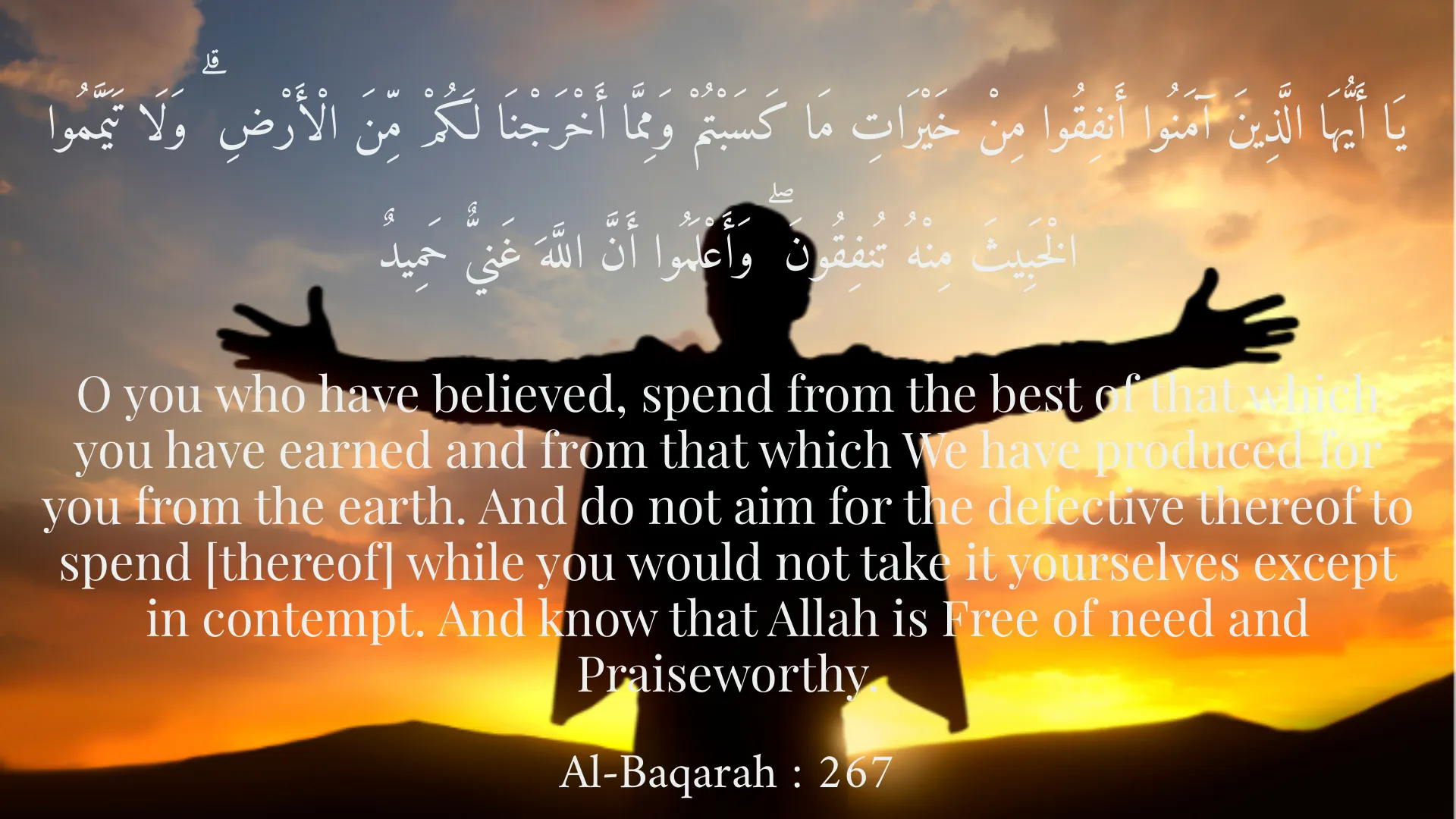
يَا أَيُّهَا الَّذِينَ آمَنُوا أَنفِقُوا مِنْ خَيْرَاتِ مَا كَسَبْتُمْ وَمِمَّا أَخْرَجْنَا لَكُمْ مِّنَ الْأَرْضِ ۗ وَلَا تَيَمَّمُوا الْخَبِيثَ مِنْهُ تُنفِقُونَ ۖ وَأَعْلَمُوا أَنَّ اللَّهَ غَنيٌّ حَمِيدٌ
O you who have believed, spend from the best of that which you have earned and from that which We have produced for you from the earth. And do not aim for the defective thereof to spend [thereof] while you would not take it yourselves except in contempt. And know that Allah is Free of need and Praiseworthy.
Al-Baqarah : 267
مِنْ أَجْلِ ذَٰلِكَ كَتَبْنَا عَلَى بَنِي إِسْرَائِيلَ أَنَّهُ مَن قَتَلَ نَفْسًا بِغَيْرِ نَفْسٍ أَوْ فَسَادٍ فِي الْأَرْضِ فَكَأَنَّمَا قَتَلَ النَّاسَ جَمِيعًا ۚ وَمَن أَحْيَاهَا فَكَأَنَّمَا أَحْيَا النَّاسَ جَمِيعًا ۚ وَقَدْ جَاءَهُمْ رُسُلُنَا بِالْبَيِّنَاتِ ثُمَّ إِن كَثَّرُوا بَعْدَهُمْ إِنَّهُم كَانُوا مُسْرِفِينَ
Because of that, We decreed upon the Children of Israel that whoever kills a soul unless for a soul or for corruption [done] in the land - it is as if he had slain mankind entirely. And whoever saves one - it is as if he had saved mankind entirely.
Al-Ma'idah : 32
اللَّهُ نُورُ السَّمَاوَاتِ وَالْأَرْضِ ۚ مَثَلُ نُورِهِ كَمِشْكَاةٍ فِيهَا مِصْبَاحٌ ۖ الْمِصْبَاحُ فِي زُجَاجَةٍ ۖ الزُّجَاجَةُ كَأَنَّهَا كَوْكَبٌ دُرِّيٌّ يُوقَدُ مِن شَجَرَةٍ مُبَارَكَةٍ زَيْتُونَةٍ لَّا شَرْقِيَّةٍ وَلَا غَرْبِيَّةٍ ۚ يَكَادُ زَيْتُهَا يُشْرِقُ وَلَوْ لَمْ تَمْسَسْهُ نَارٌ ۖ نُورٌ عَلَى نُورٍ ۗ يَهْدِي اللَّهُ لِنُورِهِ مَن يَشَاءُ ۗ وَمَضَرَبُ اللَّهُ الْأَمْثَالَ لِلنَّاسِ ۗ وَاللَّهُ بِكُلِّ شَيْءٍ عَلِيمٌ
Allah is the Light of the heavens and the earth. The example of His light is like a niche within which is a lamp; the lamp is within glass; the glass as if it were a brightly colored star, lit from [the oil of] a blessed olive tree, neither of the east nor of the west, whose oil would nearly glow even if untouched by fire. Light upon light. Allah guides to His light whom He wills. And Allah presents examples for the people, and Allah is Knowing of all things.
An-Nur : 35
Short Story
Once a young man named Amir saw one of his friends struggling with financial problems in the street. He recalled the verses of the Quran and the importance of charity, deciding to help him. Amir wholeheartedly endeavored to assist his friend, and through this act, he felt immense satisfaction and happiness. After some time, he realized that Allah too had bestowed His blessings and mercy upon him, leading his life toward betterment.