Quranic Answer
The concept of God's mercy is an integral part of Islamic theology, deeply embedded in the teachings of the Quran. One of the most profound reminders of this mercy is found in Surah Az-Zumar, verse 53, which states: 'Say, O My servants who have believed, fear your Lord. For those who do good in this world is good, and the earth of Allah is spacious. Indeed, the patient will be given their reward without account.' This verse emphasizes that God's mercy knows no bounds and encourages believers to remain steadfast in hope and action. Understanding God's mercy requires an exploration of its significance in the life of a believer. The Quran’s message reassures Muslims that no matter how grievous their sins, sincere repentance opens the door to forgiveness. This brings comfort and hope, suggesting that God's mercy is an everlasting refuge for those who seek it earnestly. The phrase 'O My servants who have believed' indicates a special relationship between God and the believers, one characterized by trust and hope. When believers face the weight of their transgressions, the Quran offers a lifeline, reminding them that the very act of belief creates a framework for God's mercy. This divine message is not merely a call for belief but underscores the importance of action—doing good deeds as a manifestation of faith. God's mercy is limitless, a theme reiterated throughout the Quran. For instance, in Surah Al-Ma'idah, verse 39, it states: 'And whoever repents and does righteousness has certainly turned to Allah with [accepted] repentance.' This verse presents a clear connection between repentance, good deeds, and divine acceptance. It reiterates that hope in God's mercy must always be coupled with actions; they are not mutually exclusive but rather complementary aspects of a faithful life. The importance of hope in God's mercy cannot be overstated. It can profoundly impact a person’s spiritual journey. For instance, individuals who nurture hope for God's mercy are more inclined to engage in acts of kindness, charity, and community service. This aspiration towards righteousness motivates believers to strive for self-improvement, aligning their actions with Islamic teachings and values. Moreover, such hope encourages individuals to turn away from sin and prioritize their spiritual growth and connection with Allah. As believers embark on the journey of repentance and self-betterment, they must understand the nature of true repentance. Sincere repentance in Islam entails heartfelt regret over past actions, making a steadfast intention to avoid committing the same sins, and seeking forgiveness from God. This process is critical because it reflects a believer’s sincerity and commitment to reform. It also reaffirms that mere hope for forgiveness is insufficient without genuine effort and adherence to divine commandments. Repentance is more than a mere act; it is a transformative journey where one realizes the weight of their actions and seeks to mend their relationship with Allah. The spiritual, emotional, and psychological benefits of repenting are vast. Through the act of turning towards God in sincere repentance, individuals often experience a sense of relief and a renewed sense of purpose. It fosters accountability and cultivates an awareness of the consequences of one’s actions, thus inspiring individuals to adopt a lifestyle aligned with righteousness. Islam elaborates on the balance of God's mercy and justice. While the divine essence embodies mercy, it also upholds justice, ensuring that individuals face the repercussions of their actions. This duality prompts believers to acknowledge the significance of righteous actions. A hopeful spirit that seeks God’s mercy must translate into tangible actions; otherwise, it becomes a hollow aspiration. Believers are encouraged to embody the principles of Islam and manifest their faith through good deeds, charitable acts, and ethical behavior. The practice of good deeds enhances the spiritual connection between the believer and God. As the Quran states, for those who engage in righteousness and strive for self-improvement, the rewards are bountiful. The transformative power of hope, when merged with action, creates a ripple effect that not only elevates an individual’s spiritual standing but also contributes positively to society. In this regard, the journey toward reform and good deeds becomes not just a personal affair but a communal one, facilitating a nurturing and supportive environment where mercy flourishes and is reciprocated. Ultimately, the teachings of Islam provide a profound understanding of hope, mercy, and accountability. The Quran intricately weaves together these concepts, prompting believers to reflect deeply on their lives, actions, and relationship with their creator. In navigating life’s challenges, whether dealing with personal sins or contributing positively to the community, the guiding truth remains: the hope for God's mercy is not an end in itself but a force that drives believers to embrace reform and do good. In conclusion, the message of God's mercy—limitless and restorative—is a cornerstone of Islamic faith that fuels a believer's journey towards righteousness. It is a dynamic interplay of hope, action, and repentance that defines the essence of a fulfilling spiritual life. The Quran calls its followers to embrace this hope and transform it into meaningful engagement with the world around them, epitomizing the very goal of Islam: to worship God through acts of goodness while embodying mercy in everyday life.
Related Verses
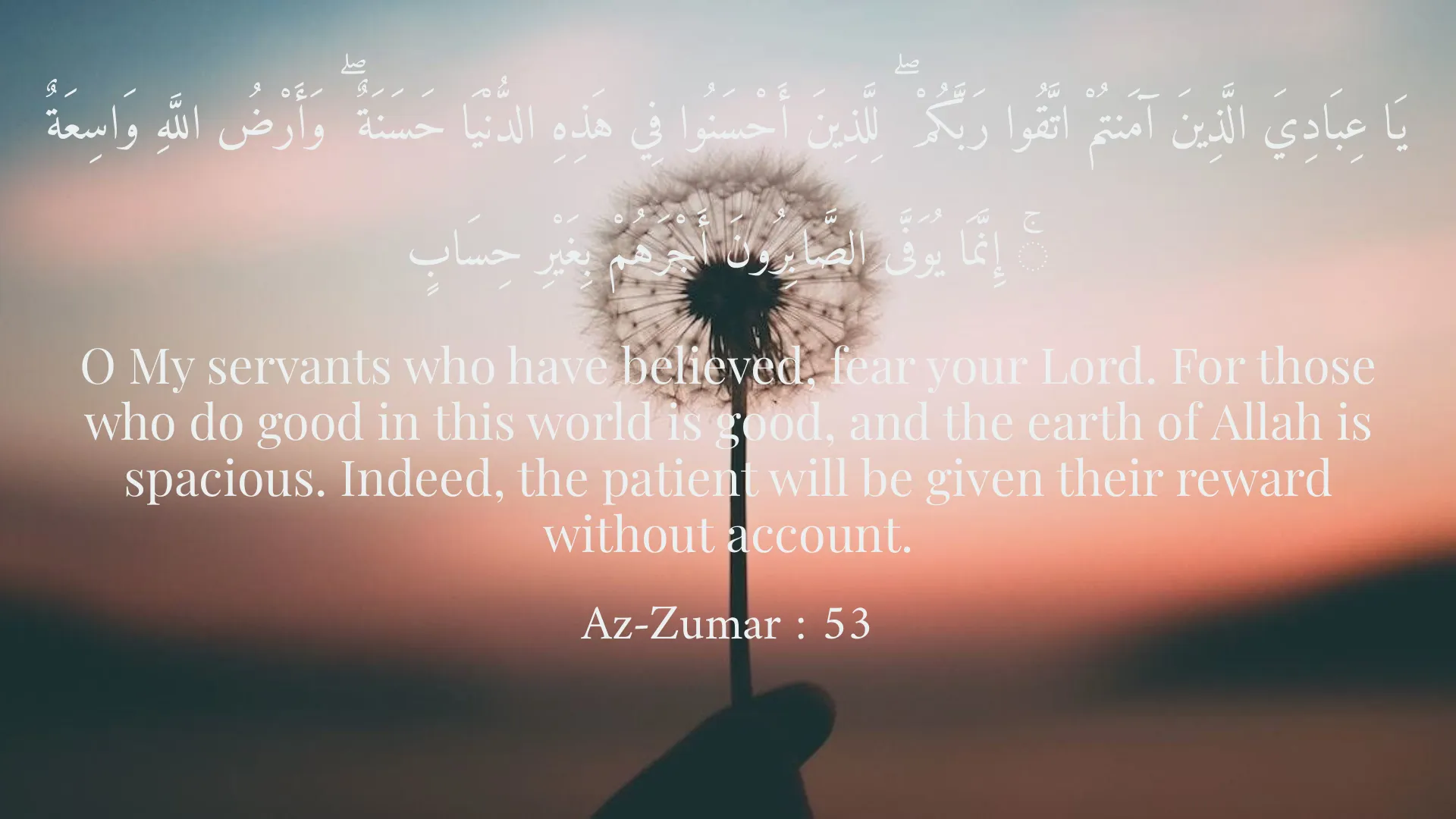
يَا عِبَادِيَ الَّذِينَ آمَنتُمْ اتَّقُوا رَبَّكُمْ ۖ لِلَّذِينَ أَحْسَنُوا فِي هَذِهِ الدُّنْيَا حَسَنَةٌ ۖ وَأَرْضُ اللَّهِ وَاسِعَةٌ ۚ إِنَّمَا يُوَفَّى الصَّابِرُونَ أَجْرَهُمْ بِغَيْرِ حِسَابٍ
O My servants who have believed, fear your Lord. For those who do good in this world is good, and the earth of Allah is spacious. Indeed, the patient will be given their reward without account.
Az-Zumar : 53
وَمَن تَابَ وَأَصْلَحَ فَقَدْ تَابَ إِلَى اللَّهِ مَتَابًا
And whoever repents and does righteousness has certainly turned to Allah with [accepted] repentance.
Al-Ma'idah : 39
Short Story
One day, a man named Arash fell into a significant sin and felt a sense of hopelessness in his heart. He decided to sincerely repent to God. During his prayer, he suddenly realized God's endless mercy. He felt as if his sins were mere dots submerged in an ocean of God's mercy. Therefore, from that day forth, Arash not only cleansed himself from his sins but also taught others to have hope in God's mercy.