Quranic Answer
In the Holy Quran, prayer and action are presented as inseparable concepts that together create a comprehensive framework for spiritual development and personal success. At its core, prayer serves as the act of seeking divine connection and guidance from Allah, and this practice is woven throughout the fabric of the Quran. Verses within the Quran highlight not just the importance of prayer itself, but also the necessity of coupling it with good deeds and purposeful actions that align with the supplicant's intentions. One of the significant verses that encapsulate this relationship is found in Surah Al-Mu'minun, verse 60, where Allah states: "And those who invoke their Lord with humility and with aspiration..." This passage emphasizes that prayer is not just a mechanical recitation of words but rather a heartfelt and sincere invocation that recognizes the divine presence and seeks to draw closer to God. The terms 'humility' and 'aspiration' indicate a proactive mindset, reflecting an inner commitment not just to seek assistance from Allah but also to embody the characteristics that make one worthy of divine support. While recognizing one's need for God's mercy, there is also an implicit call to enhance one's character and ethical conduct through good deeds. Furthermore, in Surah Al-Baqarah, verse 186, we find another foundational principle related to prayer: "And when My servants ask you concerning Me, indeed I am near. I respond to the supplicant when he calls upon Me." This verse reiterates the importance of prayer and illustrates the immediacy of God's response. It reassures believers of God's presence and openness to hear their calls. However, a deeper understanding reveals that mere supplication is insufficient if not accompanied by tangible actions reflecting one's intentions. The actionable aspect of prayer reinforces the idea that faith must manifest in one's behavior. For instance, if an individual prays for a better job, it would be essential for them to actively work on crafting a compelling resume, seeking job opportunities, or even enhancing their skills to become eligible for new positions. This is a clear embodiment of the belief that while prayer is crucial, it must be complemented by human effort. In Surah Ghafir, verse 60, Allah further emphasizes this connection, saying: "Call upon Me; I will respond to you." Here, the promise of response underscores the faith that believers should have when reaching out to God. However, it also implies a prerequisite of sincerity and effort on the part of the individual. Simply uttering prayers without a corresponding sense of duty to take action renders the supplication less effective. In other words, prayer without action may not deliver the desired results. The depth of this relationship between prayer and action becomes even more significant when we consider the broader implications of living a life that integrates faith with practice. Throughout Islamic teachings, there is a recurring theme that spiritual life cannot be segregated from practical life. The Quran calls upon believers to embody their faith through their daily actions, which ultimately leads to the refinement of character and the betterment of oneself in this world and the hereafter. Moreover, the interplay between prayer and action can serve as a powerful motivator for personal change and growth. When one approaches prayer with sincerity and genuine aspirations, it can ignite the drive to actively pursue their goals and dreams. This dynamic can be particularly beneficial during challenging times, offering believers not simply solace, but also the encouragement to engage in constructive actions that further their spiritual and material aspirations. For instance, an individual may pray for patience and strength to cope with life's adversities. In response, they might take proactive steps such as seeking community support or engaging in self-care practices that promote resilience. The duality of prayer and action also finds resonance in various teachings and practices across the entire spectrum of Islamic tradition. The life of the Prophet Muhammad (peace be upon him) stands as a powerful exemplar of this principle, where his life was marked by a continuous commitment to prayer, coupled with tireless effort toward serving the community, spreading the message of Islam, and engaging in acts of charity. His conduct reminds us that one can be devoted in prayer while equally devoted to taking action that aligns with one's faith. In practical terms, this understanding can be further enhanced through the establishment of a structured approach to prayer and action. Believers can develop specific goals in areas of their lives where they seek improvement, such as personal growth, career paths, or community service. Complementing their prayers with well-defined action plans helps in fostering a sense of accountability, while also ensuring that one's spiritual commitments translate into real-world impacts. Thus, as we navigate the path of life, the teachings of the Quran remind us that the essence of faith is intertwined with the implementation of action. The concept of prayer should never be isolated from the world of deeds; instead, they should be viewed as complementary forces that can lead to holistic development and fulfillment. As believers invoke Allah with devotion and humility, we are encouraged to rise to the challenges of life by taking affirmative action. In doing so, we fulfill not only our spiritual obligations but also contribute positively to our communities and the larger world around us. In conclusion, the inseparability of prayer and action in the Holy Quran serves as a profound reminder to engage in a life marked by both spiritual fulfillment and responsible action. By balancing the act of sincere supplication with tangible steps toward achieving desired outcomes, believers can cultivate resilience, face life's challenges, and enrich their spiritual journeys. Ultimately, while prayer serves as a critically significant tool for divine guidance, it is the accompanying actions that truly reflect the intentions of the heart and pave the way to personal and collective success.
Related Verses
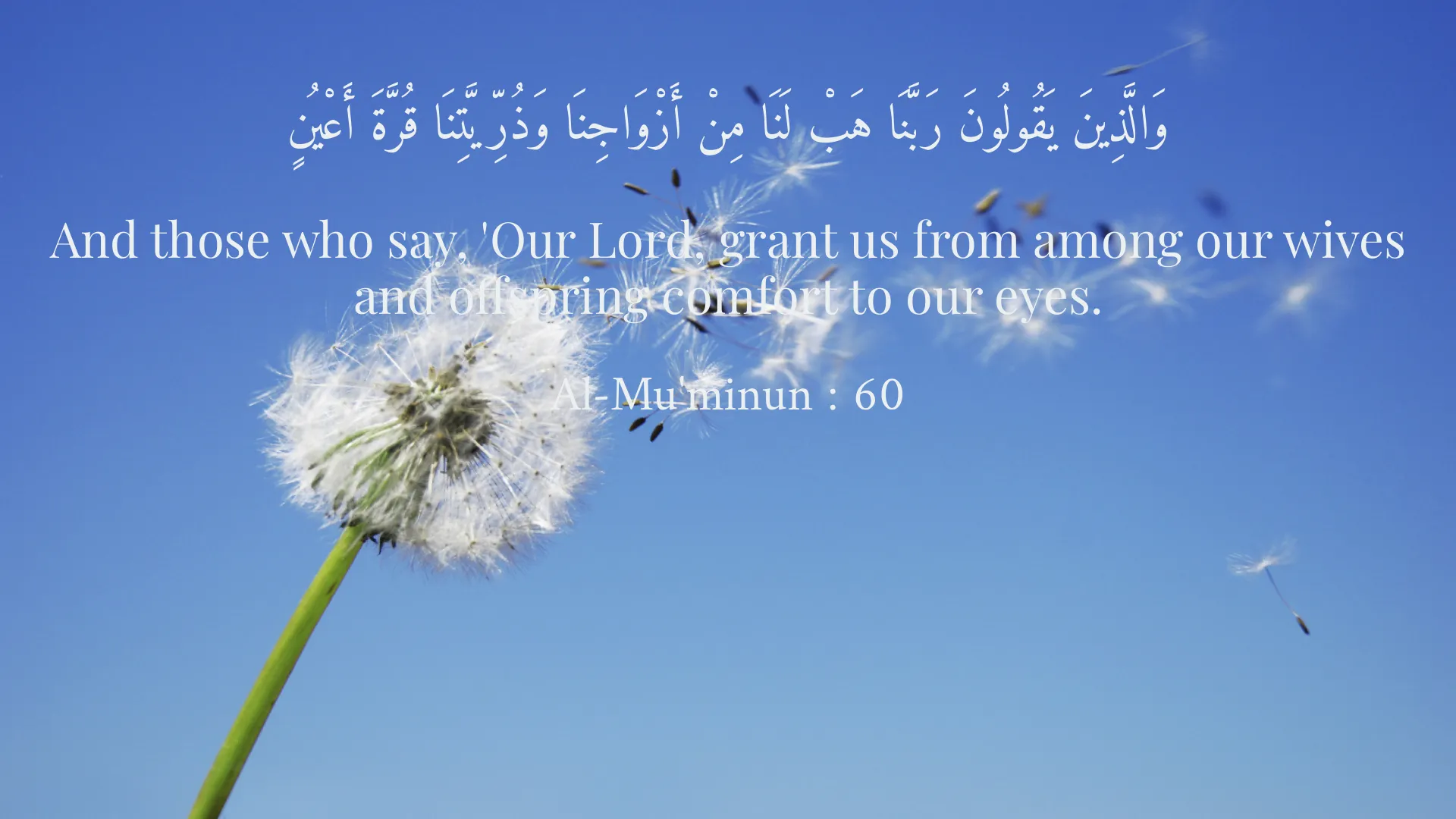
وَالَّذِينَ يَقُولُونَ رَبَّنَا هَبْ لَنَا مِنْ أَزْوَاجِنَا وَذُرِّيَّتِنَا قُرَّةَ أَعْيُنٍ
And those who say, 'Our Lord, grant us from among our wives and offspring comfort to our eyes.
Al-Mu'minun : 60
وَإِذَا سَأَلَكَ عِبَادِي عَنِّي فَإِنِّي قَرِيبٌ ۖ أُجِيبُ دَعْوَةَ الدَّاعِ إِذَا دَعَانِ
And when My servants ask you concerning Me, indeed I am near. I respond to the supplicant when he calls upon Me.
Al-Baqarah : 186
وَقَالَ رَبُّكُمْ ادْعُونِي أَسْتَجِبْ لَكُمْ
And your Lord says, 'Call upon Me; I will respond to you.'
Ghafir : 60
Short Story
Once upon a time, a young man named Shahab was engulfed in the worries of daily life. He prayed for God's help, yet never took any action to improve his situation after praying. One day, he said to a friend, "I've prayed, why isn’t anything changing?" His friend reminded him that action is also a part of prayer. Shahab then decided to work on his problems and, alongside his prayers, took effective actions to enhance his life. Day by day he progressed and ultimately realized that prayer and action are two wings for flying towards success.