Quranic Answer
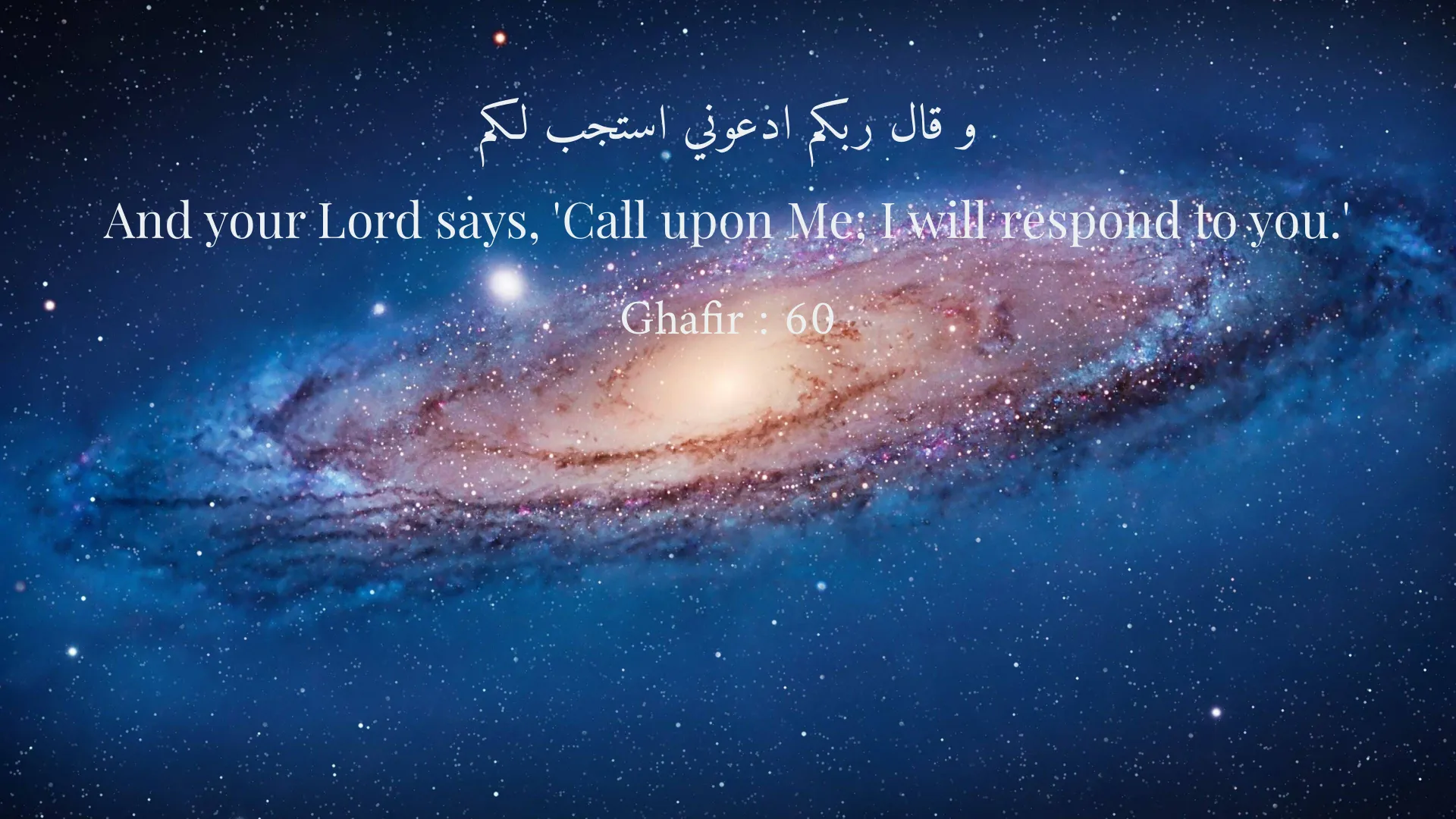
In the Holy Quran, prayer is not merely a ritualistic act but rather a profound means of connecting with Allah (SWT). It serves as a crucial pillar of Islamic faith, fostering a deep and meaningful relationship between believers and their Creator. The importance of prayer is accentuated in Surah Ghafir (Chapter 40, Verse 60), where Allah explicitly invites His believers to reach out to Him: 'And your Lord says, 'Call upon Me; I will respond to you.' This divine decree is a powerful reminder of Allah's readiness to listen and respond to the supplications of His servants. Prayer, or Salah, acts as a lifeline for Muslims, providing them with the opportunity to communicate directly with Allah. It reinforces the idea that regardless of the challenges one may face, there is always an open channel to seek guidance, support, and forgiveness. This relationship fosters emotional and spiritual resilience, enabling individuals to navigate life's trials with faith and trust in their Creator. Furthermore, the Quran emphasizes the significance of intercessory prayer, or praying not just for oneself but for others as well. This concept is beautifully underscored through authentic narrations wherein the angels affirm, 'For you too, like this.' This saying signifies that when individuals sincerely pray for the benefit and well-being of others, they earn the blessings and mercy of Allah, often enhancing the likelihood of their own prayers being accepted. The act of praying for others is viewed as a selfless deed, promoting compassion and community, inherent values within the Islamic tradition. Praying for others not only reflects one's love and kindness towards fellow beings but also nurtures an environment of mutual support within the community. In a world increasingly characterized by individualism and self-interest, the practice of praying for others serves as a refreshing reminder of the interconnectedness of humanity and the moral obligation to uphold one another in times of need. It stands as an embodiment of the Islamic ethos of brotherhood and solidarity. The Quran also underscores the themes of patience and perseverance in prayer, as illustrated in Surah Aal-e-Imran (Chapter 3, Verse 17): 'And be steadfast and patient and guard your duty.' This call for steadfastness underscores that the journey of faith is not devoid of challenges; rather, it demands unwavering commitment and resilience in one's devotion to Allah. The encouragement to 'guard your duty' emphasizes the necessity of maintaining regular prayer, even amidst life's uncertainties and struggles. Adhering to the discipline of prayer requires an individual to cultivate a heart filled with gratitude and virtue. Such qualities are crucial as they create a conducive atmosphere for prayers to be answered. A grateful heart acknowledges the countless blessings bestowed upon it; it recognizes the mercy and love of Allah, creating a bond that draws a believer closer to fulfilling their desires and aspirations. Moreover, the spiritual benefits of prayer extend beyond the mere act of supplication. Engaging in prayer allows for moments of reflection, mindfulness, and tranquility. It provides a sanctuary away from the distractions and noise of the world, facilitating a deeper connection with Allah. Within these moments, individuals can express their joys, sorrows, hopes, and fears, creating a holistic dialogue with their Creator. The significance of prayer in the context of Islamic teachings is reiterated throughout various verses in the Quran and Hadith literature. The Prophet Muhammad (peace be upon him) frequently emphasized the role of prayer in a believer's life. He described prayer as the 'light of the believer,' illustrating its illuminating and guiding characteristics. It empowers individuals to recognize their purpose, instills confidence in their faith, and ultimately motivates them to contribute positively to society at large. Additionally, the communal aspect of prayer, particularly in congregational prayers, reinforces the bonds of unity among Muslims. Participating in group prayers allows for collective reflection, shared experiences, and mutual support, further enhancing the sense of belonging within the community. It reminds individuals that they are part of a greater ummah (community) that transcends geographical and cultural boundaries. In conclusion, prayer occupies an irreplaceable position in the lives of Muslims, acting as a vital conduit for connection, reflection, and personal growth. The Quran's encouragement to pray both for oneself and for others highlights the deeply interwoven nature of individual and communal welfare in Islam. By embracing the principles of patience, gratitude, and love for others, believers can navigate life's challenges with resilience while cultivating a heart that is receptive to divine guidance and mercy. Ultimately, the act of prayer is not only a form of worship but also a transformative practice that cultivates a sense of belonging, compassion, and purpose in the life of a believer.
Related Verses
و قال ربكم ادعوني استجب لكم
And your Lord says, 'Call upon Me; I will respond to you.'
Ghafir : 60
و صابروا و صابروا و رابطوا
And be steadfast and patient and guard your duty.
Al-Imran : 17
Short Story
One day, two friends named Ali and Hassan were sitting in a garden. Ali said to Hassan: 'I always pray for blessings for myself and my family, but I wonder why my prayers are not answered.' Hassan replied: 'My dear friend, you should pray for others as well. Because when you pray for others, Allah cleanses your heart and listens to your prayers more.' Days passed, and Ali began praying for his friends and relatives. A few weeks later, on a beautiful night, he prayed and felt that Allah was answering his prayer.