Quranic Answer
Prayer is one of the essential acts of worship in Islam, serving as a profound expression of devotion and obedience to Allah (God). Emphasized extensively in the Holy Quran, prayer is not only a spiritual obligation but also a means of developing a close relationship with the Creator. The significance of prayer transcends its ritualistic practices; it cultivates a deep connection between the believer and Allah. On a broader scale, prayer in Islam embodies the essence of faith and the deep-seated need for spiritual sustenance. The act of praying is distinctly characterized by a sense of sincerity that goes beyond mere words. It is expected that believers approach prayer with their hearts, pouring out their deepest emotions and seeking solace in their connection with Allah. This notion of heartfelt prayer is beautifully captured in Surah Al-Baqarah, verse 186, which reads: 'And when My servant asks you concerning Me, indeed I am near. I respond to the invocation of the supplicant when he calls upon Me...' This verse conveys the closeness of Allah to His servants, reinforcing the idea that prayer is a dialogue, a two-way communication where believers are encouraged to express their thoughts and feelings openly. However, it is crucial to understand that the effectiveness of prayer is contingent upon its inner sincerity and purity of intention. It is not enough to recite religious texts or phrases mechanically; rather, the believer must invest their heart and spirit into each supplication. As articulated in the Hadith narrated by the Prophet Muhammad (peace be upon him), 'Prayer is worship.' This statement highlights that prayer is a form of worship that requires active engagement, awareness, and heartfelt dedication. When prayer is reduced to a ritual devoid of feeling, it loses its essence and profound significance. The depth of prayer is tied to a believer's understanding of their responsibilities towards Allah. Engaging in prayer should inspire reflection and insight regarding one’s life choices, ethical behavior, and the pursuit of personal improvement. It invites individuals to examine their hearts and their intentions, aligning them with their faith. In this way, prayer serves as a tangible reminder of one’s obligations as a Muslim and provides a framework within which personal growth can occur. When individuals pray without genuine emotional investment, their worship may appear superficially correct, yet it lacks the transformative power that authentic prayer offers. An emotional detachment while praying can result in a hollow experience that fails to resonate within the believer's heart. Prayer, in this sense, should be a cathartic moment that enables the supplicant to feel the weight of their struggles, the joy of gratitude, and the urgency of mercy. It should lead to an elevated state of mindfulness, fostering compassion and humility in one’s everyday life. Furthermore, the societal dimensions of prayer cannot be overlooked. Prayer acts as a unifying force among the Muslim community. Engaging in congregational prayers, such as those performed in a mosque, cultivates a sense of belonging and shared spiritual experience. Collectively, believers stand shoulder to shoulder in submission, invoking mutual encouragement to stay true to the faith. In this collective worship, individuals reinforce their commitments to one another and to Allah, thereby enhancing community bonds and fostering spiritual development. In the modern world, characterized by distractions and fast-paced lifestyles, the emphasis on sincere and heartfelt prayer becomes even more significant. It is all too easy to fall into the trap of routine, performing prayers silently and quickly, often disconnected from the very essence of what it represents. However, to truly benefit from prayer, Muslims are urged to create a supportive environment that encourages contemplation, conscious reflection, and emotional sincerity. Physical posture also plays a role in the effectiveness of prayer. In Islam, specific movements and positions are prescribed during prayer, such as bowing and prostration. These physical actions are not merely rituals; rather, they symbolize humility and servitude to Allah. By bowing and prostrating, believers physically manifest their submission, which compliments the inner sincerity and heart-felt connection being sought in prayer. Therefore, it is essential to approach these physical acts with a conscious awareness of their deeper spiritual significance. In conclusion, prayer in Islam is a multifaceted practice that is essential for every believer's spiritual growth. It is a call to engage deeply with one's faith, both linguistically and emotionally. By understanding that prayer should emerge from a pure and sincere heart, believers can cultivate a more meaningful connection with Allah. This connection is a source of strength and resilience in times of hardship and a wellspring of gratitude during moments of joy. Ultimately, the essence of prayer lies in the blend of heartfelt intention, conscious reflection, and communal support, which collectively foster a deeper relationship with Allah and enhance the overall spiritual experience within the life of a Muslim.
Related Verses
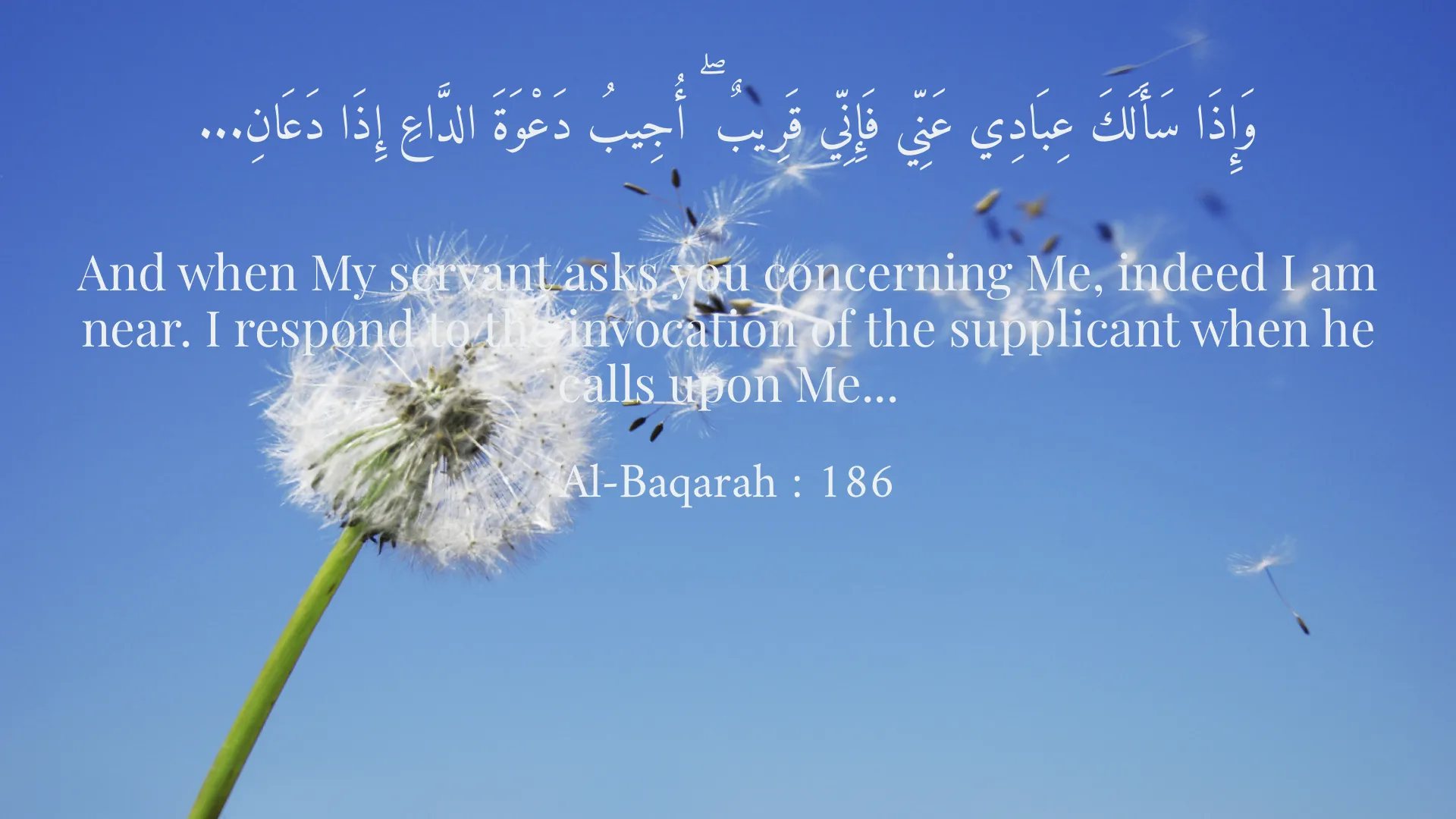
وَإِذَا سَأَلَكَ عِبَادِي عَنِّي فَإِنِّي قَرِيبٌ ۖ أُجِيبُ دَعْوَةَ الدَّاعِ إِذَا دَعَانِ...
And when My servant asks you concerning Me, indeed I am near. I respond to the invocation of the supplicant when he calls upon Me...
Al-Baqarah : 186
Short Story
One starry night, Maryam went out to her yard and gazed at the angels in the sky for prayer and supplication. She felt that connecting with God should encompass her entire being. She realized that prayer is not merely a verbal act but should be infused with feelings and pure intention. Maryam decided to recite her prayers with deeper emotions every night, soon discovering a greater sense of peace in her life.