Quranic Answer
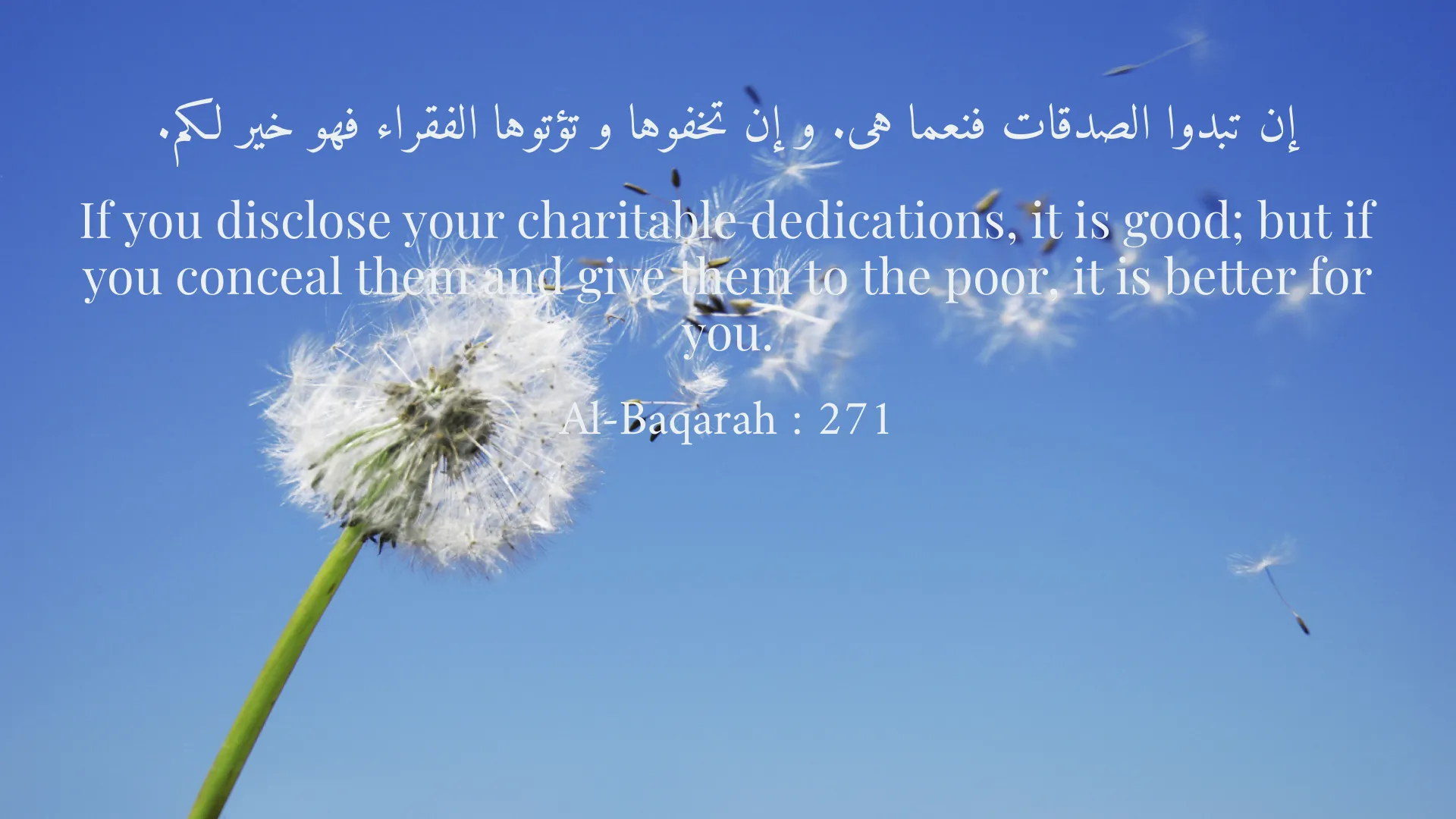
In the Holy Quran, the importance of charity, particularly when performed secretly and discreetly, is a recurring theme that underscores the profound compassion and moral responsibility individuals hold within the framework of Islamic teachings. One of the core tenets of Islam is the commitment to helping others, especially those who are less fortunate. In this regard, the Quran provides clarity on the manner in which charity should be given and offers guidance on achieving true spiritual fulfillment through altruistic actions. For instance, in Surah Al-Baqarah, verse 271, it is stated: 'If you disclose your charitable dedications, it is good; but if you conceal them and give them to the poor, it is better for you.' This particular verse encapsulates the essence of secret charity by highlighting the greater blessings and rewards bestowed by Allah for those acts which are performed in secrecy. The Quran does not merely advocate for charity; it emphasizes the virtue of purity of intention behind such acts. When charity is given discreetly, it reflects a person’s genuine desire to help others rather than seeking honor or recognition. Moreover, this verse serves as a reminder that the true spirit of giving lies in the act itself, rather than in its public declaration. The manner in which charity is given can have significant implications on the giver's motivations and the overall impact on the recipient. When individuals offer help without seeking attention, it demonstrates a sincere commitment to alleviating the suffering of others purely for the sake of pleasing Allah. This quality is embedded deeply in the teachings of Islam, which encourages believers to cultivate humility and selflessness in their charitable acts. This idea is further reiterated in verse 273 of Surah Al-Baqarah, where charity is emphasized to be for the sake of Allah and aimed at relieving the needs of others. The verse clearly states that acts of charity should not be driven by the desire for fame or recognition; instead, they should stem from a genuine concern for the wellbeing of others. This principle of giving for Allah's sake fosters a genuine spirit of community and solidarity among individuals, thereby enhancing the moral fabric of society. The practice of concealed charity is not only about the physical act of giving; it also has a profound spiritual dimension. It acts as a means of drawing closer to Allah, nurturing the believer’s faith, and enhancing their moral character. When individuals commit to helping others discreetly, it emphasizes a profound and compassionate human spirit that aligns with the core values of Islam. Such acts of kindness invoke a sense of empathy and companionship and encourage the establishment of an inclusive society where everyone plays a role in uplifting those who are marginalized and in need. Religious scholars and leaders throughout Islamic history have consistently underscored the importance of performing charitable acts covertly. They often draw upon the teachings of the Prophet Muhammad (PBUH), who exemplified the highest levels of compassion, kindness, and humility in his interactions with people—particularly with the poor and needy. The historical narratives highlight numerous instances where the Prophet would give without seeking acknowledgment or praise. His life serves as a paradigm for Muslims to emulate, prompting believers to create paths of charity that reflect their faith’s teachings on modesty and altruism. By providing charity discreetly, one's character and morals are strengthened, leading to reconciliation with one’s own ethical and spiritual foundations. It shapes individuals into generous givers and fosters a community ethos enriched by mutual support and trust. Secret charity enhances the emotional bonds between people, culminating in the establishment of a nurturing network that can help to mitigate the struggles faced by society’s vulnerable members. This practice aligns with the Quranic vision of a compassionate world that is guided by the values of justice and fairness, which underpins nearly every chapter and verse of the Quran. In modern times, while the methods and channels for donating may have diversified, the core values of giving with sincerity continue to resonate throughout Islamic communities around the world. Whether through direct aid, charitable organizations, or grassroots initiatives, the underlying message remains the same: true charity goes beyond just financial assistance; it embodies the ethos of love, kindness, and respect for every individual, regardless of their socio-economic status. Conclusion In conclusion, the Quran's teachings on secret charity serve as guiding principles for believers striving to live a life of purpose, compassion, and spirituality. It emphasizes the importance of humility, intention, and selflessness in acts of giving. By engaging in charitable deeds covertly, individuals not only draw nearer to Allah but also contribute to the strengthening of community ties. The timeless wisdom within these verses encourages Muslims to prioritize the welfare of others above personal recognition, hence cultivating a society marked by altruism and collective responsibility. This emphasis on secret charity exemplifies the values of Islam, urging individuals to create a legacy of kindness that will resonate long into the future.
Related Verses
إن تبدوا الصدقات فنعما هی. و إن تخفوها و تؤتوها الفقراء فهو خیر لکم.
If you disclose your charitable dedications, it is good; but if you conceal them and give them to the poor, it is better for you.
Al-Baqarah : 271
إنما الصدقات للفقراء والمساكين والعاملين عليها والم…
Charity should be given to the poor with sincere intentions for the sake of Allah.
Al-Baqarah : 273
Short Story
One day, a man was searching for a way to help others. He noticed that among his neighbors were those in need of assistance. However, he decided that instead of public charity, he would help them secretly without drawing attention. Days passed, and he felt more happiness and peace than ever before. From then on, he realized that secret giving not only aided those in need but also rewarded him with blessings and tranquility.