Quranic Answer
### The Significance of Seeking Forgiveness in Islam: A Comprehensive Exploration Seeking forgiveness is a fundamental aspect of the Islamic faith, deeply rooted in the teachings of the Holy Quran. Allah, in His infinite mercy, emphasizes the importance of repentance and reassures His servants that forgiveness is always attainable. The essence of this theme can be derived from verses in the Quran, particularly in Surah Az-Zumar and Surah Al-Baqarah, where Allah highlights the boundless nature of His mercy and the conditions necessary for attaining it. #### Understanding Forgiveness in Islam In the vast tapestry of Islamic teachings, the concept of forgiveness occupies a central role. It reflects Allah's compassion and serves as a guiding principle for Muslims in their everyday lives. The act of seeking forgiveness (Tawbah) is not merely about reciting words but involves a profound internal transformation. A person must reach a state of sincere remorse for their sins, seek divine pardon, and strive to amend their actions. This approach embodies a commitment to personal growth and a renewed relationship with Allah. The Quran articulates this notion eloquently. In Surah Az-Zumar, verse 53, Allah addresses His faithful servants with the words, "O My servants who have believed, do not despair of the mercy of Allah. Indeed, Allah forgives all sins." This verse is not just an affirmation of God's forgiveness; it is a lifeline for those burdened by guilt and regret. It reassures believers that no matter how grave their transgressions, they have an avenue to seek forgiveness. #### The Nature of Allah's Mercy The Quran consistently emphasizes that Allah's mercy supersedes all sins. This fundamental truth encourages individuals to reflect on their actions and approach Allah's door of mercy with hope rather than despair. The Arabic term "rahmah," often translated as mercy, embodies a sense of compassion, forgiveness, and kindness. Allah's mercy, described as expansive and all-encompassing, provides assurance to believers that seeking forgiveness is always met with an open heart from the Creator. In Surah Al-Baqarah, verse 218, Allah further illustrates this idea by stating, "Indeed, those who have believed and those who have emigrated and fought in the cause of Allah, they can expect the mercy of Allah." This verse emphasizes that believers who strive for righteousness, even in the face of challenges, are under the protective cover of Allah's mercy. It establishes a direct link between sincere belief, commitment to faith, and the likelihood of receiving divine forgiveness. #### Conditions for Seeking Forgiveness While Allah assures forgiveness, it is essential to understand the conditions necessary for attaining it. The process of Tawbah requires not only an acknowledgment of wrongdoing but also sincere repentance. The individual must genuinely regret their actions, cease the sin, and resolve not to commit it again. This process is a form of self-reflection and acknowledgment of one's human flaws. In his teachings, the Prophet Muhammad (peace be upon him) illustrated the significance of approaching repentance with a pure heart. He emphasized that Allah does not seek perfection from His servants but desires sincerity and honesty in their quest for forgiveness. When an individual approaches Allah with humility and honesty, they likely encounter the enveloping mercy that Allah promises. #### Psychological and Spiritual Benefits of Forgiveness Seeking forgiveness is not solely a ritualistic act; it has profound psychological and spiritual implications. For individuals burdened with guilt, the act of seeking Allah's forgiveness can be incredibly liberating. It facilitates emotional healing, reducing feelings of anxiety, shame, and despair. This emotional release prompts a transformative journey, allowing believers to leave behind past mistakes and move towards a more fulfilling and constructive path. Moreover, forgiveness can enhance a person's relationship with themselves and others. When one seeks and receives forgiveness from Allah, they are also encouraged to extend forgiveness to those who have wronged them. The Quran encourages such behavior, as forgiveness fosters compassion, understanding, and healing within communities. This cycle of forgiving oneself and others cultivates a harmonious society, enriching interpersonal relationships and spiritual well-being. #### Embracing the Opportunity for Forgiveness In a world filled with challenges, mistakes, and moral dilemmas, seeking forgiveness stands as a beacon of hope. It opens the door for righting wrongs and re-establishing a connection with Allah. The essence of the Quranic message is to foster a culture of repentance and mercy, allowing individuals to learn from their experiences and grow closer to their Creator. The beauty of seeking forgiveness lies in its availability, regardless of one's circumstances. Whether an individual struggles with minor or significant sins, the path to forgiveness remains open. This inclusive approach to mercy is a testament to Allah's unconditional love for His creation. #### Conclusion In conclusion, the act of seeking forgiveness in Islam holds immense significance and serves as a tool for spiritual growth and healing. Verses from the Quran, such as those from Surah Az-Zumar and Surah Al-Baqarah, reaffirm the boundless mercy of Allah and remind believers that sincere repentance is always met with forgiveness. The psychological and spiritual benefits of seeking forgiveness cannot be overstated, as it not only liberates individuals from guilt but also fosters a culture of compassion and healing. Ultimately, navigating the path of seeking forgiveness encourages believers to move forward with hope, resilience, and a renewed commitment to righteousness.
Related Verses
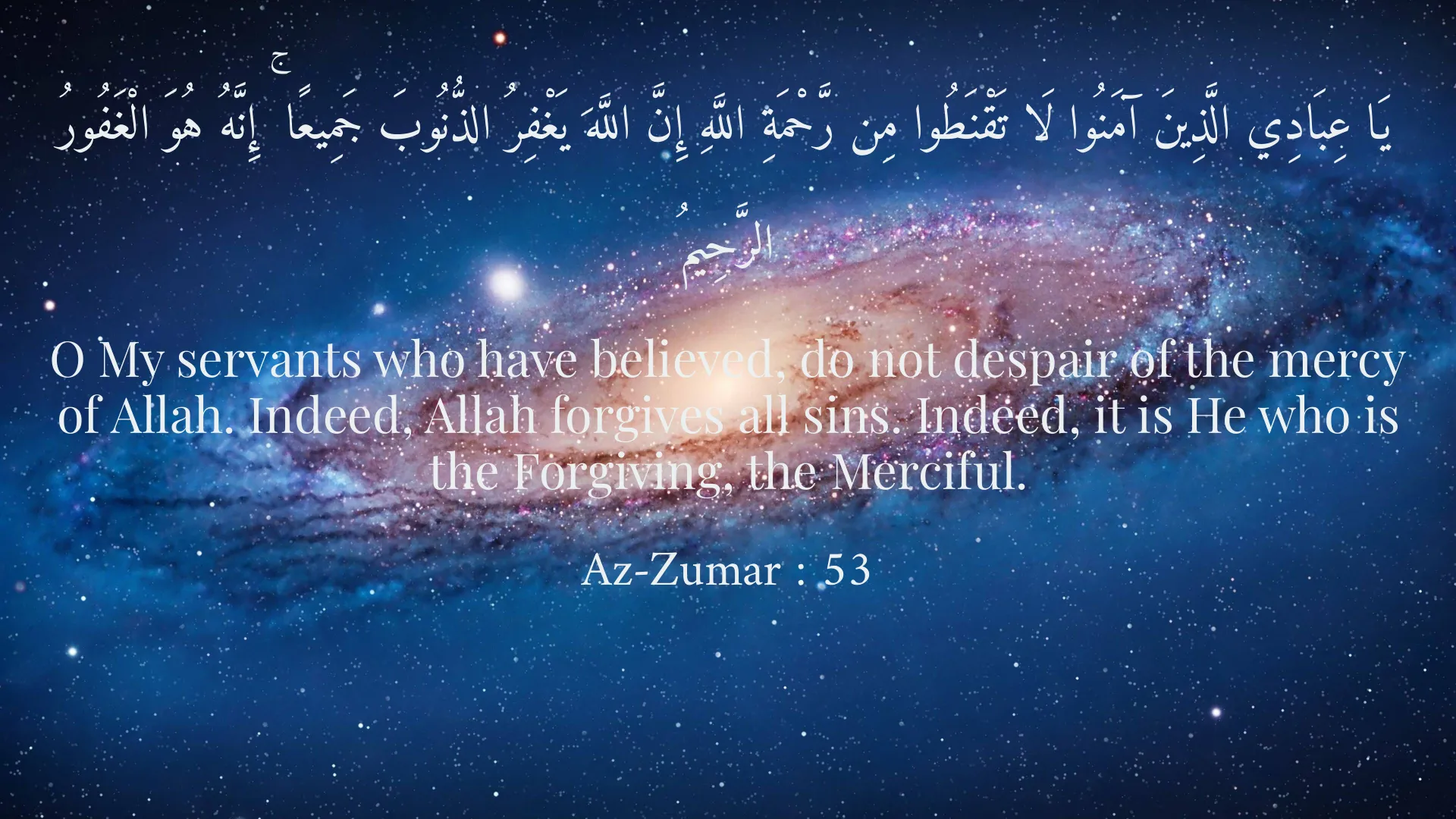
يَا عِبَادِي الَّذِينَ آمَنُوا لَا تَقْنَطُوا مِن رَّحْمَةِ اللَّهِ إِنَّ اللَّهَ يَغْفِرُ الذُّنُوبَ جَمِيعًا ۚ إِنَّهُ هُوَ الْغَفُورُ الرَّحِيمُ
O My servants who have believed, do not despair of the mercy of Allah. Indeed, Allah forgives all sins. Indeed, it is He who is the Forgiving, the Merciful.
Az-Zumar : 53
إنَّ الَّذِينَ آمَنُوا وَالَّذِينَ هَاجَرُوا وَجَاهَدُوا فِي سَبِيلِ اللَّهِ أُولَـٰئِكَ رَجَاءُ رَحْمَةِ اللَّهِ
Indeed, those who have believed and those who have emigrated and fought in the cause of Allah, they can expect the mercy of Allah.
Al-Baqarah : 218
Short Story
One day, Ali was reflecting on his mistakes and worried about how he could compensate for them. He decided to humbly seek forgiveness from Allah with a pure heart. Ali approached Allah sincerely and prayed. After a while, he felt lighter in spirit and experienced greater peace. He realized that seeking forgiveness not only impacted him but also had a deep and transformative effect on his friends and others around him.