Quranic Answer
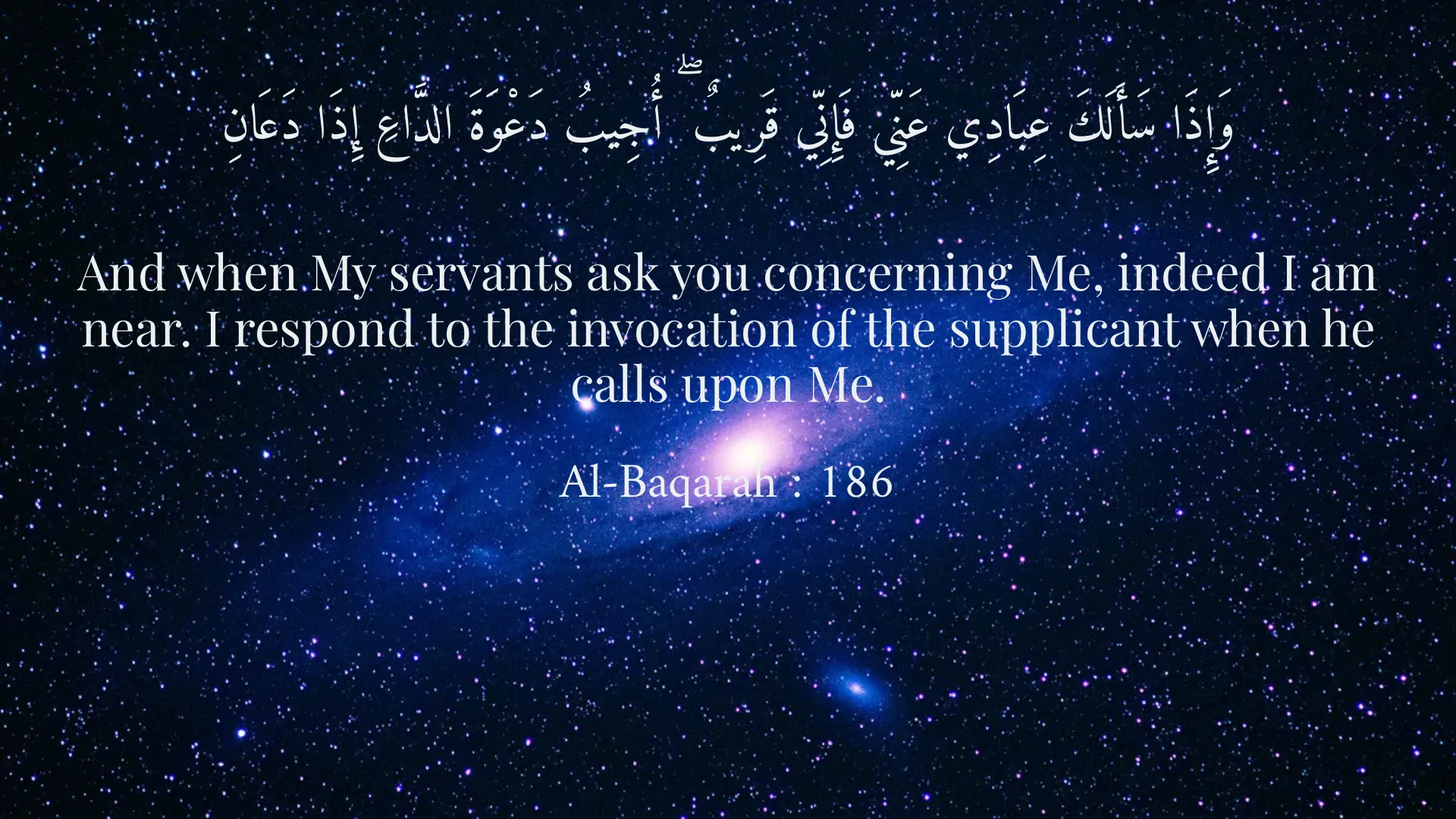
In the Holy Quran, the concept of a pure heart and sincere intention in supplication is not merely an abstract idea; rather, it is a crucial aspect of a believer's relationship with Allah. The significance of approaching Allah with a clean heart and pure intentions is woven throughout the sacred text, providing guidance for those seeking a genuine and effective connection with their Creator. This article aims to explore the profound meanings and implications of having a pure heart in the context of supplication as highlighted in specific verses of the Quran, notably in Surah Al-Baqarah, Al-Mu’minun, and Surah Ar-Ra’d. At the core of Islamic belief, supplication, or 'dua,' signifies more than just asking for needs; it is an acknowledgement of the Almighty's power and a manifestation of humility and dependence on Him. The Quran conveys this with utmost clarity. In Surah Al-Baqarah (2:186), Allah reassures His servants of His closeness, stating: 'And when My servants ask you concerning Me, indeed I am near. I respond to the invocation of the supplicant when he calls upon Me.' This verse indicates the intimate relationship between Allah and His creations. The wording reflects a direct and personal correspondence—when sincerely called upon, Allah affirms His nearness, promising to respond. Yet, the underlying message is that the supplication must arise from a heart that is free from malice, fully aware of its own intentions. In other words, a supplication made with sincerity nurtured through a pure heart is more likely to be granted. It emphasizes that one's inner state, which includes their beliefs and sincerity, plays a pivotal role in how prayers are perceived and answered. Purity of heart is described in Islamic teachings as an essential characteristic that brings individuals closer to God. When a believer seeks to connect with Allah, they must approach Him without the weight of worldly distractions or corrupt intentions. This is echoed profoundly in Surah Al-Mu’minun (23:60) which states: 'Indeed, they will not be responded to except for those who are truly believing.' This verse firmly establishes that belief coupled with a pure heart is a prerequisite for one’s supplication to be heard. The affirmation of being ‘truly believing’ hints at a deeper level of sincerity that goes beyond mere lip service. It is not enough to recite prayers without genuine faith and conviction. The implication here is that true faith is what facilitates a deeper connection with the Divine, ultimately resulting in favor during times of supplication. A heart shaped by faith influences intention and drives one to pray sincerely, planting the seeds for mercy and blessings from above. Moreover, Surah Ar-Ra’d (13:28) provides additional insight into the sanctity of remembering Allah: 'Indeed, by the remembrance of Allah do hearts find rest.' This verse encapsulates the essence of turning to God and the comfort that comes with it. The act of remembering Allah—be it through prayer, supplication, or reflection—has a restorative effect on the heart. When one genuinely engages in worship with the intention of connecting with Allah, the heart becomes purified. This cycle of remembrance produces tranquility and facilitates sincere supplications to be made with a heart in a state of peace. The interconnectedness between having a pure heart and effective supplication unfolds brilliantly in these verses. The Quran reiterates that a clean heart not only enhances the quality of prayer but also transforms the spiritual seeker. A heart imbued with sincerity fosters a greater awareness of divine presence, thereby drawing individuals closer to Allah and making their supplications more impactful. In the complexities of modern life, many may feel distanced from their faith due to distractions or challenges. As such, reflecting on the qualities of the heart becomes more important than ever. One must strive to remove impurities such as jealousy, anger, and arrogance, which can cloud the heart and hinder the supplication process. In achieving a purified heart, believers can navigate their spiritual journey with authenticity and purpose, ensuring that their duas are not only heard but also treasured by Allah. In conclusion, the Quran paints a vivid picture of the importance of a pure heart accompanied by sincere intentions in supplication. Through verses like those found in Surah Al-Baqarah, Al-Mu’minun, and Ar-Ra’d, believers are reminded that the essence of their faith is encapsulated in the beauty of their relationship with Allah. A pure heart allows for a stronger connection, a more profound remembrance, and ultimately, it increases the likelihood of prayers being answered. It is vital for every Muslim to engage in self-reflection, purify their intentions, and commit to maintaining a heart that is pure. Thus, let every invocation be born from a heart that seeks closeness to Allah, resonating with belief and sincerity, paving the way for blessings and mercy in abundance.
Related Verses
وَإِذَا سَأَلَكَ عِبَادِي عَنِّي فَإِنِّي قَرِيبٌ ۖ أُجِيبُ دَعْوَةَ الدَّاعِ إِذَا دَعَانِ
And when My servants ask you concerning Me, indeed I am near. I respond to the invocation of the supplicant when he calls upon Me.
Al-Baqarah : 186
وَأَنَّهُم لَن يَسْتَجِيبُوا لَهُمْ غَيْرَ أُولَـٰئِكَ هُمُ الْمُفْلِحُونَ
Indeed, they will not be responded to except for those who are truly believing.
Al-Mu’minun : 60
أَلَا بِذِكْرِ اللَّهِ تَطْمَئِنُّ الْقُلُوبُ
Indeed, by the remembrance of Allah do hearts find rest.
Ar-Ra’d : 28
Short Story
Once upon a time, a man named Ahmad was feeling sorrowful due to various reasons in his life. He decided to remember God and pray with a pure heart. Over time, his heart found peace, and he was able to cope with the challenges in his life. He realized that the purity of heart and sincere intentions in his prayers brought him closer to God more than ever, resulting in his prayers being answered. This experience taught him to always approach God with sincerity.