Quranic Answer
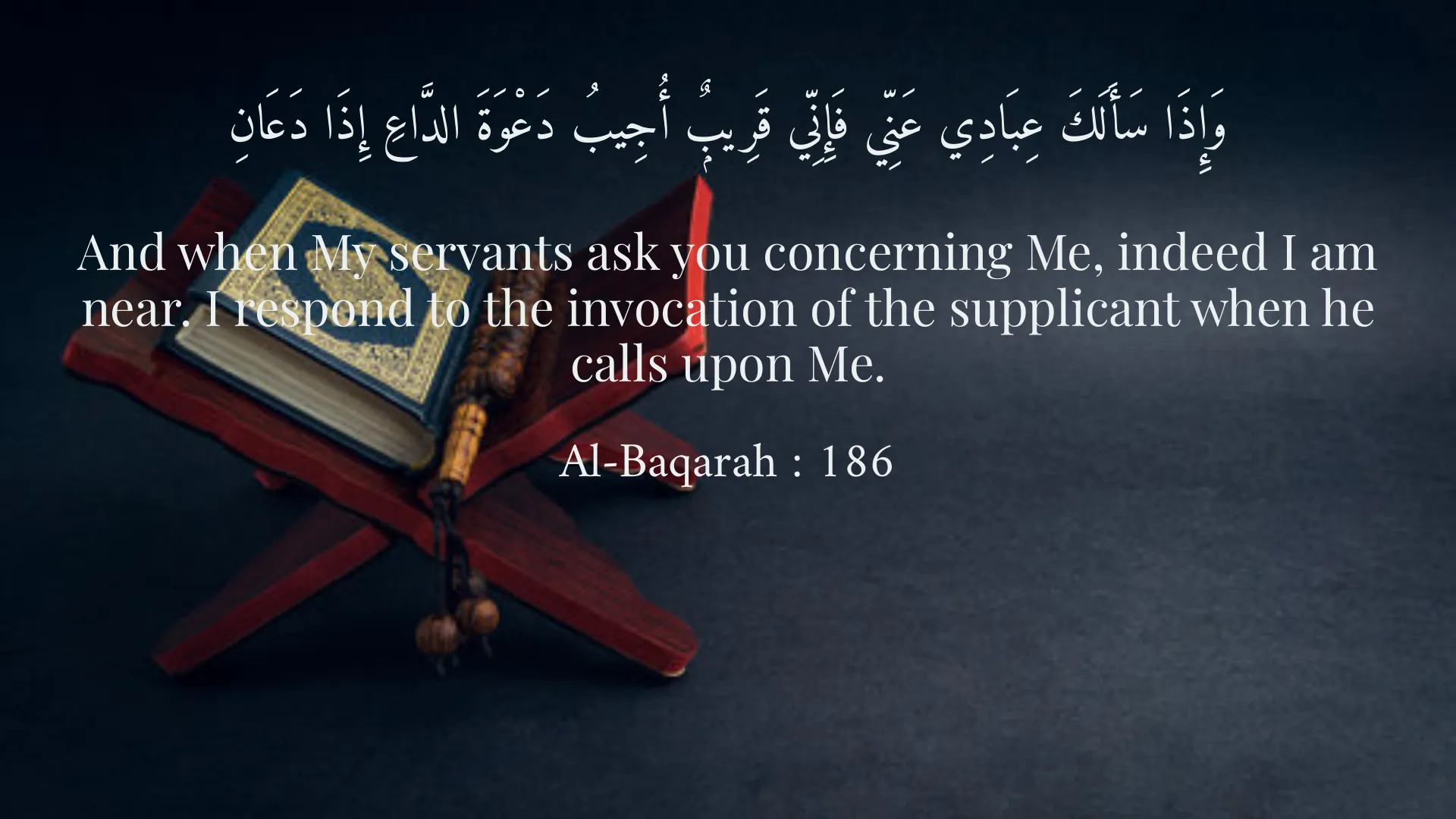
The Holy Quran, the central religious text of Islam, serves as a profound source of guidance for millions. Its verses articulate the essence of the relationship between Allah (God) and His creations, emphasizing the accessibility and nearness of Allah to His servants. The Quran plays a pivotal role in shaping a believer's understanding of their connection with the Divine, defining how one should approach this relationship without fear or barriers. Specifically, the Quran underscores that Allah is always near and receptive to the prayers and supplications of His servants, allowing them to communicate their innermost thoughts and emotions from their hearts. One of the most significant verses that encapsulate this theme is found in Surah Al-Baqarah, verse 186, where Allah states: 'And when My servants ask you concerning Me, indeed I am near. I respond to the invocation of the supplicant when he calls upon Me.' This powerful declaration conveys the message that Allah is not an abstract or distant entity; rather, He is intimately connected with His creation. The immediate implication is that every one of us has the right to pray and make supplications, regardless of our circumstances or the form of our expressions. The Quran emphasizes inclusivity in prayer. No specific language, manner, or setting is required for one to reach out to Allah. This accessibility means that anyone, at any moment, can engage in conversation with the Almighty using their own words and feelings. Whether it is in moments of joy, despair, confusion, or gratitude, a heartfelt prayer can bridge the distance between the supplicant and their Creator. Indeed, the simplicity of communication with Allah is a gift that opens up a pathway for believers, fostering a personal relationship with God that transcends traditional religious practices. In Surah Al-Mu’minun, verse 60, the Quran again emphasizes that Allah responds to the supplications made by His servants, thereby reinforcing the notion of an active relationship between the believer and Allah. The verse states: 'And they who say, “Our Lord, grant us from among our wives and offspring comfort to our eyes and make us an example for the righteous.' This passage signifies the importance of heartfelt desires expressed in supplication, conveying the message that Allah is attentive to the needs and wants of His servants, and encourages them to communicate these deeply personal aspirations. Moreover, the Quran presents various modes of communication with Allah, be it through formal prayers (Salah) or informal supplications (Dua). A believer can connect with Allah at any time—whether during the obligatory five daily prayers or in moments of silence and contemplation. This personal engagement allows for a dialogue that is both intimate and enriching. Even in times of distress, the Quran assures believers that they can pour out their hearts to Allah, expressing their troubles and seeking guidance or relief. In Surah Al-Anfal, verse 24, Allah urges believers with the words: 'O you who have believed, respond to Allah and to the Messenger when he calls you to that which gives you life.' This verse serves as a reminder that prayer is not merely a ritual but a source of spiritual sustenance that invigorates the soul. Responding to the call of Allah and His Messenger is an invitation to engage actively with one’s faith, enhancing the connection with the Divine. It illustrates the dynamic nature of the relationship between Allah and His worshippers, wherein believers are encouraged to respond positively to divine prompts, thus nourishing their spiritual lives. Beyond the mechanics of prayer and supplication lies the essence of having faith in Allah’s mercy and compassion. Believers are assured that their prayers are heard, and they must approach them with sincerity and hope. The Quran paints a vivid picture identifying Allah as a close confidant ready to hear the cries of those who are earnest in their pleas. This is a remarkable aspect of the Islamic belief system, as it fosters an environment of trust and understanding between the Creator and His creations. In practice, many Muslims often turn to the Quran for guidance before or during their prayers, finding verses that resonate with their feelings, fears, and hopes. Sections of the Quran can provide comfort and assurance, strengthening their belief that Allah is always by their side, ready to listen. The act of reciting specific verses in prayers becomes a way of structuring one’s thoughts and intentions, allowing for a more profound connection. Furthermore, the concept of making Dua, or informal supplication, is distinctly personal and fluid. A believer can talk to Allah as if confiding in a dear friend. This personal bond is reinforced through the knowledge that one’s vulnerabilities and thoughts are respected and heard in the most sacred space of prayer. The freedom to express oneself in one's own words, whether they are cries for help or expressions of gratitude, contributes to a heartfelt connection full of authenticity and warmth. The Quran thus invites every believer to maintain this dialogue with God on a daily basis, encouraging them to seek support in all aspects of their lives. By continuously engaging with Allah through prayer and supplication, believers nurture their faith and cultivate spiritual resilience. In conclusion, the Holy Quran profoundly teaches that Allah is ever-present and always attentive to the hearts of His servants. By emphasizing the accessibility of prayer, the Quran destroys the barriers that may inhibit a believer’s dialogue with God. Such teachings not only enrich the spiritual lives of Muslims but also foster a sense of community and shared faith among them. Ultimately, the relationship between Allah and His servants is characterized by mutual trust, respect, and love, providing a sanctuary for spiritual growth and divine connection in every individual's life. Through prayer and supplication, the essence of faith flourishes, propelling believers toward a deeper understanding of themselves and their Creator.
Related Verses
وَإِذَا سَأَلَكَ عِبَادِي عَنِّي فَإِنِّي قَرِيبٌۭ أُجِيبُ دَعْوَةَ الدَّاعِ إِذَا دَعَانِ
And when My servants ask you concerning Me, indeed I am near. I respond to the invocation of the supplicant when he calls upon Me.
Al-Baqarah : 186
وَالَّذِينَ يَدْعُونَ رَبَّهُمْ خَوْفًا وَطَمَعًا وَكَانُوا مُشْتَكَينَ
And those who supplicate to their Lord in fear and aspiration and are certain of their supplication.
Al-Mu'minun : 60
يَا أَيُّهَا الَّذِينَ آمَنُوا استَجِيبُوا لِلَّهِ وَلِلرَّسُولِ إِذَا دَعَاكُمْ لِمَا يُحْيِيكُمْ
O you who have believed, respond to Allah and to the Messenger when he calls you to that which gives you life.
Al-Anfal : 24
Short Story
Once upon a time, a young man named Ali was sitting in a garden, contemplating his life and dreams. He felt lonely and needed someone to talk to from his heart. Remembering the verses of the Quran, he decided to speak to Allah from his heart. Ali said, 'O God, in this vast world, I seek my purpose and I seek You.' After a while, he felt peace and realized that Allah was always close to him.