Quranic Answer
The Holy Quran, as the divine word, not only has an opinion about the future hope of humanity but also articulates this hope as a fundamental and foundational principle in the philosophy of life and the purpose of creation. This hope is not merely blind optimism; rather, it is built upon the solid pillars of faith in God, divine justice, His wisdom, and the role of humanity in shaping its own destiny and that of the world. The Quran teaches us that the future of humanity, though fraught with challenges and trials, ultimately progresses towards the triumph of truth, the establishment of justice, and the fulfillment of divine promises, provided that human beings fulfill their duties and follow the path of guidance. One of the most significant dimensions of this hope lies in understanding humanity's status as 'Khalifah Allah' (God's vicegerent) on Earth. In Surah Al-Baqarah, verse 30, Allah says: "And [mention, O Muhammad], when your Lord said to the angels, 'Indeed, I will make upon the earth a successive authority (khalifa).'" This position of vicegerency not only places a great responsibility on humans but also grants them immense potential for building, developing, establishing justice, and progressing. This perspective instills in humanity the hope that it possesses the ability to change and improve conditions, and through will and effort, can forge a better future. A future where divine and human values attain a lofty status. Furthermore, the Quran emphasizes that worldly life is full of tests and tribulations. These tests are not meant for destruction but for growth, elevation, and distinguishing the righteous from the wicked. In Surah Al-Ankabut, verses 2 and 3, it states: "Do people think that they will be left alone because they say, 'We believe,' and will not be tested? But We have certainly tried those before them, and Allah will surely make evident those who are truthful, and He will surely make evident the liars." These trials are part of humanity's evolutionary journey, and it is from the depths of these difficulties that hope for victory and relief is born. This perspective teaches humanity not to despair in the face of problems but to persevere with patience and steadfastness, for indeed, with hardship comes ease (Surah Ash-Sharh, verses 5 and 6). Divine promises in the Quran are the primary source of hope for humanity's future. Allah has repeatedly promised victory to believers and the oppressed. In Surah An-Nur, verse 55, He says: "Allah has promised those among you who believe and do righteous deeds that He will surely grant them succession [to authority] in the land, just as He granted it to those before them, and that He will surely establish for them their religion which He has preferred for them, and that He will surely substitute for them, after their fear, security, [provided that] they worship Me and do not associate anything with Me." This verse clearly states that a bright and secure future belongs to those who believe and do righteous deeds. This promise not only includes succession and empowerment on Earth but also refers to the establishment of security and freedom from fear, which are signs of a desirable future for human society. Moreover, the Quran emphasizes the importance of internal change within individuals for the alteration of collective destiny. In Surah Ar-Ra'd, verse 11, it is mentioned: "Indeed, Allah will not change the condition of a people until they change what is in themselves." This verse is a key principle that entrusts the hope for the future into humanity's own hands. If humans decide to strive towards righteousness and piety, Allah will also change the conditions for them. This means that a bright and hopeful future for humanity is dependent on its own efforts and correct choices. Ultimately, the ultimate hope that the Quran outlines for humanity is the hope for eternal life in the Hereafter and the reward for good deeds. This dimension of hope helps humans transcend transient worldly disappointments and maintain an eternal perspective of salvation and bliss. Even if all aspirations are not realized in this world, the ultimate reward is preserved with Allah. This hope gives meaning and stability to human life and keeps individuals steadfast on the path of truth. In general, the Quran, with its comprehensive teachings, offers a clear, dynamic, and hopeful picture of humanity's future, emphasizing both human effort and responsibility, and relying on God's infinite wisdom and justice.
Related Verses
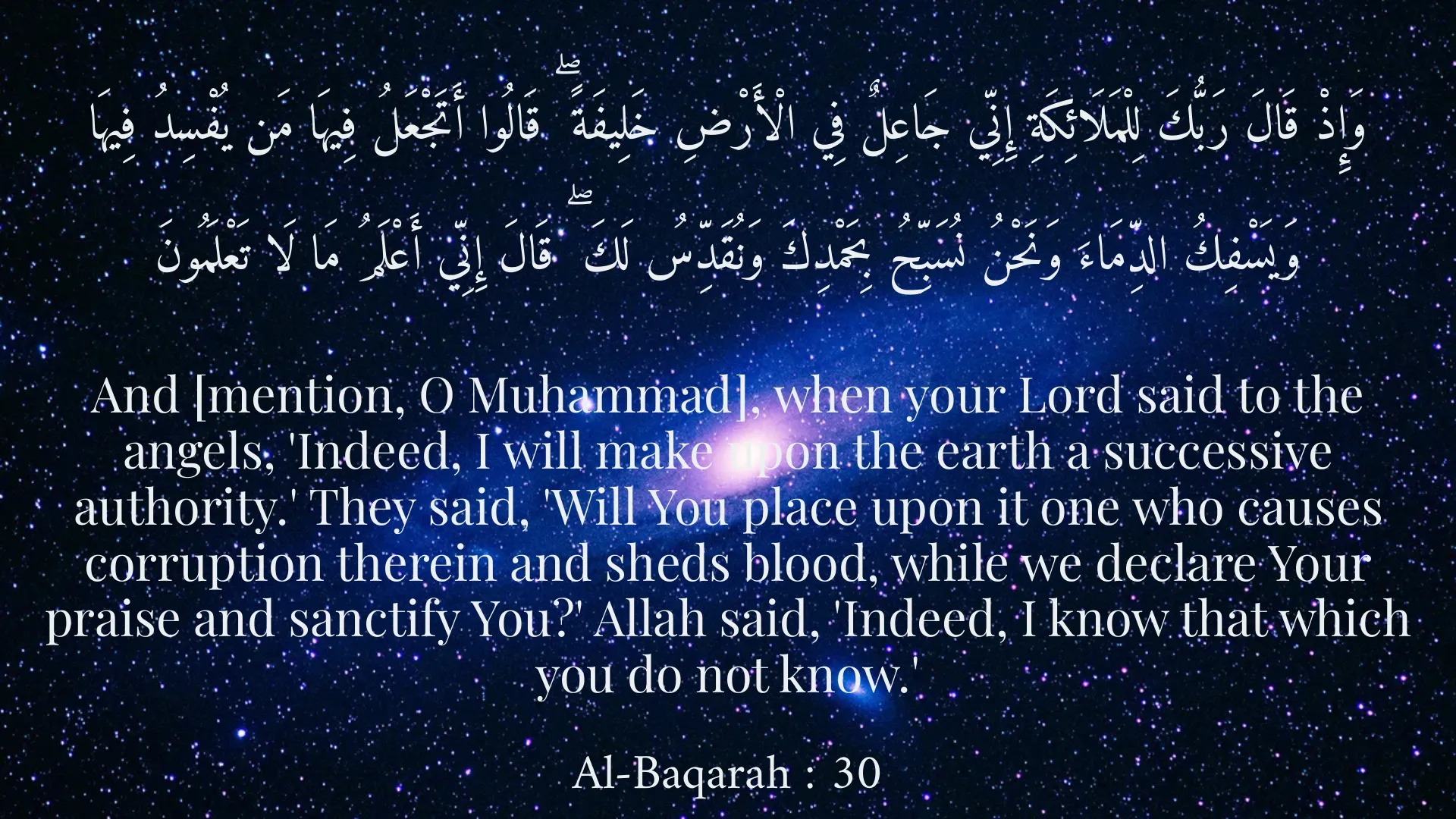
وَإِذْ قَالَ رَبُّكَ لِلْمَلَائِكَةِ إِنِّي جَاعِلٌ فِي الْأَرْضِ خَلِيفَةً ۖ قَالُوا أَتَجْعَلُ فِيهَا مَن يُفْسِدُ فِيهَا وَيَسْفِكُ الدِّمَاءَ وَنَحْنُ نُسَبِّحُ بِحَمْدِكَ وَنُقَدِّسُ لَكَ ۖ قَالَ إِنِّي أَعْلَمُ مَا لَا تَعْلَمُونَ
And [mention, O Muhammad], when your Lord said to the angels, 'Indeed, I will make upon the earth a successive authority.' They said, 'Will You place upon it one who causes corruption therein and sheds blood, while we declare Your praise and sanctify You?' Allah said, 'Indeed, I know that which you do not know.'
Al-Baqarah : 30
وَعَدَ اللَّهُ الَّذِينَ آمَنُوا مِنكُمْ وَعَمِلُوا الصَّالِحَاتِ لَيَسْتَخْلِفَنَّهُمْ فِي الْأَرْضِ كَمَا اسْتَخْلَفَ الَّذِينَ مِن قَبْلِهِمْ وَلَيُمَكِّنَنَّ لَهُمْ دِينَهُمُ الَّذِي ارْتَضَىٰ لَهُمْ وَلَيُبَدِّلَنَّهُم مِّن بَعْدِ خَوْفِهِمْ أَمْنًا ۚ يَعْبُدُونَنِي لَا يُشْرِكُونَ بِي شَيْئًا ۚ وَمَن كَفَرَ بَعْدَ ذَٰلِكَ فَأُولَٰئِكَ هُمُ الْفَاسِقُونَ
Allah has promised those among you who believe and do righteous deeds that He will surely grant them succession [to authority] in the land, just as He granted it to those before them, and that He will surely establish for them their religion which He has preferred for them, and that He will surely substitute for them, after their fear, security, [provided that] they worship Me and do not associate anything with Me. But whoever disbelieves after that - then those are the defiantly disobedient.
An-Nur : 55
لَهُ مُعَقِّبَاتٌ مِّن بَيْنِ يَدَيْهِ وَمِنْ خَلْفِهِ يَحْفَظُونَهُ مِنْ أَمْرِ اللَّهِ ۗ إِنَّ اللَّهَ لَا يُغَيِّرُ مَا بِقَوْمٍ حَتَّىٰ يُغَيِّرُوا مَا بِأَنفُسِهِمْ ۗ وَإِذَا أَرَادَ اللَّهُ بِقَوْمٍ سُوءًا فَلَا مَرَدَّ لَهُ ۚ وَمَا لَهُم مِّن دُونِهِ مِن وَالٍ
For him are successive [angels] before him and behind him who protect him by the decree of Allah. Indeed, Allah will not change the condition of a people until they change what is in themselves. And when Allah intends for a people ill, there is no repelling it. And there is not for them besides Him any patron.
Ar-Ra'd : 11
Short Story
It is narrated in Sa'di's Gulistan that a king was speaking with a learned minister. The king asked, "How do you see the future of this land?" The minister replied, "O King, now that you have spread goodness and justice throughout your land, there is no reason to despair of the future. The tree of beneficence yields the sweet fruit of hope, and whoever sows the seeds of goodness will eventually reap a harvest of happiness. Whatever you plant in hearts now, you will harvest in the future. If you water the hearts of the people with justice, their hope in you and your land will increase." The king was pleased with these words and understood that hope for the future is rooted in the actions and intentions of today.