Quranic Answer
The Holy Quran, revered by Muslims as the ultimate source of guidance, indirectly addresses matters related to nutrition and healthy eating practices. Within its verses, it establishes a framework that emphasizes the significance of consuming pure and lawful food. This framework serves as more than just dietary advice; it embodies spiritual, ethical, and physical principles that inform the lifestyles of believers. In the following discourse, we will delve into the teachings of the Quran regarding nutrition and how they align with modern understanding of health and wellness. To begin with, in Surah Al-Baqarah, verse 172, Allah provides explicit guidance to the believers concerning their dietary practices. The verse states: "O you who have believed, eat from the good things which We have provided for you and be grateful to Allah, if it is indeed Him that you worship." This directive encapsulates the core principles of healthy eating—focusing on foods that are not only halal (lawful) but also pure and beneficial. The emphasis on gratitude is crucial, as it cultivates an attitude of appreciation for the bounties provided by Allah, reinforcing the notion that sustenance is a form of divine blessing. Furthermore, Surah Al-Ma'idah, verse 88, further elaborates on the significance of lawful consumption by encouraging believers to "eat of what Allah has provided for you that is lawful and good, and fear Allah in whom you are believers." This verse not only reiterates the necessity of consuming clean and proper food but also instills a sense of accountability among believers. The notion of 'fear of Allah' serves as a reminder that dietary choices transcend mere physical nourishment; they embody moral and spiritual dimensions that align with one's faith and ethical considerations. These teachings underscore the Quranic perspective on eating as a holistic practice that protects the body and soul alike. But what constitutes 'good' and 'pure' food according to the Quran? While the text does not delve into extensive details regarding specific foods, it implicitly encourages selections that promote health and well-being. This approach can be interpreted in contemporary contexts, where the understanding of nutrition emphasizes whole foods, nutrient density, and the avoidance of harmful substances like artificial additives, excessive sugar, and processed ingredients. Moreover, the prophetic teachings (Sunnah) of Prophet Muhammad reinforce these Quranic principles. The Prophet's dietary habits illustrated moderation, encouraging a balance that assists in preventing the adverse health effects associated with both overeating and undereating. He famously advised against excess and wastefulness in consumption, which aligns with modern nutritional science advocating for portion control and mindfulness in eating practices. Among the numerous sayings of the Prophet, he stated, "Eat and drink, but do not be extravagant; indeed, He does not like the extravagant." (Surah Al-A'raf, 31). This instruction highlights the value of moderation, a principle deeply integrated into both Sunnah and contemporary nutrition. The disapproval of extravagance extends beyond physical health; it also incorporates environmental and ethical concerns that arise in issues of sustainability and food justice. By being mindful of not only what we consume but also how much we consume, Muslims are encouraged to adopt a lifestyle that is considerate of their own health and that of the environment. Moving beyond individual practices, the principles laid out in the Quran and Sunnah extend to communal and societal implications regarding healthy eating. The Quran’s verses frequently highlight the importance of sharing and generosity in meals, thus fostering community bonds and social responsibility. In this regard, providing for the needy and sharing blessings becomes not just an act of charity but a significant aspect of maintaining a healthy society. Eating together also promotes emotional well-being and strengthens relationships, aspects integral to holistic health. Additionally, Quranic injunctions steer followers toward an ethical consideration of food sourcing and consumption. By being directed to consume what is halal, believers are engaged in a practice that goes beyond merely observing dietary restrictions; they are consciously choosing to support ethical food systems. This consideration mirrors the modern movements towards organic farming, cruelty-free production, and sustainable eating. In alignment with current research on nutrition and health, the Quran champions an inclusive perspective towards eating that encompasses physical, spiritual, and ethical elements. This multifaceted approach not only promotes the consumption of healthy foods but also emphasizes the importance of intention and mindfulness. The Quran encourages believers to understand that dietary choices reflect their faith and values, signifying that what we eat has direct implications on our well-being, behavior, and spiritual state. In conclusion, the Holy Quran and the teachings of the Prophet Muhammad emphasize multiple dimensions of healthy eating, advocating for moderation, purity, and gratitude. As contemporary challenges of nutrition continue to evolve, these ancient teachings remain relevant, providing a moral compass guiding believers in their dietary choices. The calls for consuming halal and good food not only cater to physical health but also elevate spiritual consciousness and ethical considerations. Thus, the holistic approach towards nutrition in the Quran serves as an invaluable guideline, urging us to be mindful of our choices and live harmoniously with ourselves, society, and the environment.
Related Verses
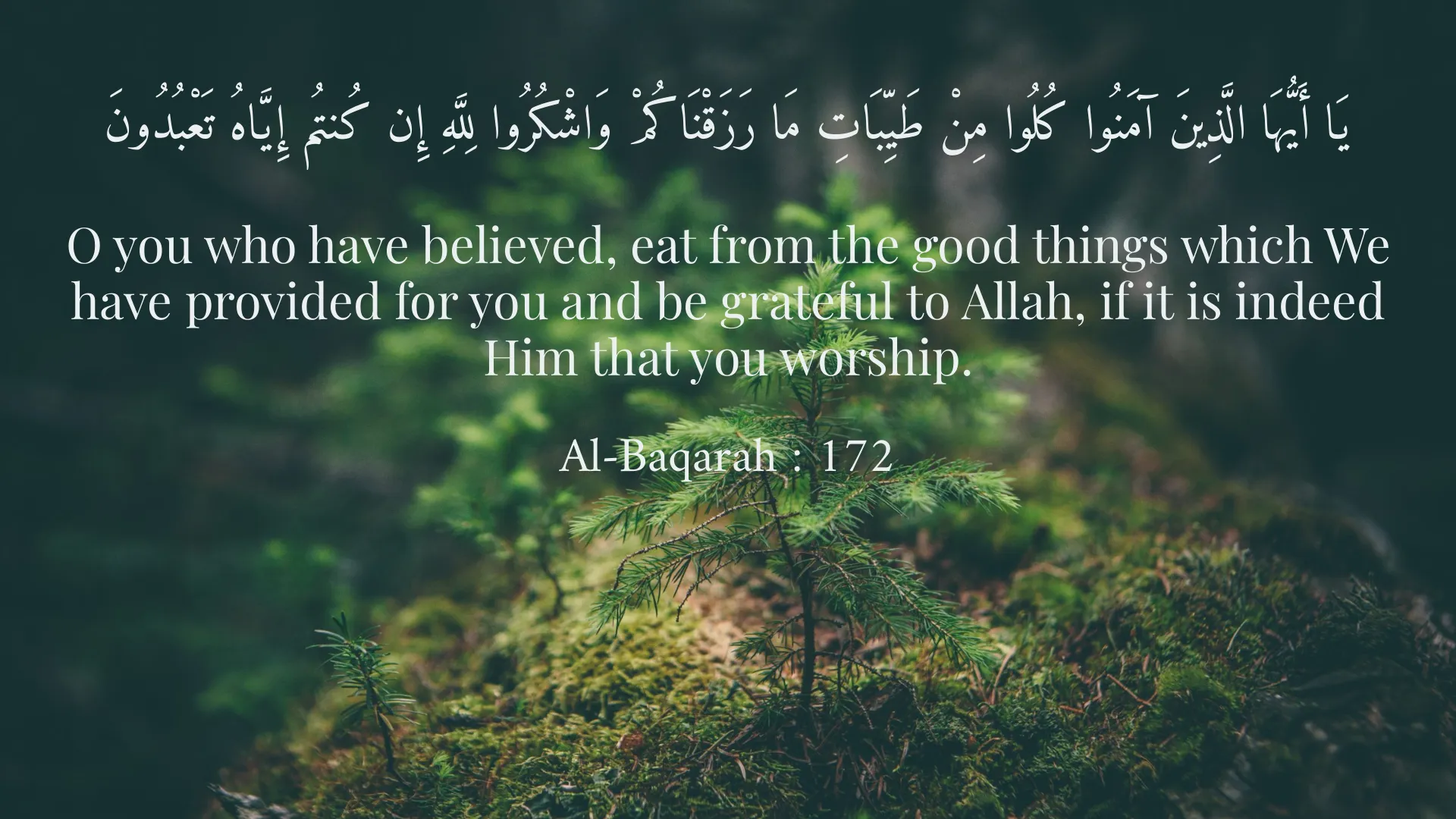
يَا أَيُّهَا الَّذِينَ آمَنُوا كُلُوا مِنْ طَيِّبَاتِ مَا رَزَقْنَاكُمْ وَاشْكُرُوا لِلَّهِ إِن كُنتُم إِيَّاهُ تَعْبُدُونَ
O you who have believed, eat from the good things which We have provided for you and be grateful to Allah, if it is indeed Him that you worship.
Al-Baqarah : 172
وَكُلُوا مِمَّا رَزَقَكُمُ اللَّهُ حَلَالًا طَيِّبًا وَاتَّقُوا اللَّهَ الَّذِي أَنتُم بِهِ مُؤْمِنُونَ
And eat of what Allah has provided for you that is lawful and good, and fear Allah in whom you are believers.
Al-Ma'idah : 88
Short Story
One day, a man named Soroush decided to pay more attention to his health. He turned to religious books and learned that the Holy Quran emphasizes healthy nutrition. He continued reading Quranic verses and decided to consume lawful and nutritious foods. After some time, Soroush noticed that not only was his body healthier, but his spirit also improved. These positive changes in his life astonished him and strengthened his faith.