Quranic Answer
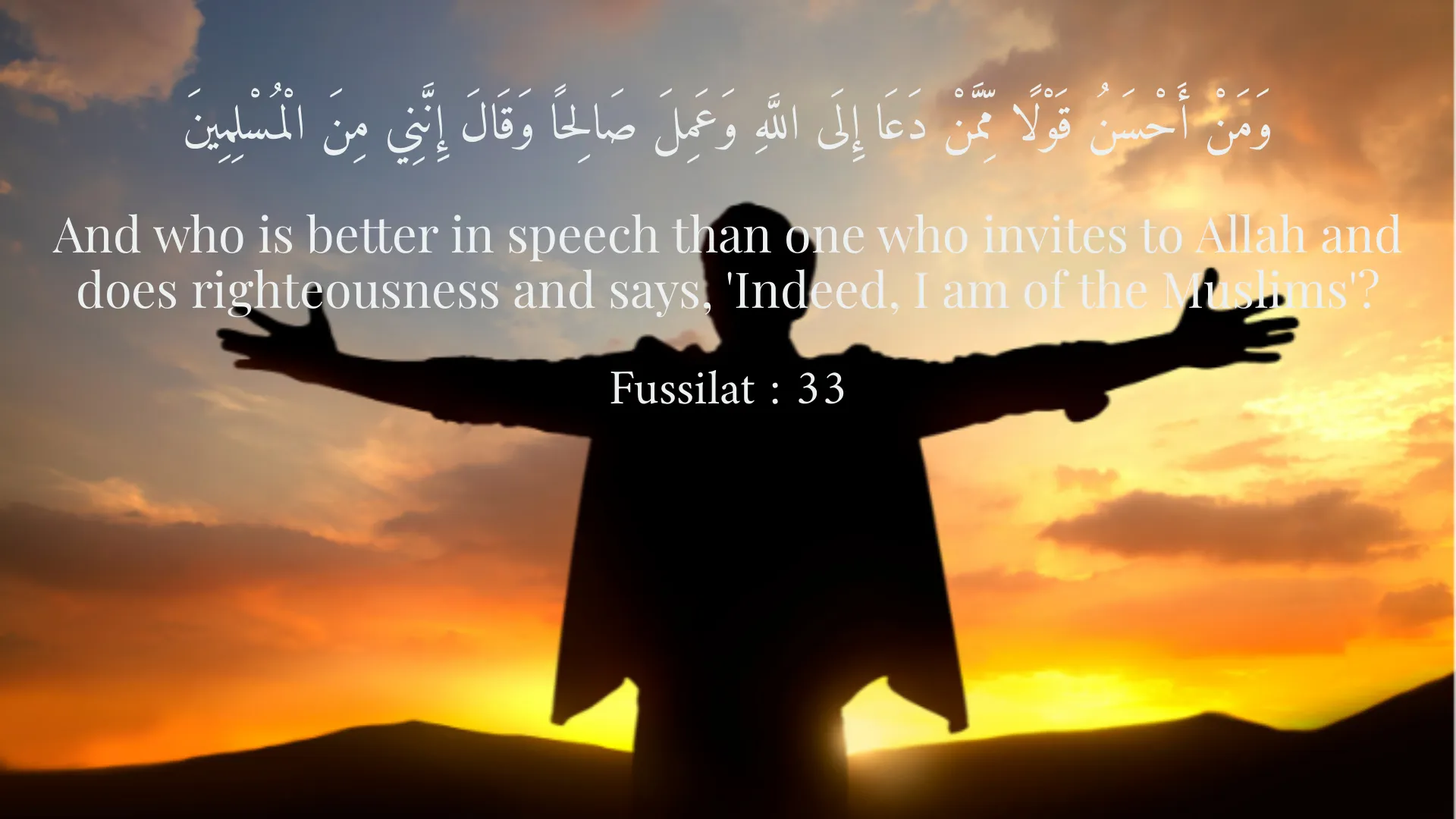
The Holy Quran is revered by Muslims as the ultimate source of guidance in various aspects of life, dictating moral, ethical, and spiritual frameworks. One of the most compelling themes that arises from its verses is the significance of words and speech. The Quran emphasizes the power that words hold, underscoring how they can influence both the individual and the collective. It is a profound observation that the Quran elucidates on the impact and essence of our statements, urging humanity to consider the weight of what they say. Throughout its teachings, the Holy Quran advocates for the utterance of truth as an essential aspect of human interaction. This truthfulness is not merely a mundane characteristic but represents a moral duty enshrined in divine guidance. The very essence of speech is profoundly depicted in Surah Fussilat, verse 33, where Allah states: 'And who is better in speech than one who invites to Allah and does righteousness and says, ‘Indeed, I am of the Muslims’?' This verse serves as a beacon for believers, highlighting the importance of inviting others to the divine message through kind and beautiful words. The significance of this verse lies in its multi-dimensional approach. Firstly, it demonstrates that effective communication is more than just delivering messages; it is about the manner in which these messages are conveyed. Words that invite others to reflect upon their faith carry a transformative power. By employing gentle and beautiful speech, an individual can sway thoughts and foster goodwill, which is paramount in propagating the core values of Islam. When a person speaks with sincerity and kindness, it builds bridges of understanding and aids in the spread of righteousness. Moreover, the importance of reflection upon speech is evident in Surah Az-Zumar, verse 18. Allah commends those who listen to speech and reflect upon it, stating: 'Those who listen to speech and follow the best of it.' This verse profoundly illustrates that words hold transformative power; they can either uplift an individual or lead them astray. The Quran advocates a culture of active listening, encouraging believers to not only hear the words spoken by others but to ponder their meaning and implications. In today’s fast-paced world, the art of listening is often overlooked. People frequently engage in dialogues where they are more focused on formulating their responses than on genuinely understanding what the other person conveys. The Quran’s emphasis on listening thereby provides a remedial suggestion, urging society to cultivate the ability to absorb and reflect upon words. This reflective engagement with speech paves the way for personal growth, deeper understanding, and spiritual enlightenment. Another essential aspect highlighted by the Quran is the dual nature of words; they can either promote good or propagate evil. The power that language commands necessitates responsibility on the part of the speaker. The Quran encourages individuals to engage in self-reflection concerning their speech, pointing towards a broader ethical understanding that what we say can have dire consequences—or, conversely, uplifting effects. For example, in Surah Al-Hujurat, the Quran points out the dangers of slander and the destructive potential that careless speech can have on community bonds. Speaking ill of others can devastate relationships and foster an atmosphere of distrust and discord. Thus, one of the implications drawn from the Quran is that individuals should be vigilant about their language, avoiding words that might harm or degrade others, and instead choosing to employ language that uplifts and inspires. Extensive study of the aforementioned verses reveals a crucial understanding: words possess power—they shape realities, define human relationships, and can solidify or challenge beliefs. In every community, the influence of language and speech is tangible; leaders and speakers can rally masses behind noble causes while others can sow division through hateful rhetoric. Given the rising challenges faced by societies around the globe, the Quran’s teachings on the power of words become ever more relevant. It serves as a reminder that in an era inundated with information, the weight of speech carries implications far beyond the immediate moment. Moreover, in practical terms, the integration of these principles encourages individuals and communities to foster environments characterized by constructive dialogue. Schools, workplaces, and community centers become vital grounds where words of respect, kindness, and positive reinforcement are practiced. By embedding Quranic principles into daily life, people can work towards cultivating a society that values speech not merely as a means of communication, but as a potent tool for change and unity. In conclusion, the Holy Quran’s address concerning the power and impact of words serves as an invaluable guide for believers and humanity at large. It calls upon individuals to be mindful of their speech and the potential consequences that accompany their statements. The exhortation to speak truthfully, invite others with kindness, listen attentively, and engage in self-reflection lays down a moral and ethical framework within which words can promote righteousness and harmony. By recognizing the inherent authority of words, individuals can actively participate in shaping a more compassionate, understanding, and unified world. In a time when divisions are often emphasized, the Quran invites individuals to rise above and harness the beautiful power of words, transforming lives and societies in the process.
Related Verses
وَمَنْ أَحْسَنُ قَوْلًا مِّمَّنْ دَعَا إِلَى اللَّهِ وَعَمِلَ صَالِحًا وَقَالَ إِنَّنِي مِنَ الْمُسْلِمِينَ
And who is better in speech than one who invites to Allah and does righteousness and says, 'Indeed, I am of the Muslims'?
Fussilat : 33
الَّذِينَ يَسْتَمِعُونَ الْقَوْلَ فَيَتَّبِعُونَ أَحْسَنَهُ
Those who listen to speech and follow the best of it.
Az-Zumar : 18
أَلَمْ يَأْنِ لِلَّذِينَ آمَنُوا أَنْ تَخْشَعَ قُلُوبُهُمْ لِذِكْرِ اللَّهِ وَمَا نَزَلَ مِنَ الْحَقِّ
Has the time not come for those who have believed to humble their hearts at the remembrance of Allah and what has come down of truth?
Al-A'raf : 53
Short Story
One day, a young man named Sami was talking with a friend, always claiming that words hold a powerful essence. His friend, curious, asked, 'How can a word change someone's life?' Sami smiled and replied, 'The Quran states that a person who invites others to goodness is also on the path of righteousness. Words can convey love, inspiration, and hope.' This conversation prompted both of them to reflect on the power of words and promise to be more careful with their speech.